Iran's Deepening Crisis: Protests Radicalize Amid Fears of Civil War
As America assembles a formidable naval presence in the region, Iran's regime is grappling with a surge of internal unrest that threatens to spiral into full-scale civil conflict. Recent violent protests have not only exposed the regime's brutal crackdowns but are also radicalizing a populace increasingly willing to take up arms. The situation in Iran is deteriorating rapidly, with human rights groups confirming the deaths of over 6,500 individuals during the recent upheavals, while opposition sources claim the toll could exceed 36,500.
Regime Crackdown Fuels Public Rage
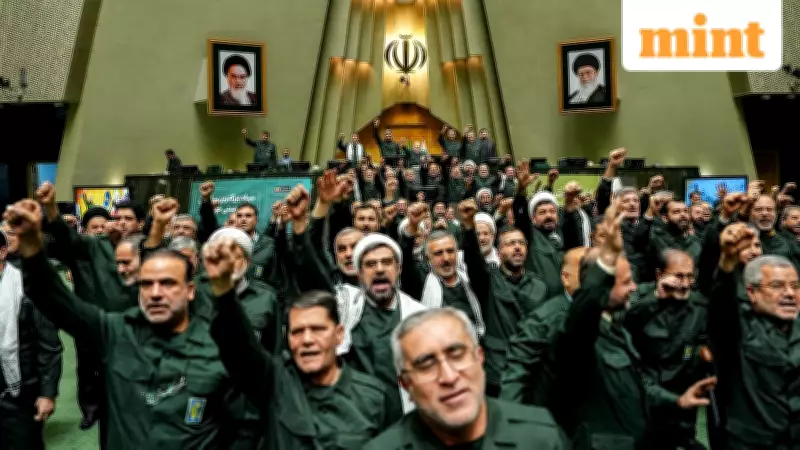
Ayatollah Ali Khamenei, Iran's supreme leader, appears to be failing in Machiavelli's advice to avoid hatred, as the regime's response to protests has ignited widespread fury rather than fear. With the partial lifting of an internet blackout, graphic accounts of killings and repression are emerging, painting a picture reminiscent of a battlefield. In cities like Tehran and Mashhad, eyewitnesses report torched banks, overturned security vehicles, and even the destruction of cultural sites such as the university museum in Mashhad, a stronghold of the clerical regime.
One protester described the scenes as "amazing and beautiful vandalising", highlighting the extent of public defiance. The regime's humiliation of the dead, including forcing families to pay for bullets to recover corpses, is further alienating a public that had already turned violent. This radicalization is evident in the hardening divisions within Iran's multi-ethnic and multi-religious society, with both sides accusing each other of hiring mercenaries and threatening escalation.

Economic and Political Fallout
The three-week internet blackout has crippled Iran's digital economy, exacerbating its economic isolation and pushing the rial to new lows. Initial official sympathy for protesters' economic grievances has vanished, replaced by branding all opponents as "terrorists". The regime has morphed into a security state, with drones patrolling skies and mobile phone checks targeting dissenters. Political opposition has been neutralized, with reformist voices like former president Hassan Rouhani reportedly under house arrest and his allies facing travel bans.
Meanwhile, exiled figures like Reza Pahlavi, son of the last shah, are urging Americans to strike and emphasizing Iranians' right to self-defense. Royalist symbols are replacing religious ones among protesters, with chants and hashtags turning openly anti-Islamic. This shift underscores the erosion of the regime's traditional support base, as even former hardline supporters now back opposition movements.
Path to Armed Conflict and International Implications
As protests escalate, there are growing calls for armed resistance, with elders in provinces like Lorestan and Ilam vowing revenge on social media. Some royalists abroad are exploring ways to smuggle arms into Iran, raising fears of a descent into civil war similar to Libya or Syria. However, lessons from the Arab Spring's aftermath—marked by civil wars and mass displacement—seem overlooked in the current fervor.
Internationally, the buildup of American military forces off Iran's coast adds to the tension, with Mr. Khamenei reportedly moving to a fortified bunker in anticipation of a strike. Western interventions in Iran's past, such as the coups orchestrated by Britain and America, have historically fueled backlash, as seen in the 1979 revolution. The unpredictable fallout from external involvement, coupled with the regime's determination to retain power, suggests that chaos looms regardless of the outcome.
In this volatile environment, the voices advocating for peaceful reform and democratic representation are being drowned out by calls for vengeance and regime overthrow. As fear of revenge killings spreads and Turkey considers buffer zones for refugees, Iran stands at a precipice, with its future hanging in the balance between internal collapse and external intervention.