Iran Threatens UAE Ports as US-Israel Conflict Escalates, Risking Global Trade
In a dramatic and unprecedented escalation, the conflict involving Iran, the United States, and Israel has entered a perilous new phase, with tensions now spilling across the Gulf region and directly threatening some of the world's most critical economic hubs. Iranian authorities have issued urgent evacuation warnings for residents near several major ports in the United Arab Emirates, including facilities in Dubai, Abu Dhabi, and Fujairah, marking the first time Tehran has openly menaced such vital infrastructure in the UAE.
Evacuation Warnings and Regional Alarm
Iranian media specifically named Jebel Ali Port, Khalifa Port, and the Port of Fujairah as potential targets, urging civilians to leave nearby areas immediately. Tehran claimed these ports are being used as "ports, docks and hideouts" for American forces allegedly involved in recent strikes on Iranian oil infrastructure, though no evidence was provided. The warning, which sent shockwaves across the Gulf, came amid rising tensions following US strikes on Iran's Kharg Island, the country's primary oil export terminal. Iranian officials retaliated by stating that locations linked to the United States, including ports and logistics hubs, could become legitimate targets.
This development intensifies fears that the conflict could widen beyond Iran and Israel, potentially destabilizing global energy markets and the Gulf's vital trade routes. As drone strikes, missile interceptions, and fires near oil facilities continue to be reported across the region, the threat underscores the volatile nature of the ongoing confrontation.

Strategic Importance of the Threatened Ports
The ports under threat are not only crucial to the UAE economy but also play a central role in global trade and energy supply chains. Jebel Ali Port, located in Dubai, is the Middle East's busiest hub and one of the most important shipping centers worldwide. Operated by DP World, it handles millions of containers annually, serving as a gateway for trade across the Gulf, Africa, and South Asia. Any disruption here could ripple through global supply chains far beyond the region.
Khalifa Port in Abu Dhabi is a major deep-water port developed to expand the UAE's maritime trade capabilities, forming part of the Khalifa Industrial Zone. It handles large container shipments and connects the UAE with global shipping networks, making it another vital node in regional trade.
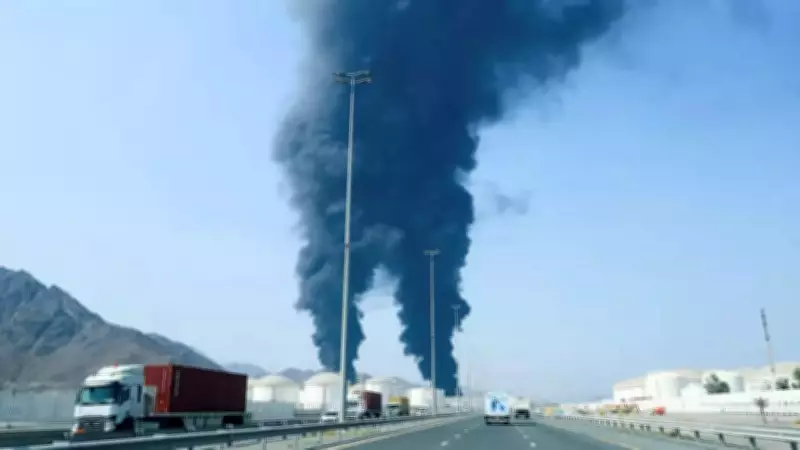
Perhaps most strategically sensitive is the Port of Fujairah, which lies outside the Strait of Hormuz. This location makes it crucial for energy security, allowing the UAE to export oil without sending tankers through the strait. The port handles approximately 1 million barrels of crude oil per day, about 1% of global oil demand. Recent incidents, such as drone interceptions causing debris to ignite fires near energy facilities, have highlighted the vulnerability of Gulf infrastructure, with some oil operations temporarily halted due to security concerns.
Escalating Military Actions and Broader Implications
The evacuation warning coincides with a wave of drone and missile incidents across the Gulf. Reports indicate several Iranian drones and missiles have been intercepted by Gulf air defense systems, with debris falling in urban areas and fires near oil storage facilities. These attacks are part of a broader escalation following US and Israeli military operations targeting Iranian facilities, with Iran responding by launching strikes and warning that countries hosting US forces could face retaliation.
The crisis intensified after the United States targeted military installations near Kharg Island, which handles around 90% of Iran's oil exports. US officials described the strikes as targeting military sites, but Iran interpreted them as an attack on its economic lifeline, prompting threats against US-linked infrastructure throughout the region.
Since late February, the conflict has escalated rapidly, spreading across multiple fronts with missile exchanges, drone attacks, strikes on energy infrastructure, and cyberattacks. Thousands of casualties have been reported in Iran, and analysts fear the region may be on the brink of a much larger confrontation as the war enters its third week.

Global Economic and Security Concerns
The situation is further complicated by the proximity to the Strait of Hormuz, one of the world's most important shipping lanes. This narrow waterway carries roughly 20% of the global oil supply from countries like Saudi Arabia, the UAE, Kuwait, Iraq, and Qatar. Any disruption here could send energy prices soaring worldwide, with markets already showing signs of panic and oil prices surging amid supply fears.
In response, the UAE has not publicly confirmed Iran's claims but has taken precautionary steps, including urging residents to report debris, increasing security around critical infrastructure, and tightening controls on social media misinformation. Energy companies are closely monitoring the situation, as even temporary disruptions to Gulf ports could have far-reaching consequences for global shipping, oil markets, and international trade.
Potential Scenarios and Future Outlook
Iran's warning has raised concerns that major cities like Dubai and Abu Dhabi could become targets if the conflict escalates further. However, analysts note that direct attacks on Gulf states risk triggering a wider regional war involving multiple countries. Most Gulf governments are trying to avoid being drawn into the conflict, despite hosting US military bases and maintaining close economic ties with Western allies.
Military analysts outline several possible scenarios in the coming days:
- Escalation of drone and missile attacks across the Gulf
- Further strikes on energy infrastructure or shipping routes
- International naval deployments to secure oil shipping lanes
- Diplomatic efforts to prevent a wider regional war
Much will depend on whether Iran carries out its threats against UAE ports and how regional governments respond. The evacuation warning for Dubai, Abu Dhabi, and Fujairah ports serves as a stark reminder of how quickly geopolitical conflicts can threaten the world's most important economic hubs. For decades, Gulf cities like Dubai have thrived on stability and global trade, but as the Iran-US-Israel conflict deepens, the region now faces one of its most serious security challenges in years. If tensions continue to escalate, the repercussions may extend beyond the Middle East, rippling across global energy markets, shipping routes, and financial systems.