Iranian Leader Decries Threats of 'Stone Age' Devastation as War Crimes
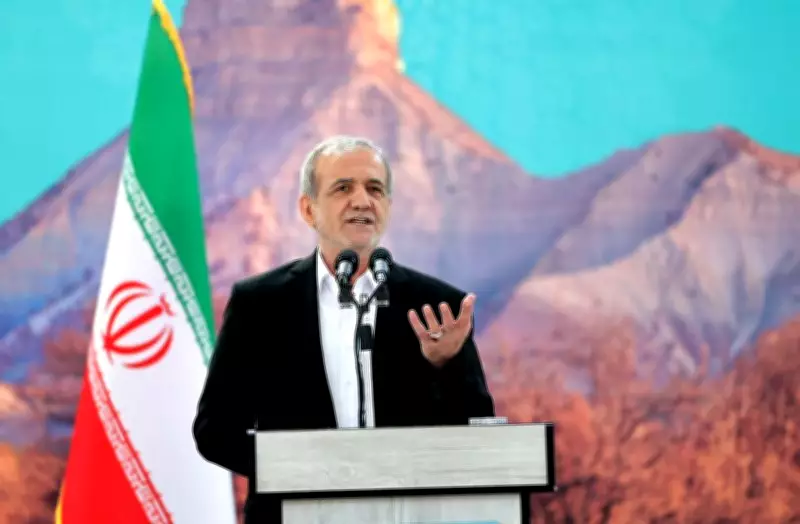
In a forceful statement addressing global tensions, Iran's President Ebrahim Raisi has issued a stark condemnation of threats aimed at reducing nations to a state of "Stone Age" devastation. The president emphasized that such aggressive rhetoric and potential actions constitute clear violations of international law and amount to war crimes.
International Law and the Principle of Proportionality
President Raisi highlighted that under established international legal frameworks, including the Geneva Conventions, any threat or use of force intended to cause widespread, long-term, and severe damage to the natural environment or civilian infrastructure is strictly prohibited. The concept of "Stone Age" devastation, implying a complete collapse of modern society and a regression to primitive conditions, falls squarely within this prohibition. The principle of proportionality in warfare mandates that military actions must not cause harm excessive in relation to the concrete and direct military advantage anticipated.
Context of Regional and Global Tensions
While the president's remarks did not single out any specific nation or actor, they come amid heightened geopolitical friction in the Middle East and globally. The statement serves as a broader critique of what Iran perceives as destabilizing rhetoric and policies from certain quarters that threaten regional peace. Raisi's administration has consistently positioned itself as a defender of national sovereignty and international norms against what it describes as foreign aggression and coercion.

This public stance reinforces Iran's diplomatic efforts to frame itself as a responsible actor on the world stage, countering allegations from adversaries. The condemnation of "Stone Age" threats aligns with Iran's long-standing criticisms of military interventions and economic sanctions that it claims aim to cripple nations.
Legal and Moral Implications
Legal experts note that labeling such threats as war crimes carries significant weight. It invokes the responsibility of states and individuals under international criminal law. The International Criminal Court (ICC) and other tribunals have jurisdiction over war crimes, which include intentionally launching attacks knowing they will cause incidental loss of life or injury to civilians or damage to civilian objects which would be clearly excessive in relation to the concrete and direct overall military advantage anticipated.
The Iranian president's statement is a reminder of the catastrophic human and environmental costs associated with total war concepts.By framing the issue in legal terms, Iran seeks to mobilize international opinion and legal mechanisms against its opponents. The rhetoric of "Stone Age" devastation is not new in global conflicts, often used to describe the potential outcome of nuclear warfare or extensive conventional bombing campaigns.
President Raisi's condemnation adds to the ongoing global discourse on the ethics and legality of modern warfare, urging a return to diplomatic solutions and conflict de-escalation. The international community continues to grapple with these challenges, as nations balance security concerns with the imperative to protect civilian populations and uphold humanitarian law.