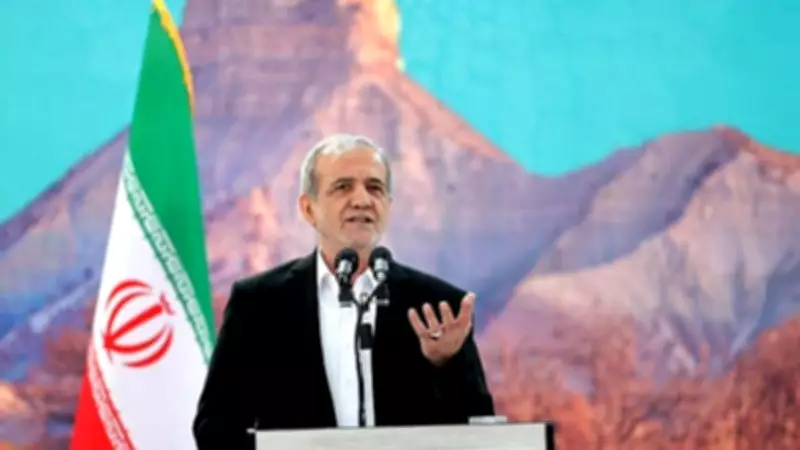
In a significant diplomatic development, Iran's President Masoud Pezeshkian has given the green light for potential talks with the United States, marking a notable shift in Tehran's foreign policy stance. This move comes amid mounting pressure from allied nations in the region, highlighting the complex geopolitical dynamics at play.
President Pezeshkian's Directive for Negotiations
President Masoud Pezeshkian announced that he has instructed Iran's foreign minister to lay the groundwork for what he described as "equitable and fair negotiations" with the United States. This directive was issued in response to appeals from friendly regional countries, which have been urging Iran to engage with Washington following a suggestion from the US President for dialogue.
Conditions Set for US-Iran Talks
However, Pezeshkian emphasized that any negotiations would only proceed under specific conditions. He stated that talks should occur in "an atmosphere free of threats and unreasonable expectations," indicating Iran's cautious approach and desire for a level playing field. This condition underscores Tehran's concerns about previous diplomatic engagements and its insistence on mutual respect in any future discussions.

Regional Pressure and Diplomatic Context
The decision to consider talks with the United States is not made in isolation. President Pezeshkian explicitly mentioned that it takes into account demands from friendly regional countries, suggesting that allies in the Middle East have been advocating for a more conciliatory approach. This regional pressure reflects broader efforts to stabilize the area and reduce tensions that have often characterized US-Iran relations.
Key aspects of this development include:
- The influence of regional allies in shaping Iran's foreign policy decisions.
- The potential for a thaw in long-standing hostilities between Iran and the United States.
- The emphasis on fairness and equity as non-negotiable principles for Tehran.
Implications for Middle East Stability
This move could have far-reaching implications for Middle East stability. If talks materialize, they might address critical issues such as:
- Nuclear proliferation concerns and the Joint Comprehensive Plan of Action (JCPOA).
- Regional security dynamics, including conflicts in Syria and Yemen.
- Economic sanctions and their impact on Iran's economy and global trade.
President Pezeshkian's announcement, reported by Reuters on February 3, 2026, at 10:51 IST, signals a potential opening for diplomatic engagement, though it remains contingent on the creation of a conducive environment. As both nations navigate this delicate process, the world watches closely, hoping for a breakthrough that could ease tensions in one of the globe's most volatile regions.