

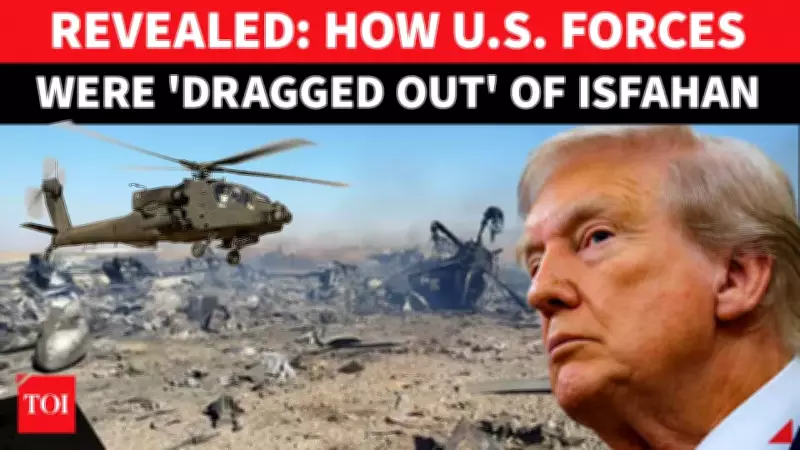
Iran Mocks U.S. Military's 'Failed' Isfahan Rescue Mission as 'Dragged Out' Operation
In a dramatic escalation of tensions, Iran has publicly mocked a recent U.S. military operation near Isfahan, labeling it a "failed" and "dragged out" mission that ended in American forces being forced to retreat. The incident, which occurred in early April, has sparked renewed geopolitical friction between the two nations.
Details of the Alleged Clash Near Isfahan
According to Iranian military officials, U.S. forces attempted a rescue operation in the Isfahan region in early April, but Tehran's troops responded swiftly to what they termed an "infiltration attempt." Iranian Army spokesman Brigadier General Mohammad Akraminia stated that during the engagement, Iranian forces struck a Lockheed C-130 Hercules aircraft with a shoulder-fired missile, effectively bringing the mission to a halt.
Akraminia emphasized that the U.S. operation was unsuccessful, with American personnel forced to withdraw after heavy engagement from Iranian defenses. This claim, if verified, represents a significant military confrontation in a region already fraught with instability.

Iran's Characterization of the Event as a 'FAILED OPERATION'
Iranian authorities have been vocal in their criticism, using terms like "dragged out" to describe the U.S. mission and asserting it was a complete failure. This rhetoric is part of a broader pattern of Tehran challenging U.S. military activities in the Middle East, often highlighting perceived American weaknesses.
The timing of this incident is particularly notable, as it comes amid ongoing regional conflicts and diplomatic strains. Iran's mockery of the operation serves to bolster its domestic narrative of resilience against foreign intervention while potentially undermining U.S. credibility on the international stage.
Broader Context and Regional Implications
This alleged clash near Isfahan adds to a series of recent confrontations between Iran and the United States, reflecting the deep-seated animosities that have persisted for decades. The region of Isfahan, known for its strategic military installations, has been a focal point in past tensions, making this event especially significant.
Analysts suggest that such incidents could escalate into broader conflicts, given the volatile nature of U.S.-Iran relations. The use of a shoulder-fired missile against a U.S. aircraft, if confirmed, indicates a level of military capability and readiness on Iran's part that may influence future diplomatic and military strategies.
International Reactions and Verification Challenges
As of now, the U.S. military has not officially commented on the specifics of the Isfahan incident, leaving Iran's claims unverified by independent sources. This lack of confirmation raises questions about the accuracy of the details provided by Tehran, though the event has undoubtedly captured global attention.
The international community is closely monitoring the situation, with concerns about potential ripple effects on regional stability. Countries in the Middle East and beyond are likely assessing the implications for their own security and diplomatic relations with both Iran and the United States.
In summary, Iran's mockery of the U.S. military's alleged failed rescue mission near Isfahan underscores the ongoing tensions between the two nations. With claims of a dramatic clash and a forced American retreat, this event highlights the complex and often hostile dynamics that define their relationship, with potential consequences for global geopolitics.






