

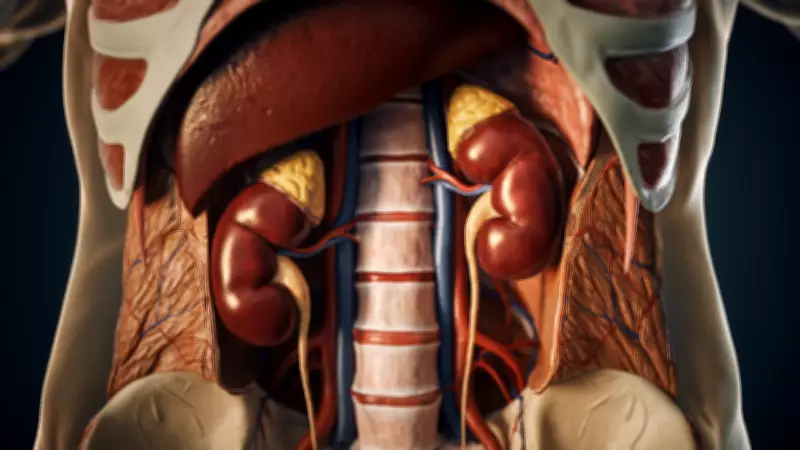
Most people rarely think about their kidneys until something goes wrong. Yet these two fist-sized organs work around the clock, filtering nearly 180 litres of fluid every day, removing waste, balancing minerals, regulating blood pressure, and helping keep the body's internal environment stable. Water is at the centre of this process.
The body can survive for weeks without food, but only a few days without water. Even mild dehydration can quietly affect how organs function. The kidneys, which depend on a steady supply of fluid to do their job, are often among the first to feel the strain.
A busy workday, a long commute, an air-conditioned office, or simply forgetting to refill a water bottle can leave many people drinking less than they need. The effects may not be dramatic at first. But over time, inadequate hydration can create conditions that make the kidneys work harder and increase the risk of several health problems.

Your Kidneys Immediately Switch into Conservation Mode
When water intake drops, the body treats it as a shortage. We spoke to Dr Deepesh V, Consultant - Nephrology and Renal Transplant Physician, Manipal Hospital Kanakapura Road, who said, "A water prescription is needed only in some medical conditions. Otherwise, thirst is the best measure of fluid intake. If you are thirsty, it means there is not enough water. When that happens, the kidneys go into a state of conserving whatever water is in the body."
Instead of allowing excess water to leave through urine, the kidneys begin holding on to as much fluid as possible. Urine becomes darker and more concentrated because it contains less water and a higher concentration of waste products.
This adaptation helps the body survive short periods of dehydration. However, when it becomes a regular occurrence, it can create an environment where waste products remain more concentrated in the urinary tract, increasing stress on the system. Research from the US National Institute of Diabetes and Digestive and Kidney Diseases (NIDDK) explains that adequate hydration helps the kidneys clear wastes from the blood and move them out through urine efficiently.
Why Dehydration Can Increase the Risk of Kidney Stones
One of the most well-established consequences of inadequate fluid intake is an increased risk of kidney stones. Kidney stones form when minerals and salts in urine become concentrated enough to crystallize. Think of sugar settling at the bottom of an over-saturated cup of tea. Something similar can happen inside the urinary tract when there isn't enough fluid available.
Dr Deepesh explained, "This results in concentrated urine, which in fact increases the risk of kidney stones and urinary infections in some individuals." When urine volume decreases, substances such as calcium, oxalate, and uric acid have a greater chance of sticking together and forming crystals. Over time, these crystals can grow into stones large enough to cause severe pain, bleeding, and urinary obstruction. While most healthy adults require around 1.5-2 litres of water daily, some kidney patients may need fluid restrictions, while others may need significantly higher intake. Recognizing thirst and early signs of dehydration can help protect long-term kidney health.
The Surprising Connection Between Hydration and Infections
Many people associate dehydration with headaches or fatigue, but fewer realize that it can also influence the risk of urinary tract infections (UTIs). Urine does more than remove waste. It also helps flush bacteria out of the urinary system. When less urine is produced, bacteria may remain in the urinary tract for longer periods, creating conditions that can favour infection.
This does not mean dehydration directly causes every infection. However, concentrated urine and reduced flushing can increase susceptibility in some individuals, particularly those who are already prone to recurrent UTIs. The kidneys themselves can also become vulnerable if infections travel upward from the bladder. In severe cases, kidney infections can lead to lasting damage if not treated promptly.

How Low Water Intake May Affect Blood Pressure and Kidney Health
The relationship between hydration and blood pressure is more complex than most people think. Dr Deepesh noted, "It may make the kidneys susceptible to damage with certain medications. It may also increase some hormones, which can increase blood pressure and change the hemodynamics of the patient."
When the body senses reduced fluid availability, it activates hormonal systems designed to maintain circulation and preserve water. These mechanisms are helpful during temporary dehydration but may become problematic if the body repeatedly operates in a fluid-deficient state.
The kidneys play a major role in regulating blood pressure. In fact, kidney disease and high blood pressure often influence each other. Poor kidney function can raise blood pressure, while uncontrolled high blood pressure can damage the kidneys over time. The US National Institutes of Health has highlighted the close connection between hydration, kidney function, and cardiovascular health through several research initiatives examining fluid balance and renal physiology.
So, How Much Water Is Enough?
There is no universal number that suits everyone. The amount of water a person needs depends on temperature, humidity, physical activity, body size, age, medications, and existing medical conditions.
Dr Deepesh explained, "Our kidneys are the body's ultimate filtration system, processing blood to remove waste and balance fluids. But when you don't drink enough water, the kidneys go through a series of issues. Exactly how much water the kidneys need depends heavily on a person's environment, physical activity, and overall health."
He further added, "In healthy individuals who predominantly work indoors, they may need around 1.5-2 litres of water, excluding other food intake and beverages. If the same individual is exposed to hot, sultry climatic conditions or engaged in physical activity, the water requirement increases to replace the loss of fluid by sweat and other forms."
For healthy adults with no major medical conditions, approximately 1.5 to 2 litres of water daily is often adequate. However, hydration needs rise significantly during exercise, hot weather, illness, or excessive sweating.
Some people require a very different approach. According to Dr Deepesh, "Patients who have kidney diseases, including chronic kidney disease and diabetic kidney disease, who routinely experience incontinence, heart failure, and chronic liver disease, need to consume as little water as possible. Usually, the prescription is less than 1 litre per day." Meanwhile, "Patients who have had kidney stones, recurrent urinary tract infections, polycystic kidney disease, or undergone a renal transplant need 2.5-3 litres of fluid every day."
This is why hydration advice should never be viewed as one-size-fits-all. For some people, drinking more water is beneficial. For others, excessive fluid intake can be harmful.





