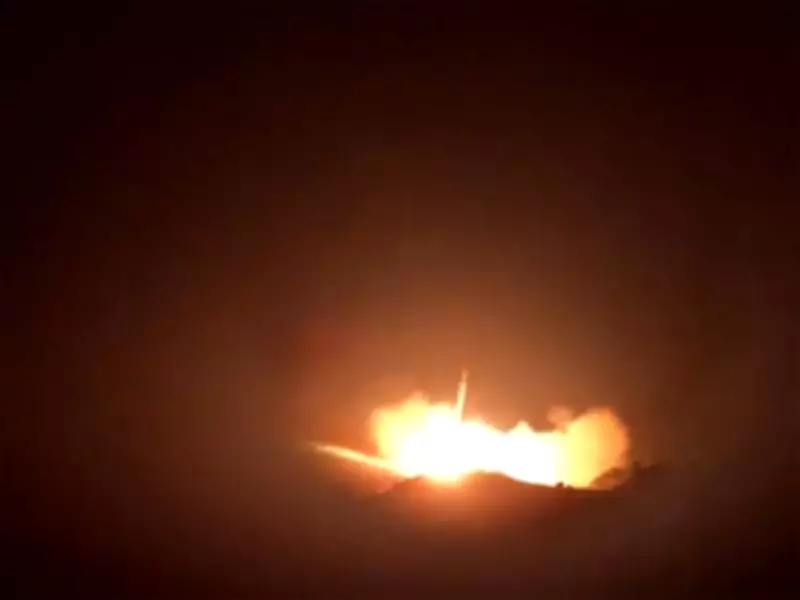
Iran's IRGC Issues Stern Warning After Retaliatory Attacks on US-Linked Oil Facilities
Iran's Islamic Revolution Guards Corps (IRGC) has publicly claimed responsibility for a series of attacks targeting what it describes as oil facilities associated with the United States in the region. The IRGC stated that these strikes were part of the 63rd wave of its ongoing retaliatory campaign, dubbed Operation True Promise 4. This operation was initiated in response to previous US-Israel military actions against Iran.
Escalation in Regional Conflict
In an official statement released by the Corps' Public Relations Office, the IRGC emphasized that the attacks were conducted with full force. The statement highlighted that this wave of retaliation also served as a response to the martyrdom of Iran's Intelligence Minister Esmaeil Khatib and other individuals during what Iran terms as aggression by adversaries.
The IRGC further asserted that by carrying out these strikes, the opposing forces aimed to exact revenge on Iran due to the nationwide rallies being held in support of the country's Islamic establishment and in protest against external aggression.

New Stage in the Conflict
The IRGC elaborated on the strategic shift in the conflict, noting that the attack on Iran's energy infrastructure has propelled the situation into a new and more intense phase. According to the statement, the Islamic Republic did not originally intend to expand the war to include oil facilities, nor did it wish to cause harm to the economies of friendly and neighboring nations.
However, with the enemy's aggression directed at Iran's energy infrastructure, the country has effectively entered this new stage. The necessity to defend Iran's energy assets compelled a retaliatory strike against American-linked energy facilities, as per the IRGC's explanation.
Military Targets and Tactics
In addition to the oil facility attacks, the IRGC claimed to have successfully hit as many as 80 military and military support targets within Israel. These targets were located in various areas, including Rishon LeZion, Ramla, and Lod in the central region; Eilat in the south; and Ramat Gan, Bnei Brak, Bat Yam, and Holon near Tel Aviv.
The IRGC detailed that all these targets were struck with surgical precision using advanced multi-warhead missiles and attack drones, showcasing the technical capabilities of Iran's military forces.
Warning of Severe Consequences
The IRGC issued a stark warning to US-Israel forces, cautioning against any repetition of strikes on Iran's energy sites. The statement declared, "If this is repeated, subsequent attacks on your energy infrastructure and that of your allies will not cease until total destruction, and our response will be far more severe than tonight's strikes."
This warning underscores the potential for further escalation in the already tense regional dynamics, with Iran signaling its readiness to intensify retaliatory measures.
US and Qatar Respond
Meanwhile, US President Donald Trump addressed the situation, stating that neither the United States nor Qatar had prior knowledge of the attacks. He clarified that Israel would not target the South Pars Gas Field unless Iran decides to launch another attack on Qatar.
In a post on Truth Social, President Trump emphasized, "The United States knew nothing about this particular attack, and the country of Qatar was in no way, shape, or form, involved with it, nor did it have any idea that it was going to happen."
He further explained that Iran was unaware of the pertinent facts regarding the South Pars attack and unjustifiably targeted a portion of Qatar's LNG gas facility. President Trump warned that if Qatar's LNG facilities are attacked again, the United States, with or without Israel's assistance, would respond with unprecedented force, potentially destroying the entire South Pars Gas Field.
Impact on Global Oil Markets
The attacks on Iran's gas field and Qatar's LNG facilities have had immediate repercussions on global oil markets, driving prices higher. There is little indication of a swift resolution to the conflict, suggesting that the volatility in oil prices may persist as tensions continue to mount.

This development highlights the interconnected nature of regional conflicts and global economic stability, with energy infrastructure becoming a focal point in the ongoing geopolitical struggles.