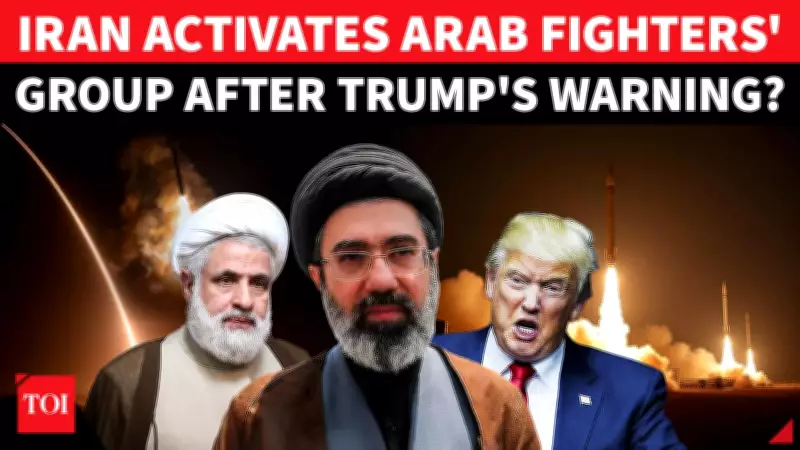
Iran Showcases Arab Unity Following Collapse of US Negotiations in Pakistan
In a significant geopolitical development, a senior Iranian military commander has declared that the so-called 'Axis of Resistance' is now more robust and unified than at any previous point. This statement comes directly in the wake of the unsuccessful diplomatic talks between the United States and Iran, which were held in Islamabad, Pakistan. The failure of these high-stakes negotiations has prompted a forceful public response from Tehran, highlighting its regional influence and strategic posture.
IRGC Commander's Stern Warning to Trump Gains Widespread Attention
Esmail Qaani, the commander of the Islamic Revolutionary Guard Corps's elite Quds Force, delivered a pointed message that has rapidly gone viral across international media platforms. Qaani explicitly addressed Israel, stating, "Israel believes that by pressuring their resistance and martyrdom, it will cause them and the oppressed and innocent people to fail, weaken, or surrender." This rhetoric underscores Iran's defiant stance and its perception of the ongoing regional conflicts.
The commander's comments are interpreted as a direct warning to former US President Donald Trump, who has been a vocal critic of Iran. The viral nature of this warning amplifies its impact, signaling Iran's readiness to confront external pressures and assert its geopolitical ambitions without hesitation.

The Cohesive 'Axis of Resistance' and Its Regional Allies
The 'Axis of Resistance,' a coalition of Iran-aligned militant groups across the Middle East, is described as being in a state of unprecedented cohesion. This network includes:
- Hamas in the Gaza Strip
- Hezbollah in Lebanon
- The Houthis in Yemen
- Various other armed factions in Palestine, Syria, and Iraq that are aligned with Iranian interests
This alliance represents a formidable bloc that Iran leverages to project power and influence throughout the region. The assertion of its strength following the diplomatic breakdown suggests that Tehran views military and proxy alliances as more reliable than diplomatic engagements with the West.
Context of the Failed Islamabad Talks and Broader Implications
The talks in Islamabad, which aimed to address contentious issues such as security in the Strait of Hormuz and Iran's nuclear program, ended without any tangible agreement. The collapse has been attributed to fundamental disagreements over key demands, with Iran accusing the US of making "excessive demands." This failure has not only strained US-Iran relations further but has also emboldened Iran to publicly flex its diplomatic and military muscles.
Analysts suggest that Iran's posturing is a strategic move to demonstrate resilience and unity among its allies, potentially to deter future US or Israeli actions. The viral warning from the IRGC commander serves as a psychological tool, aiming to showcase Iran's unwavering commitment to its regional partners and its readiness to respond forcefully to any perceived threats.
As tensions continue to simmer, the international community watches closely, recognizing that the strengthened 'Axis of Resistance' could significantly alter the dynamics of Middle Eastern politics and security. The failed talks mark another chapter in the protracted US-Iran rivalry, with Iran now emphasizing solidarity and resistance over diplomatic compromise.