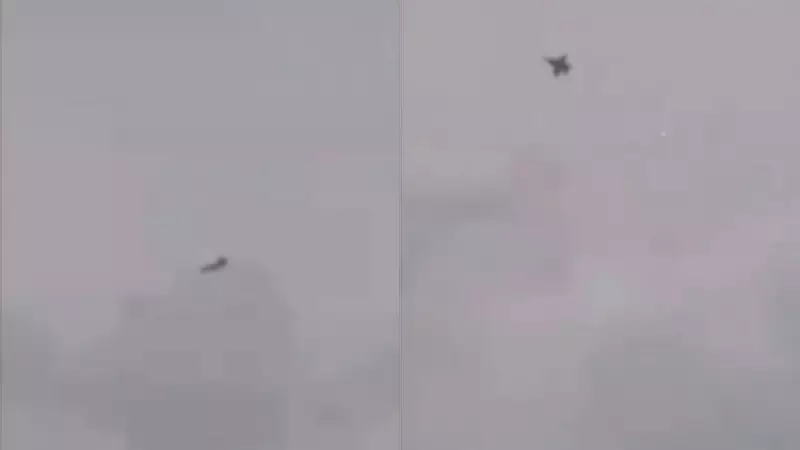
Iran's IRGC Announces Downing of U.S. F-18 Fighter Jet, U.S. Military Issues Denial
In a dramatic escalation of regional tensions, Iran's Islamic Revolutionary Guard Corps (IRGC) has claimed it successfully targeted and struck a United States F/A-18 fighter aircraft over the strategic port city of Chabahar. The announcement, made on March 25, 2026, stated that the operation was carried out using newly deployed advanced air defense systems, showcasing Iran's growing military capabilities in the area.
U.S. Central Command Firmly Rejects Iranian Claims
However, the United States military has categorically denied these assertions. U.S. Central Command (CENTCOM) responded swiftly on social media platform X, posting a clear statement that no American fighter aircraft have been shot down by Iran. The official CENTCOM account emphasized the falsity of the IRGC's report, underscoring the ongoing information war between the two nations.
The conflicting narratives emerged simultaneously on March 25, 2026, with Iran's state-affiliated media outlet Press TV amplifying the IRGC's claim through its Telegram channel and social media posts. This has created a cloud of uncertainty and heightened alertness in the already volatile Persian Gulf region.

Strategic Significance of Chabahar and Military Posturing
The location of the alleged incident, Chabahar, holds immense strategic importance. As Iran's only oceanic port, it is a critical hub for trade and military operations, often viewed as a counterbalance to Pakistan's Gwadar port. The claim of using new advanced air defense systems in this area suggests Iran is actively bolstering its defensive perimeter, potentially in response to perceived threats from U.S. forces in the region.
Analysts note that such announcements, whether factual or not, serve as a tool for psychological warfare and domestic propaganda, aiming to project strength and deterrence. The U.S. denial aims to maintain operational secrecy and prevent any perception of vulnerability.
Broader Context of U.S.-Iran Relations
This incident, albeit unconfirmed by independent sources, occurs against a backdrop of longstanding animosity between the United States and Iran. Key points of contention include:
- Iran's nuclear program and ongoing negotiations.
- U.S. sanctions and economic pressures on Tehran.
- Proxy conflicts in the Middle East involving both nations.
- Previous close encounters and skirmishes in international waters and airspace.
The rapid exchange of claims and denials highlights the fragile nature of communications and the risk of miscalculation that could lead to a direct military confrontation. Both sides are maintaining a high state of readiness, with the U.S. likely monitoring Iranian movements closely and Iran showcasing its defensive upgrades.
As of now, no visual evidence or independent verification has been provided to substantiate Iran's claim, leaving the international community to rely on the contradictory official statements. The situation remains tense, with global observers urging restraint and clarity to avoid any unintended escalation in this geopolitically sensitive zone.