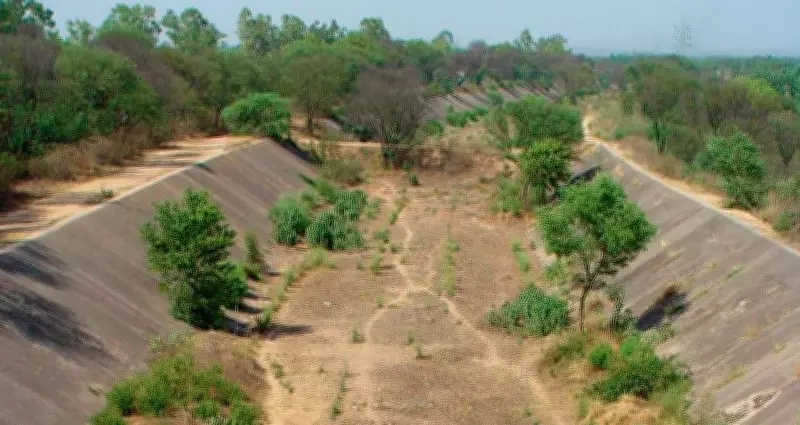
Nearly six decades after the reorganisation of the erstwhile Punjab in 1966, disputes over sharing of river waters among Punjab, Haryana and Himachal Pradesh remain one of the most contentious issues in North India. What was once a common river system serving a unified state has today become the centre of political, legal and emotional battles involving water rights, federalism and regional interests.
Kishau Dam Project Reignites Yamuna Water Claims
The latest chapter in the dispute has emerged around the proposed Kishau Dam project on the Tons river, a major tributary of the Yamuna, along the Himachal Pradesh-Uttarakhand border. Several Punjab-based groups and intellectuals have questioned why the state was not formally involved in discussions regarding the project. They argue that Punjab, being a riparian state to the Yamuna before the division of the erstwhile Punjab, should have been consulted and granted a share in Yamuna waters.
The issue has revived Punjab’s long-standing contention that it has been denied its rightful claim over Yamuna waters. While Haryana continues to press for completion of the Sutlej-Yamuna Link (SYL) canal to secure additional water supplies, Punjab maintains that the question of its share in Yamuna waters must first be settled.

Himachal Demands Permanent BBMB Membership
At the same time, Himachal Pradesh has intensified its demand for a permanent member in the Bhakra Beas Management Board (BBMB), citing its stake in the Bhakra project due to the merger of hill areas of Punjab into Himachal after reorganisation. The dispute reached a new peak in May last year when the Punjab Government, led by Chief Minister Bhagwant Singh Mann, openly challenged the BBMB over releases from the Bhakra Dam.
He participated in protests at the Nangal Dam and deployed Punjab Police personnel to prevent what the state termed the diversion of the state's share of water to Haryana. Workers of the ruling Aam Aadmi Party also staged demonstrations and allegedly gheraoed the BBMB Chairman in Nangal.
Legal Frameworks for Water Allocation
The distribution of waters from BBMB-controlled projects is governed primarily by two agreements. Under the Bhakra Nangal Agreement of 1966, the share of Sutlej waters was fixed with Punjab getting 57.88 per cent, Haryana 32.31 per cent and Rajasthan 9.81 per cent. Similarly, the Ravi-Beas Agreement of 1981-82 allocated Ravi and Beas waters as Rajasthan 49 per cent, Punjab 30 per cent and Haryana 21 per cent.
The BBMB is responsible for implementing these allocations and managing the operation of major reservoirs, dams and canal systems connected to the Sutlej and Beas. Water from the Bhakra project is released through the Bhakra Main Line Canal, commonly known as the Nangal hydel canal. From this system, water is supplied to Haryana through designated outlets, including the Sonda head. Haryana receives the water through its Narwana branch canal network and also releases around 500 cusecs for Delhi’s drinking water requirements.
The same canal system irrigates large parts of Punjab’s Malwa region and Rajasthan’s Ganganagar area. Similarly, waters of the Ravi and Beas are regulated through a network of dams and canals. Ravi waters collected at the Madhopur headworks are distributed through the Upper Bari Doab Canal (UBDC) system, while the Ravi-Beas link transfers water into the Beas basin before it reaches Harike. From the Harike headworks, the Rajasthan Feeder Canal carries water to Rajasthan.
Infrastructure Neglect and Groundwater Crisis
While political disputes dominate headlines, water experts point to a more fundamental problem, which is inadequate investment in infrastructure. Since the completion of the Bhakra canal system in the 1960s and the British-era UBDC network, only a few major canal projects have been undertaken in the region. Despite repeated debates over water shortages and interstate allocations, successive governments have largely failed to create new canal systems capable of optimising river flows.

The Punjab Government has initiated efforts to revive and rehabilitate old irrigation canals that had become dysfunctional after decades of reliance on groundwater. The availability of free electricity for tubewells encouraged excessive groundwater extraction, reducing dependence on traditional canal irrigation and leading to declining water tables across large parts of the state.
Flood Management and Seasonal Water Waste
Another major concern is the absence of long-term flood management projects on the Swan and Sirsa rivers, the two largest tributaries contributing to the Sutlej basin. During the monsoon season, both rivers can contribute nearly one lakh cusecs of water each to the Sutlej floodplains. Despite recurring floods and heavy expenditure on relief and embankment repairs, no comprehensive programme has been implemented to harness, store or regulate these seasonal flows.
Experts argue that taming these rivers through reservoirs, check dams, flood-control structures and diversion channels could not only reduce flood damage but also create additional water resources for irrigation and groundwater recharge. As Punjab, Haryana and Himachal continue to battle over existing river allocations, the larger challenge remains developing modern water infrastructure capable of conserving every available drop. Until that happens, disputes over sharing a limited resource are likely to persist, while vast quantities of water continue to flow unused during the monsoon and shortages reappear during the dry season.