

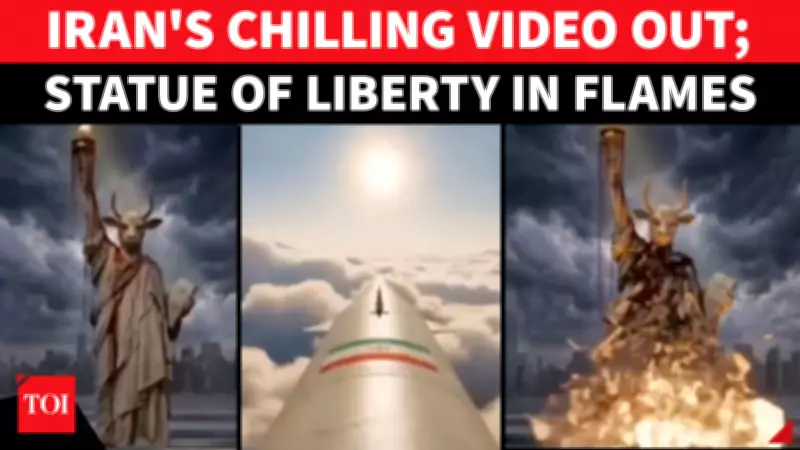
Iran's AI 'Revenge' Video Goes Viral: Statue of Liberty Missile Strike Imagery Sparks Global Alarm
A deeply unsettling and provocative AI-generated video has rapidly spread across the internet, reportedly originating from or being promoted by Iranian media outlets. This development has triggered strong international reactions and heightened concerns, occurring against a backdrop of escalating geopolitical tensions between the Islamic Republic of Iran and the United States of America.
Chilling Narrative and Symbolic Imagery
The video, ominously titled "One vengeance for all," constructs a powerful and haunting narrative through its visual composition. It opens by weaving together stark and emotionally charged imagery from several historical tragedies and contemporary conflict zones, explicitly aiming to highlight the profound human cost associated with warfare. The sequence includes symbolic references to:
- The atomic bombing of Hiroshima during World War II.
- The prolonged and devastating Vietnam War.
- The ongoing humanitarian crises in Yemen and Gaza.
- The conflicts in Afghanistan and Iraq following US military interventions.
This montage is deliberately designed to evoke a sense of historical grievance and collective suffering attributed to Western powers.

Shift to Iran and Dramatic Climax
The narrative then makes a distinct pivot, focusing specifically on civilian suffering within Iran, which the video suggests is a consequence of external pressures and sanctions. The production builds methodically toward a dramatic and controversial climax. This finale features the destruction of a digitally reimagined Statue of Liberty, depicted as being struck by a missile in a clear act of symbolic retaliation.
The entire clip employs a combination of stark, computer-generated imagery and heavy political symbolism. Its core message is one of retaliation and perceived historical injustice, framing the depicted violence as a form of poetic or digital vengeance for past and present conflicts.
Global Reactions and Context of Escalation
The viral spread of this AI-generated content has not occurred in a vacuum. It coincides with a period of significant military and diplomatic friction between Iran and the US-led coalition. Recent reports and alerts have detailed a series of escalatory actions, including:
- Iran demonstrating and reportedly utilizing its long-range missile capabilities, with strikes causing alarm in European capitals like Paris and London.
- Direct warnings from Iran's Islamic Revolutionary Guard Corps (IRGC) to US political figures, referencing historical precedents.
- Incidents involving Iranian-linked drones conducting surveillance and alleged attacks on US assets and allied nations in the Gulf region, including Kuwait and Saudi Arabia.
- Strikes reported near Tel Aviv and on Israeli cities, with Iran-linked groups implicated.
- Heightened rhetoric from US leadership regarding negotiations and military posture toward Iran.
Analysts suggest that this video represents a new front in information and psychological warfare, utilizing accessible artificial intelligence technology to produce and disseminate potent propaganda. The ease with which such realistic and inflammatory content can be created and shared globally presents a novel challenge for international relations and digital media governance.
The primary intent appears to be messaging—aimed at both domestic audiences in Iran and international observers—to project strength, articulate grievance, and counter Western narratives. However, its release amid real-world military posturing risks further inflaming an already volatile situation, potentially misunderstanding symbolic digital acts as signals of intent, thereby increasing the danger of miscalculation between the involved states.






