The year 2025 unfolded as a powerful testament to the resilience of India's wildlife, even as it laid bare the mounting pressures of pollution, habitat loss, and policy paralysis. Through the eyes of a conservationist, each month revealed a stark, beautiful, and often troubling portrait of nature's struggle to endure on a rapidly changing planet.
Scavenging Eagles and Nesting Turtles: A Tale of Two Habitats
In the opening month of the year, a Steppe eagle, a majestic migrant from Central Asia, was seen soaring over the Aravalli hills. Its flight path, however, led it to a grim foraging ground: the towering Bandhwari landfill near Gurugram. The bird's dive towards the garbage mountain highlighted a disturbing new reality where waste dumps become accidental feeding sites for raptors, with unknown consequences for their health.
By March, the scene shifted to the Rushikulya beach in Odisha, where a miraculous natural event was underway. Under the moonlight, hundreds of thousands of Olive Ridley turtle eggs lay buried in the sand, the result of a mass nesting event. In a world of warming oceans and crowded shipping lanes, the synchronized journey of these mothers to their ancestral beaches felt like a fragile victory for life itself.

The Wolf's Tale: From Genetic Fantasy to Vulnerable Reality
April brought global news of genetically modified "direwolf" pups in the US, a technological fantasy of de-extinction. This stood in sharp contrast to the plight of real wolves worldwide. By August, a visit to southern West Bengal revealed Indian grey wolves denning in abandoned World War II structures, living a shadowy existence on the fringes of forests and farms. The sighting of a striped hyena and an Indian eagle-owl in a landscape scarred by coal mine fires showed wildlife clinging to life in the most hostile environments.
The sobering official confirmation came in October: the Indian wolf was classified as vulnerable, with an estimated population of just 3,000 individuals nationwide—fewer than the country's tigers. This statistic framed a critical question for conservationists: could this lupine story be rewritten?
Policy Failures and Nature's Unyielding Spirit
The latter half of the year was marked by significant policy moments with disappointing outcomes. While India prepared for the COP30 climate talks and a global plastic treaty, the results were disheartening. By December, the climate COP had no meaningful outcome, and the plastic treaty had failed. Concurrently, a dangerous debate emerged in India about redefining the Aravalli hills based solely on height, threatening to strip protection from these ancient, ecologically rich ranges.
Amidst these failures, nature offered moments of breathtaking beauty. The lateritic plateaus of Maharashtra exploded in a carpet of wildflowers post-monsoon, challenging their wrongful classification as wastelands. In Corbett Tiger Reserve, a Supreme Court ruling against illegal structures and restrictive safari guidelines offered a glimmer of hope for habitat integrity.
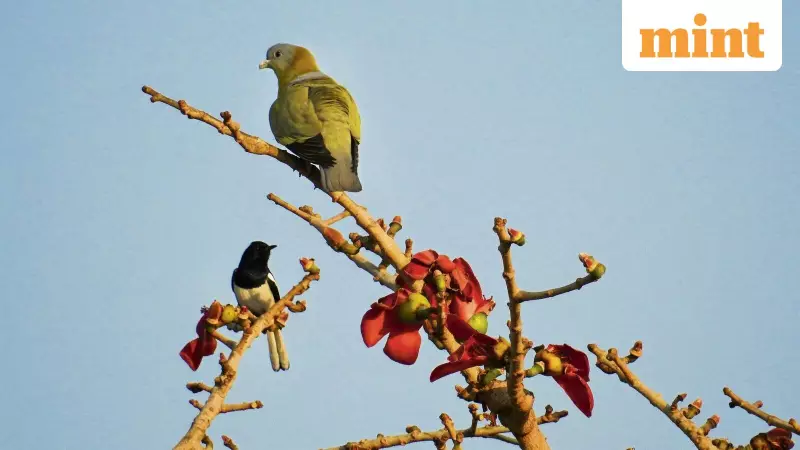
As the year ended with perilous air quality in North India, the call of an Oriental magpie-robin from a obscured semal tree served as a final, poignant metaphor. The bird's complex, ever-changing song symbolized nature's enduring creativity and fight for life. The lesson of 2025 was clear: wildlife is not merely surviving by chance; it is fighting with every resource it has. That relentless fight, the article concludes, shows us exactly what is worth fighting to protect. The need for action, both in policy and on the ground, has never been more urgent.