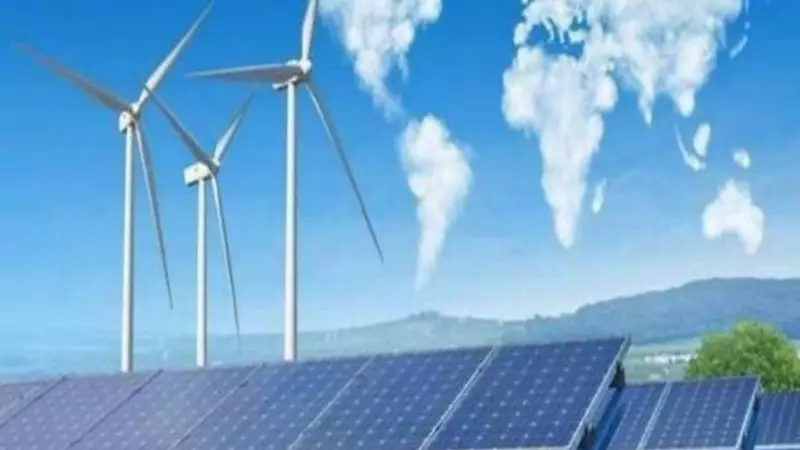
India's ambitious journey towards a greener energy future has successfully crossed a major milestone: building massive clean energy generation capacity. The country's combined solar and wind installations have now soared past 180 gigawatts, firmly establishing renewables as one of the most cost-effective sources for new power. However, the transition has entered a new, more complex phase. The primary constraint is no longer the ability to generate clean power but the urgent need to overhaul the systems that distribute and trade this electricity efficiently across the nation.
The Distribution Bottleneck: Discoms Under Financial Strain
At the heart of this challenge lie the country's electricity distribution companies, or discoms. Their financial and operational health is critical, yet they face persistent stress. National aggregate technical and commercial losses remain stubbornly high at around 16 per cent. Despite government initiatives like UDAY and the Revamped Distribution Sector Scheme (RDSS), many discoms continue to struggle with recovering their full costs.
This situation is exacerbated by the very success of renewable energy. As solar and wind penetration increases, the grid faces greater variability, making peak demand more expensive to manage. Paradoxically, some measures essential for the energy transition, like energy efficiency and rooftop solar, can threaten discom finances. This is because discoms often rely on selling high volumes of power, especially to commercial and industrial consumers who pay above-cost tariffs, to subsidise households and agriculture.
When these high-value consumers install rooftop solar panels or improve their energy efficiency, discoms lose their most profitable sales but must still serve subsidised customers. Their large fixed costs for network maintenance and long-term power purchase agreements remain, leading to a revenue squeeze. Under traditional, volume-based tariffs, selling fewer kilowatt-hours means less income to cover the same fixed obligations.
Smart Foundations and the Need for Automation
Recognising these challenges, India has embarked on a massive modernisation drive. A cornerstone of this effort is the rapid deployment of smart meters, with around 49 million already installed and millions more planned. This infrastructure is vital for a modern, responsive grid.
The government has also mandated time-of-day (TOD) tariffs to encourage consumers to shift usage away from expensive peak periods. However, price signals alone are insufficient. For TOD tariffs to be truly effective, consumers need the tools to respond automatically. Expecting households to manually manage their energy use in real-time is impractical.
The solution lies in pairing tariff reform with smart technologies like automated thermostats, smart electric vehicle chargers, and appliance-level controls. This automation can unlock demand response—a flexible, often lower-cost alternative to building new peaking power plants or storage for managing short-duration demand spikes.
Wholesale Market Reforms: Unlocking Nationwide Efficiency
The renewable challenge also has a geographical dimension. India's best solar and wind resources are concentrated in specific states, while major demand centres are often elsewhere. Although the physical transmission grid can move power, the market design remains fragmented.
Currently, the bulk of electricity supply is locked in long-term contracts, with discoms scheduling power from their own portfolios. Organised power exchanges, which could optimise dispatch based on lowest cost, account for only 7 to 9 per cent of total supply. This limits the country's ability to use the cheapest available renewable power nationwide.
Two major wholesale reforms are now seen as imperative. First, transitioning to a nationwide market-based economic dispatch system. A centralised framework would ensure power from the cheapest source—including renewables with near-zero marginal cost—is used first. The Central Electricity Regulatory Commission (CERC) estimates this could slash annual power procurement costs by roughly $1.6 billion while better integrating renewables.
Second, integrating India's vast fleet of captive power plants into wholesale markets. These plants represent a significant, underutilised source of flexible generation capacity. Bringing them into the market would boost competition, improve liquidity, and lower overall system costs.
Taken together, these retail and wholesale reforms have the potential to transform discoms from passive intermediaries into active optimisers of the grid. With the right incentives, discoms can leverage demand flexibility to manage peaks and improve reliability. More integrated national markets will ensure green electrons are used where they are needed most. The success of India's energy transition now hinges on these critical next steps in system design and market evolution.