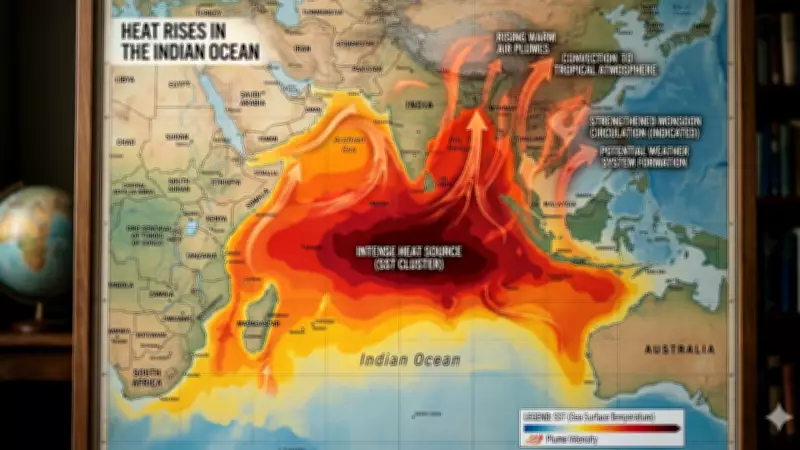
The Indian Ocean is overheating to potentially lethal levels due to marine heatwaves and rising sea surface temperatures, posing severe challenges for fish populations, coral reefs, marine ecosystems, and coastal communities, according to climate monitoring alarms.
Scientists studying the region report that warming in the Indian Ocean, including the Arabian Sea and Bay of Bengal, has reached ecologically unsustainable levels. Dangers include coral bleaching, reduced fish stocks, deoxygenation of waters, and disruption of marine food chains. Millions of people who rely on fishing and coastal resources face grave risks.
Indian Ocean Warming Intensifies as Marine Ecosystems Face Escalating Stress
An episode of abnormal heating is taking place in the Indian Ocean, detected by monitoring systems that have found a recurrence and spread of marine heatwaves in critical parts of the world's waters. A study titled "Marine Heat Waves in the Indian Ocean: A Major Climate Impact on Marine Microalgae" shows that large areas of the Arabian Sea and Bay of Bengal have experienced prolonged periods when sea surface temperatures were significantly above safe levels for marine life.

Experts caution that this unusual warming is not a temporary deviation that will correct itself. Instead, it is part of a long-term trend driven by global climate change. Rising water temperatures disrupt equilibrium, and warmer waters hold less oxygen, causing significant stress for marine life, reduced biodiversity, and altered food chains in oceans.
Coral Reefs in the Indian Ocean Face Bleaching and Long-Term Degradation
One of the most apparent effects of rising sea temperatures is the impact on delicate coral reef ecosystems, which rely heavily on maintaining specific temperature levels. Any fluctuation can cause coral bleaching, where corals expel the algae that provide them with sustenance and color.
When bleaching occurs continuously, reefs cannot recover, leading to massive coral deaths already witnessed in various locations across the Indo-Pacific region. Scientists studying climate change report an increase in global bleaching cases caused by high ocean heat. One scientific review stated that corals have experienced "severe stress due to continued ocean warming as a result of climate change." This problem affects not only the ecosystem but also humans, as reefs serve as natural coastal protection.
Fisheries Are Disrupted as Fish Move, Decline, and Coastal Incomes Weaken
Warming of the Indian Ocean also affects fish behavior and distribution, directly impacting coastal communities. Fish are highly sensitive to water temperature variations and begin shifting toward cooler or deeper areas to survive.
This shift reduces fish density in traditional fishing grounds, forcing fishermen to travel farther from the coast. Studies show that ocean warming has increased travel distances for fishing, making it more dangerous and expensive. Fishermen spend entire days in deep-sea fishing, suffering physical exhaustion and economic hardship.
Wider Ecological Imbalance Signals a Shifting Ocean System
Beyond coral reefs and fish populations, the wider Indian Ocean ecosystem is experiencing structural changes. Rising surface temperatures reduce nutrient mixing between different water depths, decreasing phytoplankton production, which forms the base of the marine food chain.
Scientists studying the Indian Ocean have observed an increase in the frequency and duration of marine heatwaves globally. Research on global climate indicates that warming of the upper ocean layers is driven by greenhouse gas emissions, making short-term reversal of these effects highly challenging.
Monitoring Systems Highlight Urgency for Climate Response
According to the Ministry of Environment, Forest and Climate Change, services like the Indian National Centre for Ocean Information Services (INCOIS) continuously monitor oceanic conditions and issue early warnings about potential coral bleaching and marine heat stress for preparedness.

However, specialists emphasize that ocean monitoring alone cannot solve the problem. Without measures to reduce emissions or improve marine environments, global warming will continue. The Indian Ocean case reflects a global trend of excessive heat being trapped in ocean waters, underscoring the ocean's role as a buffer and early-warning system for climate change.
The Indian Ocean is heating to critical temperatures, causing changes in marine organisms, bleaching coral reefs, and threatening millions of people living along its shores. With growing marine heatwaves and stressed ecosystems, the Indian Ocean stands at a turning point in its environmental destiny.