Against All Odds: Mukhi's Journey to Motherhood
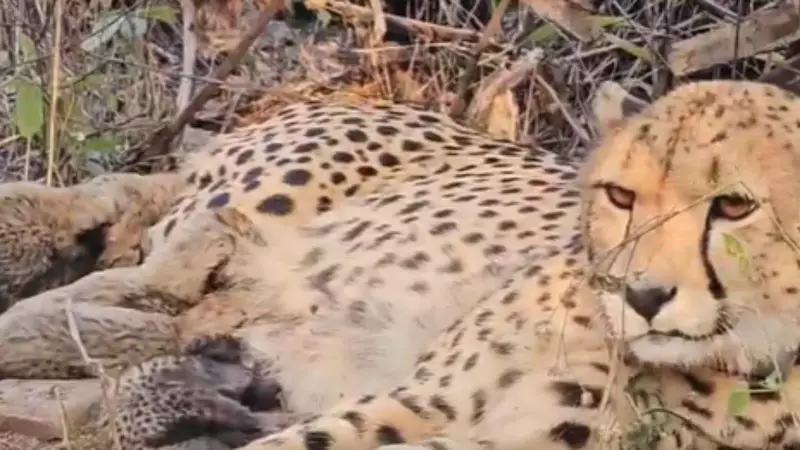
In a remarkable conservation success story, Mukhi - the first cheetah born in India after the species' reintroduction - has given birth to five healthy cubs at Madhya Pradesh's Kuno National Park. The announcement made on Thursday marks a significant milestone for India's ambitious cheetah reintroduction project.
Mukhi's survival story is nothing short of miraculous. Born on March 29, 2023, to Namibian cheetah Jwala, she was abandoned by her mother shortly after birth and lost all three siblings to extreme summer heat and dehydration. Mukhi emerged as the sole survivor from that litter, becoming the first cheetah cub successfully raised in India in decades.
The Surprising Pregnancy and Rehabilitation Journey
According to Uttam Kumar Sharma, Director of Kuno National Park and Project Cheetah, the pregnancy came as a complete surprise to park officials. "The Kuno staff did not plan for this," Sharma told The Indian Express. "Mukhi had just begun its rewilding exercise and was let out of the bigger enclosure."

The father of the cubs is believed to be one of three male cheetahs born to Asha, another cheetah at the park. Officials observed positive interactions between Mukhi and these males before deciding to release her into the wild area. The mating was unexpected since the male cheetahs were considered too young to have reached sexual maturity.
Mukhi's path to this point has been challenging. After being found weak and exhausted in May 2023, she required intensive hand-rearing by veterinary staff. She also suffered a serious injury to her right forelimb that needed over six weeks of treatment and rehabilitation.
The rehabilitation process involved introducing live prey like hares into her enclosure to stimulate and develop the hunting skills crucial for survival in the wild. Wildlife officials confirm that Mukhi has now completely rehabilitated and hunts small chital on her own.
Conservation Significance and Future Challenges
Madhya Pradesh Chief Minister Mohan Yadav described the successful reproduction as "a strong indicator of the species' adaptation, health, and long-term prospects in Indian habitats." He emphasized that this development strengthens optimism about establishing a self-sustaining and genetically diverse cheetah population in India.
However, conservationists remain cautiously optimistic. There are concerns about whether Mukhi, having been abandoned by her own mother and hand-raised by humans, will be able to properly impart hunting skills to her offspring. Sharma noted, "We will now focus on whether it will be able to impart its hunting skills to the offspring and their progress. It's too soon to comment on this."
The cheetah reintroduction project has shown promising growth. India currently has 34 cheetahs, including 10 adults and 24 cubs. This represents significant progress since the initial translocation of 20 cheetahs from southern Africa in two batches during 2022 and 2023, reviving a species that had been extinct in wild Indian habitats for decades.
Mukhi's transformation from an abandoned, struggling cub to a mother of five represents hope for India's wildlife conservation efforts and demonstrates the potential success of dedicated species reintroduction programs.