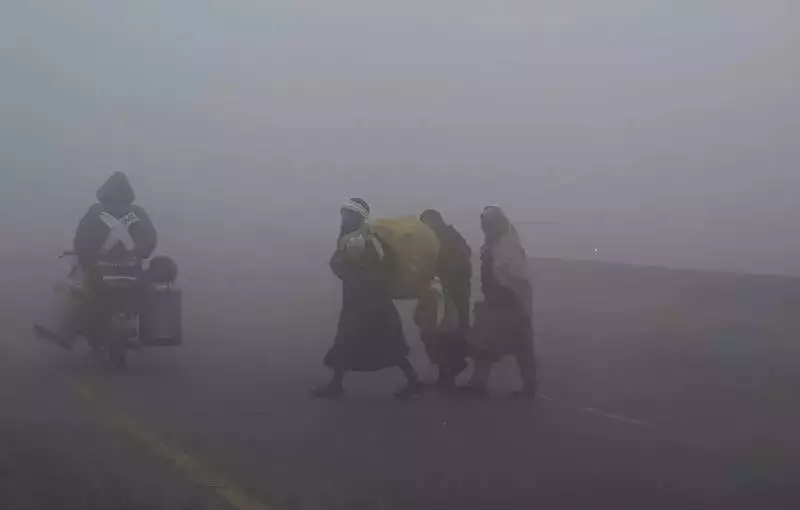
The India Meteorological Department (IMD) has issued a significant weather advisory for several northern states, warning residents of dense fog and an impending cold wave. The conditions are expected to severely impact daily life and travel across the region in the coming days.
Fog and Cold Wave Alert Details
According to the IMD, dense fog conditions during night and morning hours are very likely over isolated places in Punjab and Haryana until December 31. For Himachal Pradesh, the fog alert is in place until December 29. Concurrently, cold wave conditions are very likely in isolated pockets of Punjab, Haryana, and Chandigarh during December 25-27.
Early morning reports on Wednesday painted a stark picture of the situation. Zero visibility was recorded at Adampur, bringing traffic and normal activities to a standstill. Other critical visibility figures included:

- 100 metres at Pathankot in Punjab
- 20 metres at Bilaspur in Himachal Pradesh
- 70 metres at Sundernagar in Himachal Pradesh
- 100 metres in Chandigarh
Temperature Trends and Western Disturbance
The minimum temperatures have already dipped significantly. A few places in Himachal Pradesh recorded temperatures below 5°C, while many areas in Punjab and Haryana saw minimums in the range of 5°C to 10°C. The past 24 hours witnessed a falling tendency of 1-3°C at some locations in Himachal.
The IMD predicts a gradual fall in minimum temperature by 2-4°C over Northwest India during the next two days. No significant change is expected for the subsequent five days thereafter. State-wise, Punjab saw its average minimum temperature fall by 1.5°C compared to Tuesday, yet it remained 3.4°C above normal. Gurdaspur recorded the state's lowest minimum at 5.3°C. Haryana, conversely, noted a 0.8°C rise in average minimum, which was 2.5°C above normal, with Narnaul being the coldest at 5.4°C.
A western disturbance is also expected to influence the weather. Isolated to scattered rainfall and snowfall are likely over Himachal Pradesh on December 28 and 30, which could further affect road and air connectivity in the hill state.
Implications and Advisory
The persistent fog and dropping temperatures pose multiple challenges. The near-zero visibility conditions, especially in the early hours, severely disrupt road, rail, and air travel, increasing the risk of accidents. The impending cold wave from December 25 demands that vulnerable populations, including the elderly and homeless, take necessary precautions against the harsh weather.
Authorities advise commuters to exercise extreme caution, use fog lights, and check flight and train schedules before traveling. Residents are urged to stay warm and follow official health advisories to mitigate the effects of the cold wave. The situation remains dynamic, and further updates from the IMD should be closely monitored.