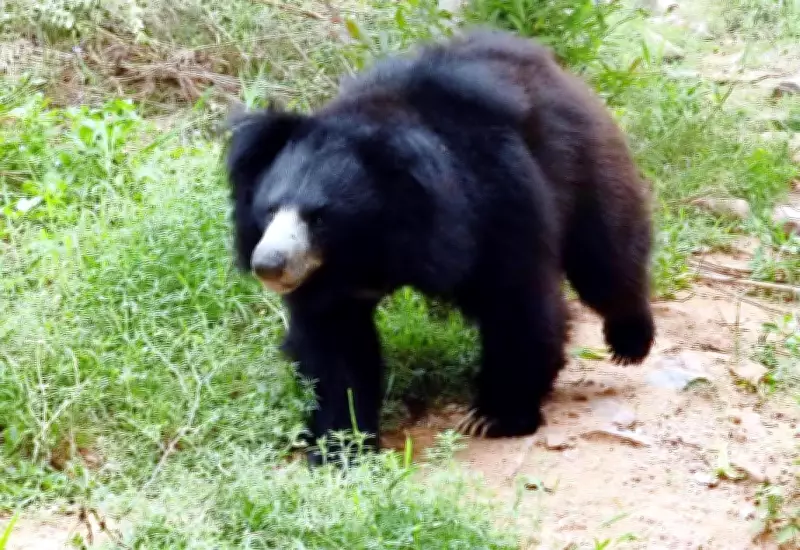
A new study has uncovered an unexpected role for sloth bears in the forests of Rajasthan: they are not just insect-eaters but also crucial seed dispersers. Research published in the journal Biotropica reveals that sloth bears in Kumbhalgarh and Todgarh-Raoli wildlife sanctuaries help regenerate forests by spreading seeds of various plant species through their droppings.
Study Methodology
The research, conducted by Utkarsh Prajapati and Vijay Kumar Koli of Mohanlal Sukhadia University, Udaipur, along with independent scientist K S Gopi Sundar, examined sloth bear scat to determine if seeds consumed by the animals remain viable after digestion. The team collected scat samples from the two sanctuaries and identified fruit species in the bears' diet. They then conducted germination and seedling survival experiments, comparing seeds from scat with those taken directly from fruits.
Key Findings
A senior forest official confirmed that seeds of several plant species remained viable after passing through the bears' digestive tracts. Species studied included Grewia flavescens, Cassia fistula, Diospyros melanoxylon, Phoenix sylvestris, Ziziphus nummularia, Cordia myxa, Ficus religiosa, and Lantana camara. Germination success varied among species, but the study demonstrated that seeds could survive digestion and sprout.

Germination Timing Differences
Notable differences emerged in germination timing. For Ziziphus nummularia, seeds from bear scat germinated earlier than those from fruits. Cassia fistula and Lantana camara seeds germinated only in the scat-derived group, while Cordia myxa germinated only in the natural seed group. Seedling survival after germination showed no significant difference between the two groups.
Ecological Implications
Researchers concluded that sloth bears function as endozoochorous seed dispersers, moving seeds away from parent plants over large foraging areas. However, the study noted a caveat: seeds of Lantana camara, an invasive shrub, germinated only in scat-derived seeds, suggesting bears may also spread invasive species. This highlights the complex role of sloth bears in ecosystem dynamics.