

In a race against time to understand and potentially reverse the catastrophic loss of the world's glaciers, a team of international scientists has undertaken a daring mission to one of the planet's most remote ice fields. Their target: the mysterious glaciers of Tajikistan's Pamir Mountains, which have stubbornly resisted the rapid melting seen across the globe.
The Hunt for the Pamir-Karakoram Anomaly
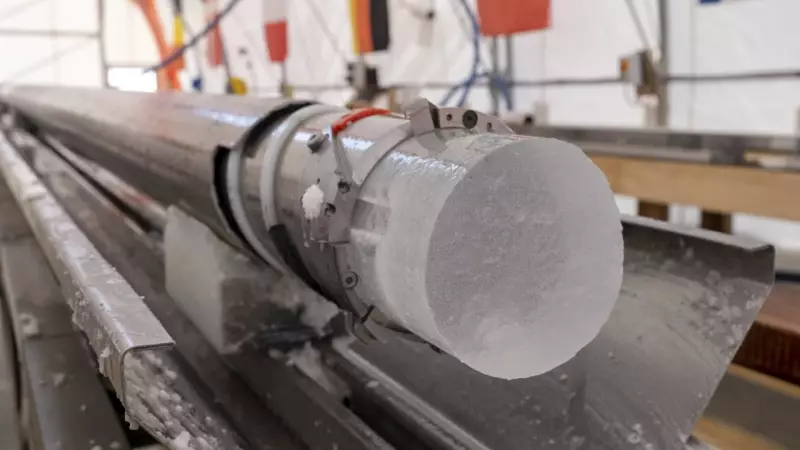
Earlier this year, Professor Yoshinori Iizuka from Japan's Hokkaido University, clad in an orange puffer jacket, led an expedition into the harsh, thin air of the Kon-Chukurbashi ice cap. At a staggering altitude of 5,810 metres (19,000 feet), his team drilled out two precious ice columns, each approximately 105 metres (345 feet) long. This site is the epicentre of a phenomenon baffling climate scientists: the "Pamir-Karakoram anomaly."
While glaciers from the Alps to the Himalayas are retreating at alarming rates, this is the only mountainous region on Earth where ice has not only held firm but has even grown slightly in volume. "If we could learn the mechanism behind the increased volume of ice there, then we may be able to apply that to all the other glaciers around the world," Professor Iizuka explained, acknowledging the ambitious hope of one day reviving lost ice.

The urgency of this work is underscored by a stark study published in Nature Climate Change, which warns that thousands of glaciers will vanish annually in the coming decades, with only a fraction remaining by 2100 if global warming continues unchecked.
Decoding Centuries of Climate Secrets
One of the extracted ice cores now resides in a secure underground sanctuary in Antarctica, preserved for future generations by the Ice Memory Foundation. The other was shipped to Professor Iizuka's lab at the Institute of Low Temperature Science in Sapporo. Here, scientists are meticulously dissecting the frozen archive.
Working in freezing storage facilities, sometimes at temperatures as "balmy" as minus 20 degrees Celsius, researchers like graduate student Sora Yaginuma carefully slice and analyse the cores. Each layer tells a story: clear ice indicates past melting and refreezing, low-density layers reveal historical snowfall, and cracks point to specific weather events.
"Information from the past is crucial," Iizuka emphasised. "By understanding the causes behind the continuous build-up of snow from the past to the present, we can clarify what will happen going forward." The team is hunting for clues like volcanic sulfate ions, which act as time markers, and water isotopes that reveal ancient temperatures. They hope the cores contain ice over 10,000 years old, despite a warm period around 6,000 years ago that likely melted much of the record.
A Global Legacy Locked in Ice
The analysis aims to solve the riddle of why precipitation increased in the region over the last century, countering global trends. While theories point to the area's cold climate or even agricultural water use in Pakistan creating more vapour, these ice cores provide the first scientific evidence to test such hypotheses.
Beyond climate, the ice holds a record of human impact. Scientists could trace how historical mining affected local air quality and weather patterns. "We can learn how the Earth's environment has changed in response to human activities," Iizuka noted.
The Hokkaido team expects to publish its first findings next year, involving "lots of trial-and-error" to reconstruct past climates. With the duplicate sample safely stored in Antarctica, this frozen time capsule will remain available for future scientists armed with new technologies and questions. For Professor Iizuka and his colleagues, the painstaking work is driven by a profound hope: that the secrets buried within Tajikistan's ancient ice may one day help protect glaciers everywhere.






