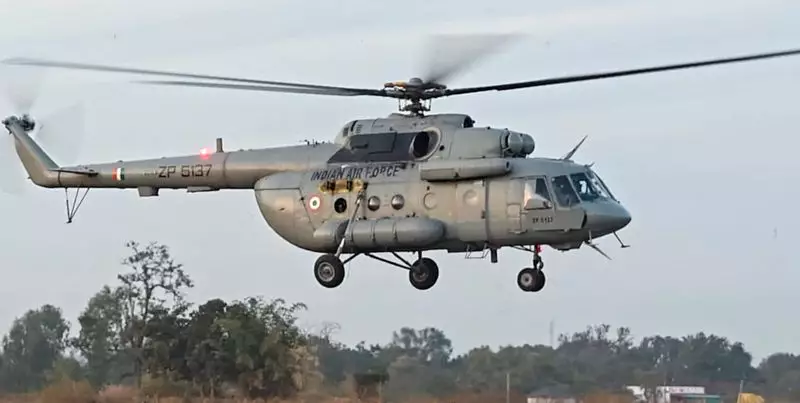
In a significant operation for wildlife conservation, the Indian Air Force (IAF) played a pivotal role in translocating a tigress from Madhya Pradesh to Rajasthan. The mission, aimed at bolstering the tiger population in Rajasthan's Mukundra Hills Tiger Reserve, was successfully executed using an IAF Mi-17 helicopter.
The High-Flying Conservation Mission
The operation commenced on the morning of April 26, 2024. The tigress, identified as T-127 and originating from the Pench Tiger Reserve in Madhya Pradesh, was the subject of this carefully planned move. She was tranquilized and transported by road from Pench to the Sukatra airstrip, located in the Seoni district of Madhya Pradesh.
At the airstrip, a waiting IAF Mi-17 V5 helicopter took charge. The big cat was securely loaded onto the aircraft for her aerial journey. The helicopter then flew her to Kota, Rajasthan, covering the distance efficiently and minimizing stress on the animal compared to a long road journey.

Destination: Mukundra Hills Tiger Reserve
The tigress's new home is the Mukundra Hills Tiger Reserve (MHTR) near Kota. Upon arrival in Rajasthan, she was transferred to a specialized transport vehicle for the final leg of the trip to the reserve. Officials confirmed she was released into an enclosed soft-release facility (boma) within MHTR on the same day.
This translocation is a strategic part of a broader tiger reintroduction program for Mukundra Hills. The reserve had seen its local tiger population dwindle in recent years. The arrival of T-127 follows the earlier translocation of a male tiger, T-104, from Ranthambhore Tiger Reserve to Mukundra Hills in 2022. The goal is to establish a viable breeding population within the protected area.
Coordinated Efforts for Big Cat Survival
The successful mission was the result of seamless collaboration between multiple agencies. The Madhya Pradesh Forest Department and the Rajasthan Forest Department worked in close coordination on the ground logistics and veterinary care. The National Tiger Conservation Authority (NTCA) provided the necessary regulatory approvals and guidelines for the inter-state translocation.
The involvement of the Indian Air Force was crucial, showcasing how defense assets can be leveraged for critical non-military, environmental causes. The use of an airlift significantly reduced the transit time, which is a vital factor for the well-being of a sedated wild animal.
This translocation marks a hopeful chapter for tiger conservation in Rajasthan. It demonstrates India's commitment to using advanced logistics and inter-state cooperation to manage its precious tiger meta-population. The nation's efforts to actively repopulate suitable habitats are essential for the long-term survival of the species. All eyes will now be on Mukundra Hills, with hopes that T-127 adapts well to her new environment and contributes to the resurgence of tigers in the region.