Human Resource Consumption Outpaces Earth's Renewal by 70-80%, Study Finds
A groundbreaking new study has sounded a stark alarm about humanity's unsustainable relationship with our planet. Published in Environmental Research Letters and highlighted by NDTV, the research reveals that human demand for resources has decisively crossed the threshold of what Earth can naturally regenerate and support.
The Critical Imbalance in Resource Consumption
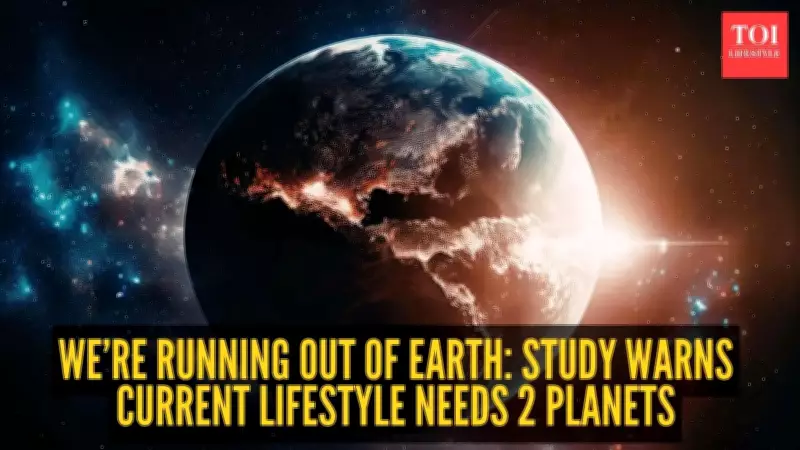
The core finding of the study is both simple and profound: humanity is currently consuming natural resources at a rate 70 to 80 percent faster than these systems can be replenished. This severe imbalance means that to sustain current global lifestyles indefinitely, we would require the equivalent of approximately 1.7 to 1.8 Earths. The planet, however, offers only one.
"The issue transcends mere population numbers," the research emphasizes. "It is fundamentally about the velocity at which we are extracting and utilizing what the planet provides. The simple reality is that the planet may not be able to keep up with the way humans are living today."

Historical Analysis and a Defining Turning Point
Led by Professor Corey Bradshaw of Flinders University, the study analyzed global population and consumption trends over more than two centuries. The historical data shows that for much of human history, population size and resource use existed in a relatively balanced state. However, this equilibrium was dramatically disrupted.
The research identifies the period following the 1950s as a major turning point. This era witnessed explosive population growth coupled with rapid industrialization and skyrocketing consumption patterns. Professor Bradshaw explained this pivotal shift, stating, "This marked the beginning of what we term 'a negative demographic phase.' It signifies that adding more people no longer correlates with faster economic or social growth in a sustainable manner."
Projected Population Peak and the Concept of Ecological Debt
Examining this negative phase, the study projects that if current trends persist, the global population is likely to peak between 11.7 and 12.4 billion people by the late 2060s or 2070s. This projection intensifies concerns, as the research makes clear that Earth is already under immense pressure.
"Our findings show we are pushing the planet harder than it can possibly cope," Bradshaw warned. "It cannot support even today's demand without major, systemic changes." This relentless pressure leads to what scientists call ecological debt, manifesting in severe global crises:
- Accelerated climate change
- Catastrophic loss of biodiversity
- Widespread deforestation
- Critical depletion of freshwater and mineral resources
Defining a Truly Sustainable Global Population
The study also calculated what a genuinely sustainable global population level might look like. According to Bradshaw, a population that allows everyone to live within ecological limits while maintaining comfortable, economically secure living standards is much lower than today's figure.
"Our calculations indicate a sustainable global population would be closer to about 2.5 billion people," he explained. "This is nearer to the population the world supported in the mid-twentieth century, before the great acceleration in consumption."
The Dual Challenge: Population Size and Consumption Patterns
A crucial insight from the research is that the sustainability crisis is not solely a function of how many people inhabit the Earth. Consumption patterns are an equally critical, if not more significant, driver.
The study highlights that a smaller population with extremely high per-capita consumption—a model characteristic of many wealthier nations—can exert far greater pressure on planetary systems than a larger population with modest, low-impact lifestyles. This places a particular responsibility on developed economies to lead by example.

The Path Forward: Urgent Action Required
The research underscores an urgent need for coordinated global action on two fronts: moderating population growth trends and fundamentally transforming consumption habits. "Smaller populations with lower, more mindful consumption create vastly better outcomes for both human societies and the planetary systems we depend on," Bradshaw stated.
He issued a call to action, noting, "The window to enact meaningful change is narrowing, but it remains achievable if nations demonstrate unprecedented cooperation. The choices we collectively make over the coming decades will irrevocably determine the well-being of future generations and the resilience of the natural world that supports all life on Earth."