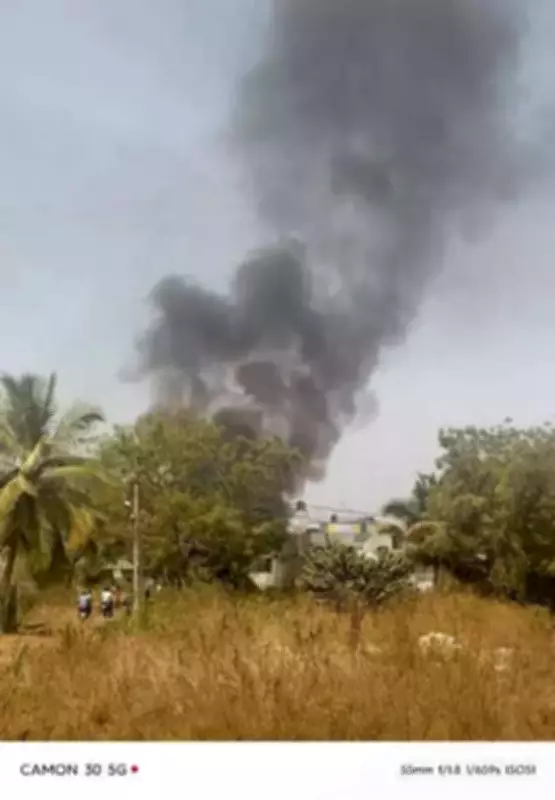
Hubballi-Dharwad Grapples with Escalating Garbage Burning Crisis
For over a week, the twin cities of Hubballi and Dharwad have been enveloped in a persistent, acrid smell of burning garbage, sparking outrage among residents and highlighting a severe environmental and public health issue. Despite a clear ban by the Supreme Court on open garbage burning, the practice is reportedly increasing across the region, with netizens taking to social media to document the smoke spreading in multiple areas.
Widespread Incidents and Resident Complaints
Recent incidents include fires set on dry garbage at a graveyard in Chanakyapuri, Ward 50, Hubballi, smoke observed along the HD BRTS corridor near Mythri Palace Hotel in Dharwad, and garbage burning reported at Rajeev Nagar in Hubballi on February 15. The situation is particularly dire in Hubballi, where areas like Karwar Road and the bypass are plagued by smoke around the clock.
On the Facebook page Dharwad Bonds, a heated discussion has erupted. Mohan Arkasali posted about smoke emanating from a garbage bin at a graveyard, urging officials to experience the conditions firsthand. Shweta Pujari responded, noting that action is only taken after garbage is completely burnt, with celebrities sometimes arriving later to document fire-dousing efforts. Other residents, such as Gururaj Alur, described how smoke has made life miserable near toll naka, Hosa Yellapur, while Sanjeev S Hiremath shared photos from Smartcity Mall and toll naka, highlighting breathing difficulties.

Causes and Health Risks of the Burning
With summer approaching, residents are burning dry herbs, bushes, and weeds to clear open spaces. Compounding the problem, HDMC pourakarmikas (sanitation workers) are also setting fire to garbage after cleaning their assigned areas. They claim a lack of vehicles for waste transport and instructions from superiors to burn the waste.
Dr. Sachin Hosakatti, a physician, warned that this practice poses a significant threat to human health and increases fire risks to nearby houses and shops. "Burning dry waste, combined with vehicular and industrial pollution, causes over 60% of respiratory disorders, compared to cigarette smoking which affects less than 50% of the population," he stated, emphasizing the ignorance of scientific guidelines and the Supreme Court verdict.
Historical Context and Official Response
Upendra Kukanur recalled a protest from two years ago where citizens blocked a main road over similar issues, criticizing the HDMC for its lethargic response. "The HDMC has not yet improved its mechanism to address such burning incidents," he asserted. Social activist Lingaraj Dharwad Shettar from Hubballi noted that pourakarmikas often burn garbage themselves, and when confronted, they explain they are forced by higher-ups, leading to targeting after complaints.
When contacted, the assistant to HDMC commissioner Rudresh Ghali mentioned that the commissioner is currently occupied with fire control operations at the Garbage Yard in Hosa Yellapur, Dharwad, indicating ongoing efforts but also the scale of the crisis.
Broader Implications and Community Action
This garbage burning crisis not only violates environmental laws but also exacerbates air quality issues, contributing to respiratory problems and reducing the quality of life for residents. The community's vocal protests on social media and past demonstrations underscore the urgency for effective waste management solutions and stricter enforcement of bans.
As the twin cities continue to choke on smoke, the call for accountability and action grows louder, with residents demanding immediate measures to curb this hazardous practice and protect public health.