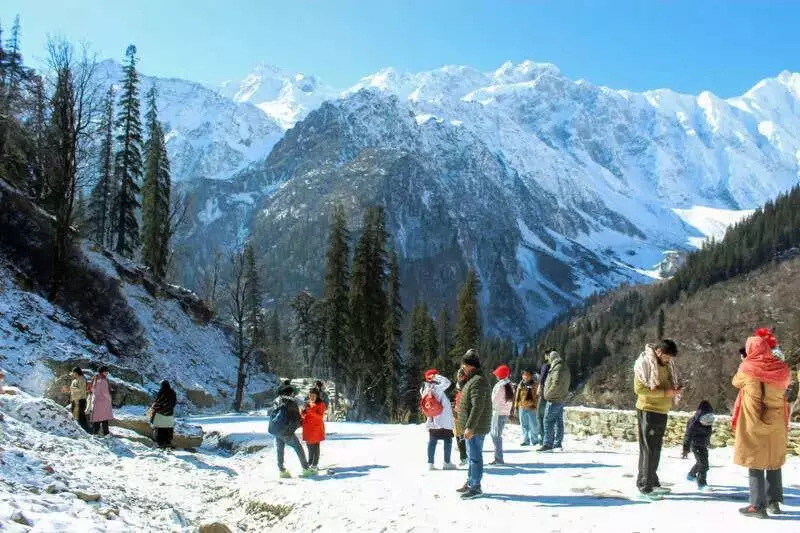
Himachal Pradesh remained firmly in the grip of a severe cold wave on Wednesday, with clear skies doing little to alleviate the biting chill. Despite dry conditions, a significant portion of the state recorded sub-zero temperatures, disrupting daily life and prompting weather warnings.
Mercury Plummets Across the Hill State
Out of 36 weather stations monitored across Himachal, a striking nine reported minimum temperatures below the freezing point. The remote town of Tabo in Lahaul Spiti district was the coldest spot, with the mercury plunging to a bone-chilling -9.4°C. It was closely followed by Kukumseri at -9.2°C and Kalpa at -5.2°C.
Other popular destinations were not spared from the freeze. Key tourist locations recorded the following lows:

- Narkanda: -2.9°C
- Reckongpeo: -2°C
- Manali: -1.4°C
- Kufri in Shimla: -1.3°C
- Solan: -1.1°C
- Seobagh near Kullu: -0.5°C
Widespread Chill and Persistent Fog Alert
The cold was not confined to high-altitude areas alone. Bhuntar near Kullu recorded 0.5°C, while Sundernagar near Mandi dipped to 0.7°C. The state capital, Shimla, logged a minimum temperature of 1.5°C. Other major towns experienced similar conditions:
- Dharamshala: 4.8°C
- Palampur: 2°C
- Mandi: 2.1°C
- Kangra and Bilaspur: 2.5°C each
- Hamirpur: 2.8°C
Adding to the woes, low-lying areas in Mandi and Bilaspur districts remained enveloped in dense fog throughout the morning and evening hours. The weather department has issued a warning, stating that these foggy conditions are likely to persist in parts of the state until January 11, potentially affecting visibility and transportation.
Dry Spell to Continue
In its forecast, the Meteorological Centre in Shimla predicted that the current spell of dry and clear weather will continue across Himachal Pradesh until January 13. While the sun may be out, the intense cold wave conditions are expected to prevail, urging residents and visitors to take necessary precautions against the harsh winter.
The widespread sub-zero temperatures highlight the severity of this winter season in the northern hill state, impacting everything from local agriculture to tourism and daily commutes.