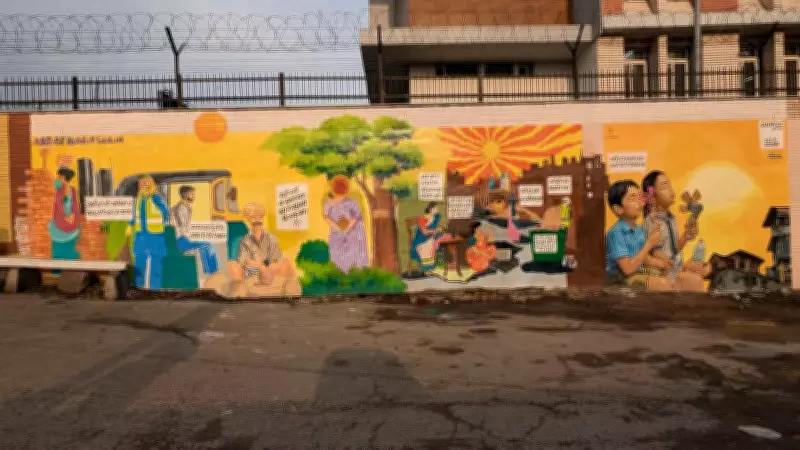
On International Labour Day, three community murals were unveiled in Sundar Nagri in East Delhi, telling the story of how extreme heat is reshaping the lives, bodies, and livelihoods of workers. One mural poses a poignant question: 'Badhti garmi, naa rukta kaam... kaho yeh naainsafi kiske naam?' (Increasing heat, unrelenting work... in whose name is this injustice?)
Greenpeace India's Delhi Rising Campaign
The murals are part of Greenpeace India's Delhi Rising campaign, which demands that heatwaves be formally recognised as a national disaster, adequate funding for heat action plans, and urgent implementation on the ground. The artworks depict the intensity of heat and its impact on outdoor labourers, home-based women workers, and children navigating deadly temperatures with minimal relief and protection.
Stories of Struggle and Coping
The murals also capture resourceful ways communities cope with extreme heat, including improvised cooling methods that make survival possible. They reflect how heat extends into classrooms and childhood, affecting students' ability to learn and rest. Developed through a participatory process, the murals emerged from conversations between artists, residents, and workers, where stories of exhaustion, fatigue, disrupted incomes, and collective coping were shared and translated into visual form.

What has emerged is more than art; it is a powerful assertion that workers are not merely affected by heat but are actively navigating, adapting, and responding to its impacts. 'These murals are not just art, they are evidence,' said Aakiz Farooq, climate and energy campaigner at Greenpeace India. 'Communities are already living through a crisis that policy is yet to fully acknowledge. Recognising heatwaves as a national disaster is a necessary first step, but it must be backed by funding, planning, and real action that protects workers on the ground.'
Farooq added: 'Extreme heat is being manufactured by fossil fuel companies whose emissions are warming our planet. Workers are paying for that with their health and their livelihoods. Polluters must be held accountable. Heat must be declared a national disaster, and it must be funded as one.'
Worker's Perspective
Mohommad Zaheer, a Sundar Nagri resident and worker who contributed to the murals, said: 'Heat affects our bodies, our work, and our homes. It makes our body inactive, drained, and impacts our income. We are not able to sleep properly even at night, as in recent years it feels too hot during night too. These walls now show our reality and the small ways we try to cope every day.'
Artists' Collaboration
Artists Harit Gulia, Shipra Rani, and Manmauji, along with team members Ravi and Anurag Kumar, shared: 'This was about listening and co-creating. Art became a way to translate lived experiences into something visible and undeniable. These murals carry stories of struggle, but also of strength and solidarity.'
As Delhi faces increasingly intense and prolonged heat conditions, initiatives like this aim to push the conversation towards accountability, with workers' safety at the center. On May Day, workers in Sundar Nagri used art to call for safer conditions, structural support, and urgent climate accountability.