

Heat Wave Intensifies in Mysuru and Chamarajanagar Districts
Districts traditionally celebrated for their mild and pleasant climates, Mysuru and Chamarajanagar, are currently experiencing a severe and unprecedented heat wave. Temperatures have escalated dramatically across various taluks, disrupting daily life and raising significant environmental and health concerns.
Record Temperatures and Harsh Conditions
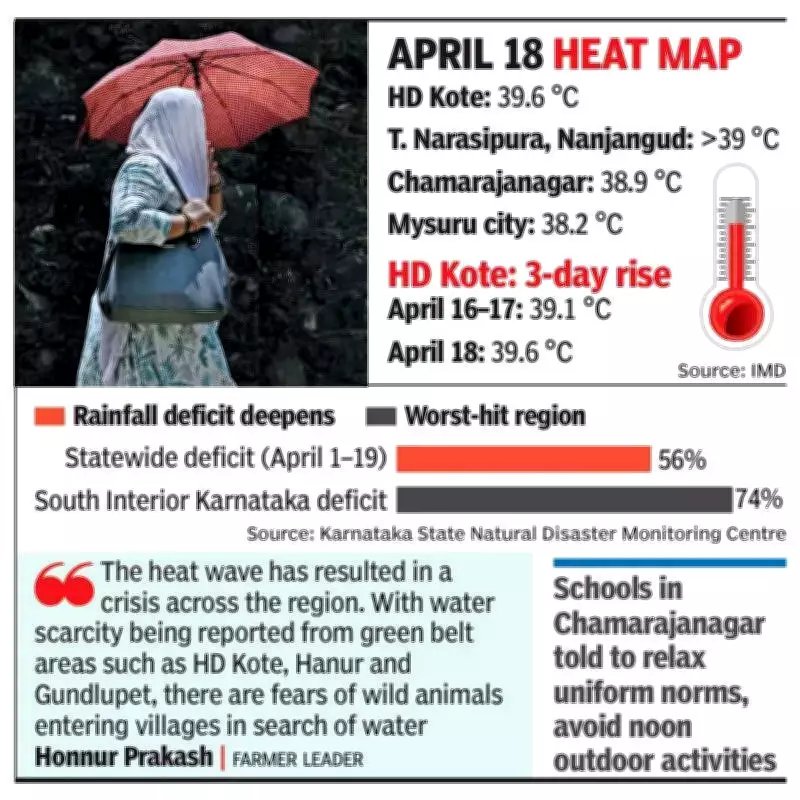
On Saturday, April 18, HD Kote taluk recorded a maximum temperature of 39.6°C, marking one of the highest readings in recent years. Residents across the region report that the intense heat during noon hours has become nearly unbearable, forcing many to alter their routines and seek shelter indoors.
Kamalakar H, a prominent green activist from Mysuru, highlighted the severity of the situation. "For the first time in recent years, the weather has turned extremely harsh. The impact of poor pre-monsoon rainfall is affecting everyone, from urban dwellers to rural communities," he stated, emphasizing the broader climatic challenges contributing to the heat wave.

Water Scarcity and Wildlife Concerns
The heat wave has exacerbated existing water scarcity issues, particularly in green belt areas such as HD Kote, Hanur, and Gundlupet. Farmers' leader Honnur Prakash expressed deep concerns about the situation, noting that dwindling water sources are prompting wild animals to venture into villages in search of hydration, posing risks to both human and animal populations.
This development underscores the interconnectedness of climate events and local ecosystems, with potential implications for agriculture and wildlife management.
Administrative Measures and School Adjustments
In response to the heat wave forecast, the Chamarajanagar district administration has implemented proactive measures to protect public health, especially among vulnerable groups like students. Schools and colleges have been directed to relax uniform requirements, making blazers and ties optional to reduce heat-related discomfort.
Educational institutions are also advised to avoid outdoor activities during peak noon hours and to actively spread awareness among children about essential heat wave precautions. These steps aim to mitigate the risks of heatstroke and other heat-related illnesses, ensuring safety in academic settings.
Broader Implications and Community Response
The ongoing heat wave in Mysuru and Chamarajanagar serves as a stark reminder of changing weather patterns and their direct impact on regional livelihoods. As temperatures continue to rise, community members and authorities are urged to adopt sustainable practices and preparedness strategies to cope with such extreme conditions in the future.






