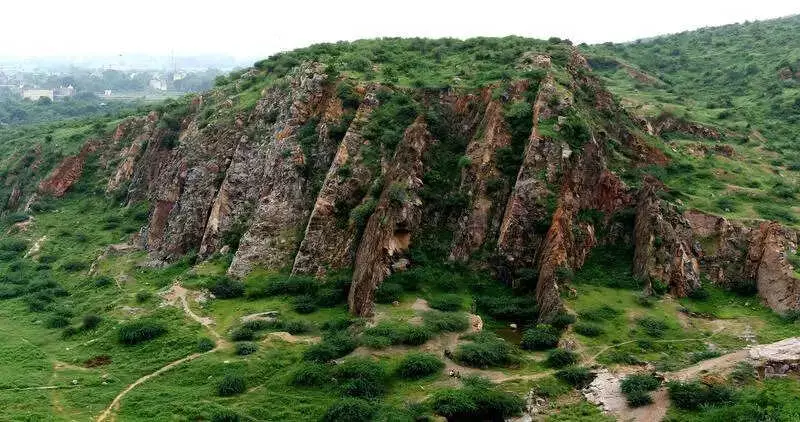
In a significant move for environmental protection, the Haryana government has reaffirmed its commitment to preserving the ecologically vital Aravali range. State Environment, Forest and Wildlife Minister Rao Narbir Singh announced on Thursday that a detailed action plan is being implemented to achieve this goal through the ambitious Haryana Aravali Green Wall Project.
A Shield Against Desertification: The Aravali's Crucial Role
Minister Rao Narbir Singh emphasized the immense ecological significance of the Aravalis for Haryana. He stated that the mountain range acts as a natural barrier against desertification and is a vital source of biodiversity, water security, and climate balance. The minister highlighted its crucial functions in groundwater recharge, improving air quality, mitigating climate change impacts, and supporting livelihoods in the state's arid and semi-arid regions.
The 2030 Roadmap: Haryana Aravali Green Wall Project
The cornerstone of this conservation drive is the Haryana Aravali Green Wall Project, which focuses on addressing major environmental challenges such as desertification, land degradation, and drought. A detailed action plan has been prepared to implement this project by the year 2030. The state is committed to cooperation with all other Aravali states, including Rajasthan, Gujarat, and Delhi, for a unified effort.

Singh pointed to the Gurugram Aravali Biodiversity Park as a successful model of ecosystem restoration. This project was declared India's first OECM (Other Effective Area-Based Conservation Measure), validating global guidelines set by the International Union for Conservation of Nature (IUCN).
Grassroots Involvement and Innovative Schemes
The government is also focusing on community participation and innovative schemes to bolster conservation. To connect youth with the cause and generate local employment, Van Mitras have been appointed at the village level across the state.
In a unique initiative, the Pran Vayu Devta Yojana provides an annual pension of Rs 2,500 for trees older than 75 years. Furthermore, to improve urban air quality and prevent desertification, the state is establishing Oxy Vans as part of its comprehensive green strategy.
This multi-pronged approach underscores Haryana's dedicated push to secure the future of the Aravali ecosystem, combining large-scale project management with community-driven conservation and novel welfare schemes for the environment.