Gurgaon Launches Comprehensive Construction Waste Tracking Initiative
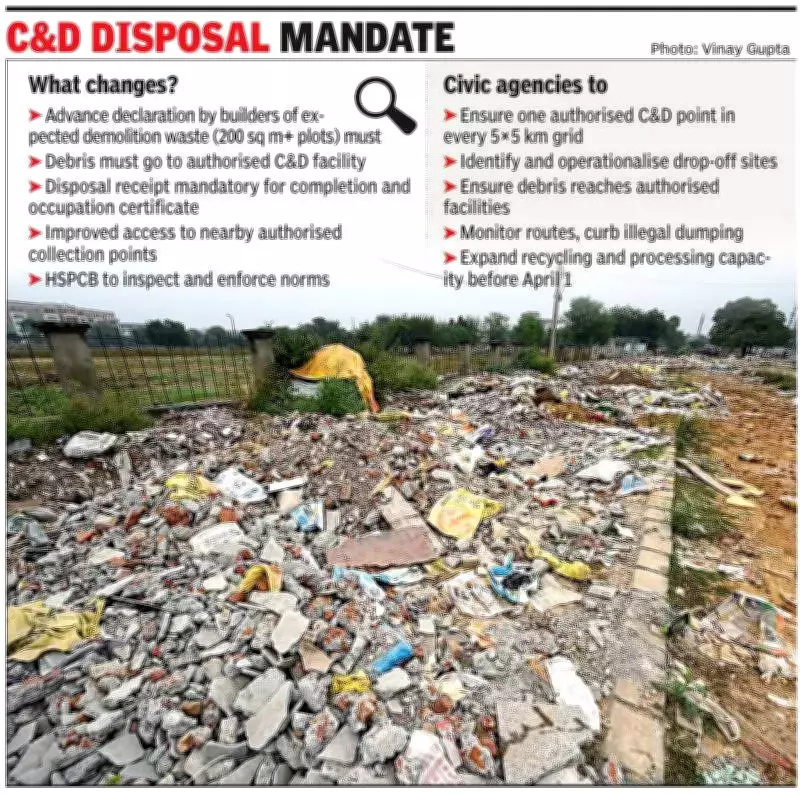
In a significant environmental policy shift, Gurgaon is implementing a mandatory system requiring complete traceability for every kilogram of construction and demolition (C&D) waste generated within the city. Starting April 1, all construction, renovation, or demolition projects on plots measuring 200 square meters or larger must provide detailed documentation showing exactly where their waste materials have been disposed.
New Regulatory Framework for Waste Accountability
The Commission for Air Quality Management (CAQM) has issued comprehensive directions that fundamentally change how construction debris is managed in the Delhi-NCR region. Under the new regulations, demolition waste must be accounted for twice during the building process: once before construction commences and again before a structure can be legally occupied.
This system effectively eliminates the long-standing practice of illegally dumping debris along roadsides, vacant plots, or forest edges, which has contributed significantly to urban pollution and environmental degradation in the region.

Documentation Requirements for Builders and Homeowners
At the plan-approval stage, all builders and homeowners must declare the estimated amount of debris their project will generate. A Haryana State Pollution Control Board (HSPCB) official explained the new procedural requirements: "If demolition forms part of any construction project, the waste must be transported to an authorized C&D collection or processing facility. The formal receipt from this facility becomes a critical document not only for initiating construction but also for obtaining completion and occupancy certificates."
The official emphasized that even completed structures cannot be legally occupied unless this waste disposal paperwork is properly documented and verified, creating a clear compliance trail throughout the construction lifecycle.
Infrastructure and Implementation Responsibilities
The new regulations place substantial responsibilities on government agencies alongside private developers. To ensure practical compliance, CAQM has directed Gurgaon's civic and planning bodies to establish at least one authorized C&D waste collection point within every 5km by 5km grid across the city.
This infrastructure requirement means the Municipal Corporation of Gurgaon (MCG) and other development authorities must:
- Identify appropriate locations for waste collection facilities
- Officially notify these designated sites
- Establish necessary infrastructure for regular collection, storage, and processing
- Ensure environmentally sound transportation and disposal procedures
The presence of designated drop-off facilities throughout the city grid effectively removes historical justifications for illegal dumping in open spaces.
Environmental Impact and Expert Perspectives
Construction and demolition dust represents a year-round source of particulate pollution in urban centers like Gurgaon, yet enforcement has traditionally been weak due to fragmented responsibility across multiple agencies. Anumita Roychowdhury, executive director at the Centre for Science and Environment, commented on the regulatory shift: "Linking waste disposal directly to building approvals and completion certificates creates a clear compliance trail and makes local authorities accountable alongside builders. This represents a crucial step toward addressing the environmental consequences of unregulated construction activities."
Digital Tracking System for Enhanced Oversight
To strengthen regulatory oversight across the National Capital Region, the new directions call for a collaborative digital tracking system to be developed jointly by the governments of Haryana and Delhi. This technological solution will feature:

- Geo-tagged waste collection points throughout the region
- GPS-tracked vehicles transporting construction debris
- Complete digital documentation for every waste transport trip
Each debris transport will leave a comprehensive digital trail from its origin plot to its final disposal facility. Missing waste, route deviations, or unexplained gaps in the disposal chain can be flagged in real time, making it substantially more difficult to dispose of construction materials through unauthorized channels.
Enforcement Mechanisms and Pollution Control
Primary regulatory and enforcement responsibilities will rest with the Haryana State Pollution Control Board (HSPCB), which will monitor multiple aspects of the new system:
- Functionality of waste collection points and processing facilities
- Compliance with environmental norms for dust suppression and runoff control
- Proper receipt and processing of debris according to established rules
The HSPCB official outlined enforcement capabilities: "We will have authority to take action against illegal dumping activities, including issuing formal notices and imposing environmental compensation charges. Additionally, C&D processing plants will fall under our regular inspection regime, requiring them to comply with established air and water pollution standards."
For a city where construction debris has historically accumulated along highways, drainage systems, and the Aravali foothills, these comprehensive regulations place the responsibility for closing environmental loopholes squarely on municipal systems and regulatory bodies.