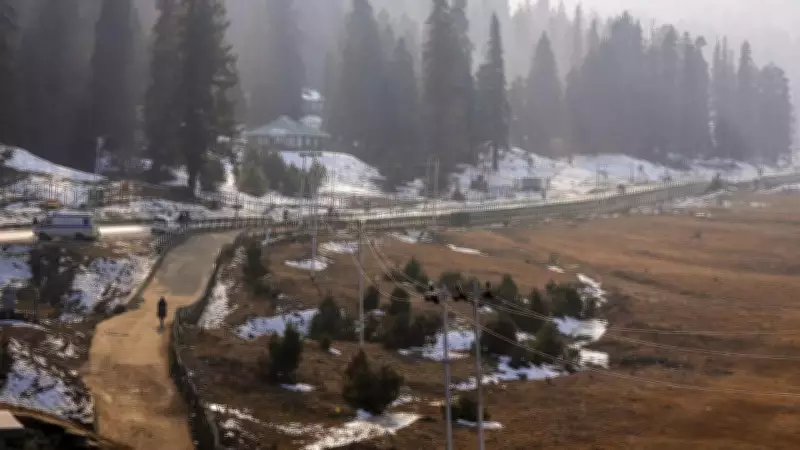
SRINAGAR: Gulmarg's glittering slopes, once blanketed for months, now flicker between white and bare. Seasons shrink. Thaws bite. People ask: Where are the snows of yesteryear? The future of India's premier ski resort looks increasingly like it is skating on thin ice — and the government is racing to keep it from sliding off course.
Plans are moving fast. Artificial snow. Synthetic slopes. A full rethink of how skiing survives in a warming Kashmir. The push comes from a hard truth. Chief Minister Omar Abdullah, who also handles tourism, warned last December that erratic snowfall could turn Gulmarg's skiing legacy into memory. Europe already leans heavily on artificial snow. Japan has reimagined infrastructure. Kashmir cannot afford to get out over its skis, he had said.
The goal is blunt: cut reliance on natural snowfall and stretch skiing into a four-season activity. The J&K Cable Car Corporation Ltd has invited bids to bring in consultants for a detailed project report and tender documents for an artificial snow-making system at Kongdori, a bowl-shaped valley about 4.5 kilometers from Gulmarg bus station. The deadline for submissions is May 2.

A parallel tender seeks plans for an all-weather artificial ski surface, expansion of drag-lift slopes, and installation of a covered "magic carpet" — a conveyor-belt-like lift that gently carries skiers, beginners, and even snow tubes uphill without the need for poles or harnesses. That bid closes May 13.
Official documents outline a technical deep dive before any rollout — meteorological, hydrological, topographical, and geotechnical studies to map viability. Foreign firms can join, but only through Indian-registered offices or partnerships led by domestic companies.
On the ground, changes could be sweeping. The existing drag-lift slope — narrow, single-use, snow-dependent — would be widened and segmented into lanes for skiers, snowboarders, and snow tubers, separated by certified safety nets. Synthetic turf would allow gliding even when snow refuses to fall. The covered conveyor would move crowds efficiently, cutting queues and easing access for novices.
Numbers are telling. Gulmarg once boasted 100 to 120 skiable days a year, with steady snow from December through March. The past decade and a half has rewritten the script — late snowfall, mid-season melts, thinning snow base at lower altitudes, and early shutdowns. The tourism economy feels the squeeze. Ski schools shorten schedules. Hotels hedge bets. Adventure operators juggle uncertainty.
Artificial snowmaking offers a buffer — machines that spray fine water droplets into cold air to crystallize into snow, building and maintaining a skiable base. Synthetic surfaces extend usability beyond winter, ensuring slopes do not sit idle. Still, stakes remain high. Costs, environmental balance, water use, and long-term climate trends will shape success. Technology can buy time — not rewrite weather. Gulmarg's slopes may yet hold. But a question lingers in cold mountain air — not just how to ski, but how long winter itself will stay.