
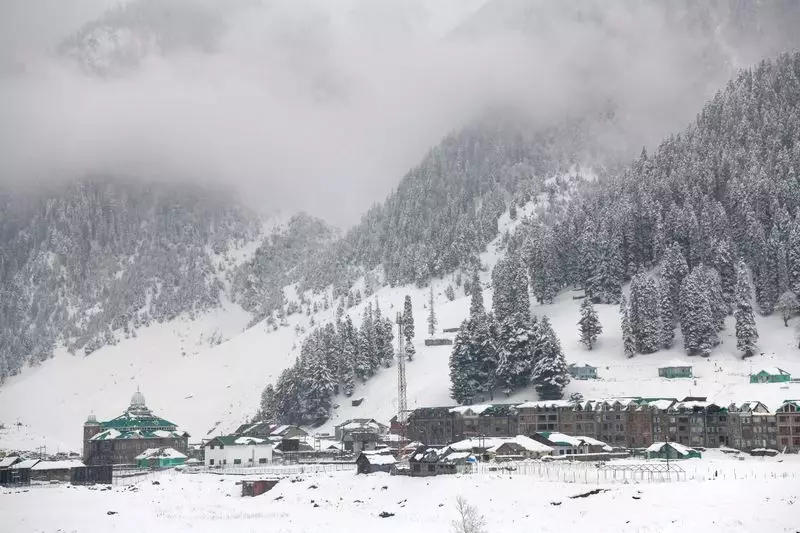
The Kashmir Valley woke up to a distinctly colder morning on Thursday as minimum temperatures took a significant dip across the region. The famous ski-resort of Gulmarg emerged as the coldest recorded place, with the mercury plunging to a biting -5.4 degrees Celsius.
Gulmarg Leads the Chill Factor
According to data from the meteorological department, the drop in temperature was widespread. While Gulmarg faced severe cold, other parts of the valley also experienced a sharp decline. The summer capital, Srinagar, recorded a minimum temperature of 3.3 degrees Celsius, which is notably below the average for this time of the season. This reading was over a degree lower than the 4.5 degrees Celsius recorded on the previous night.
Widespread Cooling Across the Region
The cold wave was not confined to just one or two locations. In the nearby Qazigund area, which serves as the gateway town to the valley, the minimum temperature settled at 2.4 degrees Celsius. The town of Kokernag in the south recorded 2.8 degrees Celsius, while Pahalgam, a popular tourist destination, registered a low of 0.2 degrees Celsius. The mercury in Kupwara district in the north dipped to 2.0 degrees Celsius.
The meteorological department has forecast that the weather is likely to remain mainly dry across Jammu and Kashmir over the next few days. Residents and tourists are advised to brace for continued cold conditions, especially during the night and early morning hours.
Implications for Residents and Tourism
This sudden dip in temperatures marks a clear intensification of winter's grip on the Himalayan region. The conditions are particularly significant for Gulmarg, where the sub-zero temperature is a positive indicator for winter sports enthusiasts and the local tourism industry, which relies on snowfall and cold weather for skiing and other activities.
For the general population in the valley, the drop necessitates increased use of heating arrangements and winter clothing. The dry weather forecast, however, means there is no immediate prediction of rain or snow that could disrupt transportation or daily life, offering some respite amidst the chill.