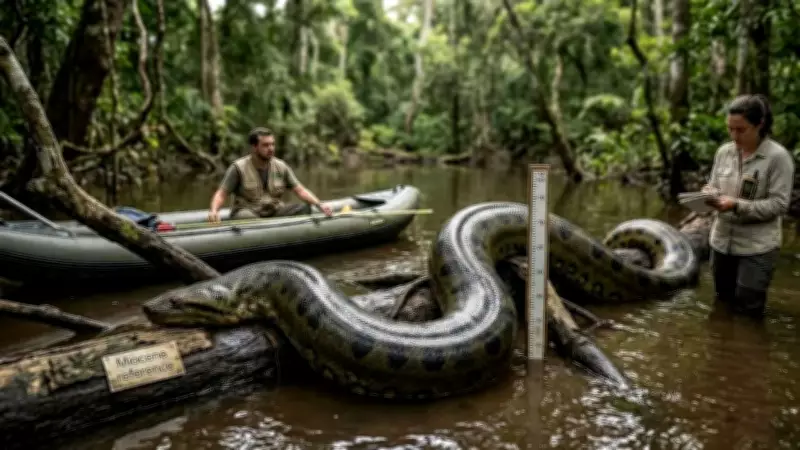
Green Anaconda's Evolutionary Stasis: Unlocking the 12-Million-Year Secret
The remarkable success of the Green Anaconda can be attributed to a phenomenon known as evolutionary stasis, where this species has remained largely unchanged for millions of years. According to paleobiological studies published in leading herpetology journals, the anaconda lineage achieved its colossal proportions during the Miocene epoch, approximately 12 to 23 million years ago. This period was characterized by extensive geological transformations in South America, which created vast, stable tropical wetland systems. These environments provided the perfect conditions for the anaconda to evolve into a semi-aquatic apex predator, exploiting the abundant resources without the constraints faced by terrestrial animals.
The Miocene Origin and Wetland Adaptation
Research from the National Centre for Biotechnology Information (NCBI) indicates that the common ancestor of modern Giant Anacondas, Eunectes murinus, thrived in these wetland habitats. Unlike terrestrial creatures, which are limited by gravity and metabolic factors in attaining extreme body mass, the semi-aquatic nature of the anaconda allowed it to grow to immense sizes. By floating in water, it could support its weight, enabling it to become an ambush hunter capable of overpowering virtually any prey in its ecosystem. This adaptation marked a key evolutionary milestone, setting the stage for the species' long-term stability.
Why the Anaconda Stopped Evolving
The concept of morphological stasis, as described by the Smithsonian Tropical Research Institute, explains how the Green Anaconda reached an optimal state where its size and environment achieved a perfect balance. Once it evolved into an enormous semi-aquatic ambush predator, there was no further evolutionary pressure to change. Its design, refined over millions of years, proved to be the most effective strategy for survival in the Amazonian wetlands. Natural selection ceased to drive alterations, as any significant modifications could compromise its fitness in this specialized niche.

Genetic Evidence of a Fossilized Body Plan
Genetic data stored in NCBI databases supports the idea of evolutionary stasis, revealing that the anaconda's genome has remained relatively unchanged for millions of years. The genomic sequences show minimal alterations in genes controlling skeletal structure and body mass, indicating that the species has reached a genetic plateau. This fossilized body plan suggests that large genetic mutations would likely reduce survival fitness, reinforcing the anaconda's arrested evolution. Thus, the Green Anaconda continues to live much as it did when it first evolved to its current form, embodying a living relic of ancient lineages.
In summary, the Green Anaconda's giant size and evolutionary stasis are deeply rooted in the Miocene epoch's environmental conditions and its unique adaptations. Through a combination of paleobiological insights and genetic research, scientists have unraveled the 12-million-year secret behind this apex predator's enduring success, highlighting how it mastered its niche and halted further evolution.