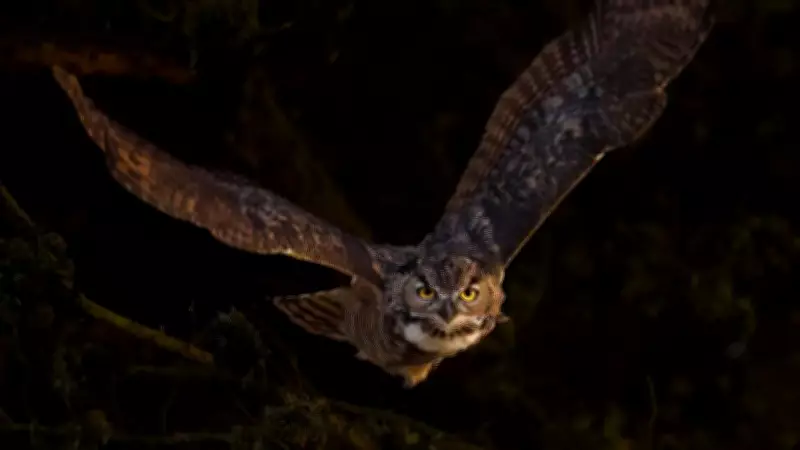
The Surprising Scale of Great Horned Owls
Great horned owls are among those birds that people believe they understand until encountering one up close. With their large, penetrating eyes, distinctive ear tufts, and a formidable, almost feline presence, these raptors command attention. Their substantial size frequently astonishes observers, particularly when they are discovered perched silently in a tree during twilight hours.
Adaptable Predators Across the Americas
These remarkable owls inhabit an extensive range throughout the Americas, demonstrating an exceptional ability to adapt to nearly any environment. Wildlife experts confirm they rank among the most widespread owl species in the region. Yet, the most common inquiry remains straightforward: how large do great horned owls actually grow, and what is their wingspan measurement in reality? The response proves more nuanced than anticipated, varying according to sex, geographical location, and subspecies classification.
Great horned owls consistently exceed most people's expectations regarding dimensions, especially when witnessed in person rather than through photographs. Their robust bodies, expansive wings, and composed yet powerful demeanor create an imposing figure. Their size, wingspan, and virtually silent movement combine to establish them as one of nature's most efficient aerial predators.

Detailed Dimensions: Length, Weight, and Regional Variations
Great horned owls are far from delicate forest birds. They are substantial, heavily-built raptors. Most mature individuals measure between 18 and 25 inches in total length. This approximates the size of a small hawk, potentially appearing even larger when observed fully extended on a branch.
Weight measurements reveal particularly interesting patterns. These owls can weigh as little as 2 pounds, yet some females reach approximately 5.5 pounds. Females typically develop greater mass and physical power, while males generally remain somewhat smaller and leaner in comparison.
Geographical Influences on Owl Size
Regional distinctions significantly impact physical characteristics. Owls inhabiting colder northern territories, such as parts of Canada or Alaska, often appear more substantial and bulkier. Conversely, birds from warmer climates may present a slightly smaller physical profile. While not an absolute rule, wildlife specialists note this pattern occurs with sufficient regularity to be noteworthy.
The Impressive Wingspan of Great Horned Owls
The wingspan measurement is where observers typically experience the greatest surprise. Great horned owls can extend their wings from approximately 3.3 feet to nearly 4.75 feet across. In larger specimens, this approaches human arm-span dimensions. Their wings feature a broad, rounded shape that facilitates the characteristically slow, floating flight pattern commonly observed during nocturnal hours.
While they may not appear exceptionally swift in flight, speed is not their primary hunting strategy. The weight variations previously mentioned translate directly into behavioral differences. Heavier females frequently dominate hunting activities and territorial disputes. This mass differential becomes particularly evident during landing maneuvers, where a heavier owl generates a more pronounced impact upon branches or prey, maintaining silence while conveying undeniable force.
Subspecies and Size Variations
Approximately 15 recognized subspecies contribute to the size diversity among great horned owls. The Subarctic populations in Canada are frequently documented as the largest representatives. Smaller, less bulky populations exist in warmer geographical regions, demonstrating how environmental factors influence physical development.
Geographical Range and Flight Characteristics
Great horned owls occupy an exceptionally vast territory. North America serves as their primary stronghold, stretching continuously from Alaska through Mexico. Their distribution extends further into Central and South America as well. These adaptable birds thrive in diverse habitats including forests, deserts, open fields, and even suburban peripheries. They appear remarkably unconcerned with specific environmental settings, provided adequate food sources and daytime shelter exist.

The Science of Silent Flight
Flight capabilities represent another crucial aspect of their size narrative. Despite their considerable weight, great horned owls move with astonishing quietness. Specialized feather structure plays a vital role in this acoustic stealth. Soft feather edges and microscopic serrations work collectively to minimize sound production during flight.
These owls typically cruise at speeds around 25 miles per hour, occasionally accelerating to approximately 40 miles per hour when necessary. While not the fastest avian predators, their hunting success relies on stealth and power rather than pure velocity, making them formidable nocturnal hunters across their extensive range.