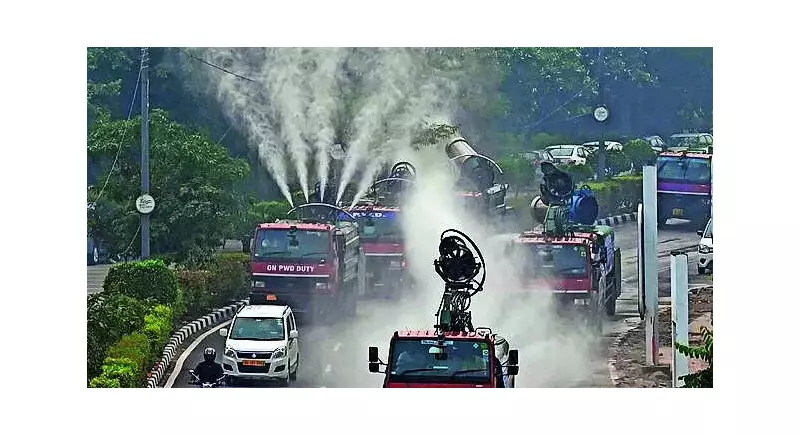
Union Environment Minister Bhupender Yadav, speaking at the Times Network India Economic Conclave on Thursday, asserted that the government is implementing a comprehensive set of measures to combat the severe issue of air pollution. He expressed confidence that the results of these sustained efforts would become evident in the coming years.
Progress and Persistent Challenges in Delhi's Air Quality
Minister Yadav acknowledged that there has been some improvement, noting an increase in the number of days where Delhi's Air Quality Index (AQI) has remained below 200. He credited this positive trend to the continuous work undertaken since the establishment of the Commission for Air Quality Management in October 2020. However, he candidly admitted that the current situation remains far from satisfactory. "We will work harder and do better," Yadav pledged.
Tackling Pollution at Its Source
The minister detailed the government's focused approach on addressing the primary sources of pollution. He specifically mentioned vehicular emissions, industrial discharge, and dust from construction and demolition activities. Highlighting a critical statistic, Yadav revealed that vehicles are responsible for 40% of the PM2.5 pollution in the national capital.

To formulate effective solutions, the government has undertaken comparative studies of successful interventions in global cities like London. "Different countries have taken different measures. We are fully sensitive to this problem and are working on science-based solutions," Yadav explained. A key global lesson, he noted, is the importance of improving fuel quality, a step India took by leapfrogging from BS-IV to the stricter BS-VI emission norms.
Supreme Court Order Paves Way for Phasing Out Old Vehicles
In a significant update, the minister pointed to a recent judicial development that aids the government's clean-air drive. He referred to the Supreme Court modifying its August order, which had previously barred coercive action against older diesel and petrol vehicles in the National Capital Region (NCR). The Court's clarification on Wednesday now allows action against vehicles that do not meet the BS-IV emission standards, effectively removing the stay that was hindering the phase-out of polluting vehicles.
Yadav expressed regret that a planned discussion on air pollution in the Lok Sabha on Thursday was disrupted. He attributed the chaos to the "ruckus created by Congress members," alleging they stood on chairs and tore documents, preventing a constructive debate on this critical public health issue.
Concluding his address, the Union Minister made a public appeal, urging citizens to contribute through voluntary actions in the collective fight for cleaner air. The government's strategy, as outlined, combines regulatory action, technological upgrades, and public participation to tackle the multifaceted problem of air pollution.