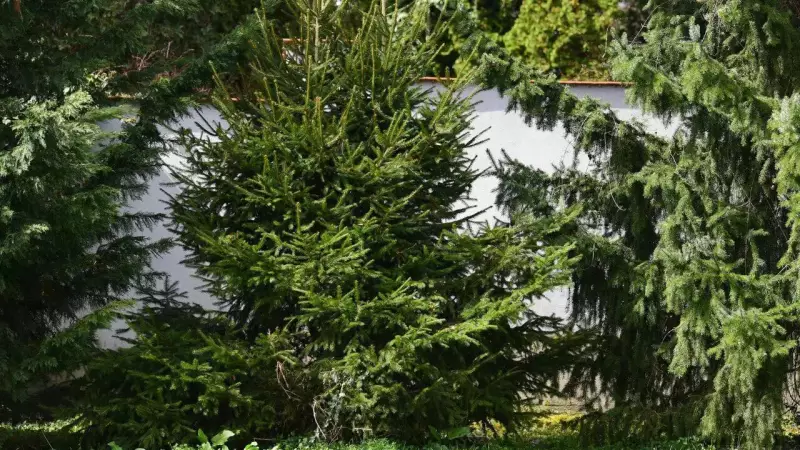
In a discovery that challenges fundamental biological principles, scientists have found solid particles of pure gold inside the needles of Norway spruce trees. This baffling phenomenon, where a precious metal appears within living plant tissue, has been traced to a remarkable partnership between the trees and specific metal-working bacteria.
The Puzzling Presence of Solid Gold in Living Trees
Life on Earth is built from a limited set of essential elements like carbon, hydrogen, and oxygen, with metals such as iron and calcium playing supporting roles. Gold, however, is biologically inert and holds no known function in any living organism. This is why the detection of gold nanoparticles within spruce needles left researchers astounded.
It was known that trees absorb trace amounts of dissolved metal ions, including gold, from the soil through their roots. Normally, plants safely isolate these ions in a non-toxic form. The profound mystery was how these scattered, dissolved gold ions were being assembled into solid particles without the extreme heat, pressure, or machinery typically required for such a transformation.

Microbial Alchemists: The Bacterial Source Revealed
The breakthrough came in 2025 with a pivotal study published in the journal Environmental Microbiome. Researchers compared Norway spruce trees containing gold nanoparticles with those that did not. The difference was unmistakable: only the gold-bearing trees hosted dense colonies of specific bacteria in their needles.
Three distinct bacterial species were consistently found surrounding the gold particles. Their complete absence in trees without gold deposits provided clear evidence of their crucial role. The study concluded that these metalworking microbes, not the tree itself, are responsible for converting dissolved gold ions into solid nanoparticles.
How Bacteria Perform Biological Gold-Making
While the precise biochemistry is still being unraveled, scientists believe the process occurs during the formation of bacterial biofilms—protective shields created by microbial communities. The chemical environment within these biofilms becomes conducive to pulling gold ions out of solution, allowing them to clump together and solidify.
In essence, the tree acts as a conduit, drawing gold ions upward from the soil. The bacteria then create the specialized chemical workshop where biomineralisation—the formation of solid minerals by living organisms—takes place. This unseen symbiosis results in gold coagulating into concentrations that are harmlessly embedded within the living tree tissue.
Revolutionizing Geology and Environmental Cleanup
This discovery has profound implications beyond mere curiosity. Geologists have long used plant analysis, or biogeochemical exploration, to locate underground mineral deposits. However, their methods were limited by a poor understanding of how metals behave inside plants.
The revelation of active bacterial involvement in mineral formation can revolutionize these estimates, potentially making plant analysis more accurate and reducing the need for invasive core samples. Furthermore, this natural process of biomineralisation presents a powerful blueprint for environmental remediation.
Abandoned mines, industrial sites, and polluted waterways often contain dangerous levels of toxic metals. The spruce tree model shows that plants and beneficial microbes can work together to clean such sites by converting harmful dissolved metals into inert solid forms. The critical lesson is that plants cannot perform this detoxification alone; they require their microbial partners.
This extraordinary finding, blending microbiology, botany, and geology, opens new frontiers in science. It reveals a hidden natural alchemy where life collaborates to create one of Earth's most coveted substances, offering innovative solutions for both resource discovery and planetary healing.