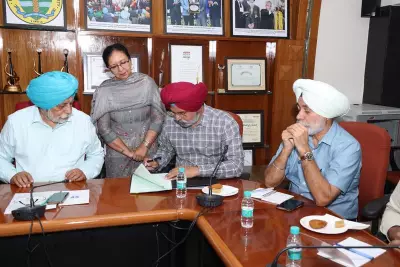
Former Rajasthan Chief Minister Ashok Gehlot issued a stark warning on Tuesday, condemning a recent Supreme Court order that establishes a new definition for the Aravalli hills. He termed the ruling a "red carpet" for illegal mining operators and a direct "invitation to ecological destruction."
A New Definition That Makes Mountains "Disappear"
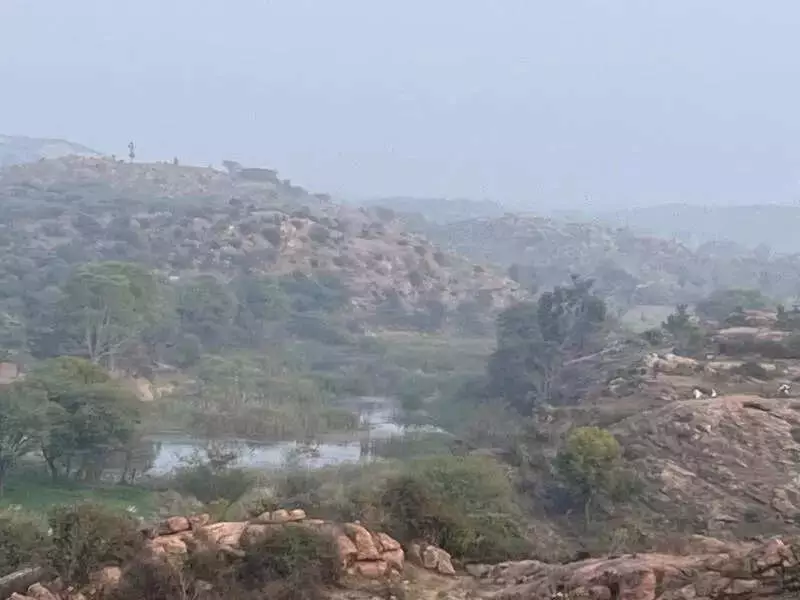
The controversy stems from a Supreme Court order passed on November 21. Based on a recommendation from the Union government, the court defined the Aravalli hills as any landform in designated Aravalli districts with an elevation of 100 metres or more above its immediate surrounding area. Gehlot argued that this technical definition is catastrophic for Rajasthan's ecology.
"The Aravalli range is not just a mountain range for Rajasthan; it is our protective shield," Gehlot stated. "Limiting it to a 100-metre scope... is tantamount to signing a death sentence for 90% of the mountain range in the state." He pointed out that approximately 90% of the Aravalli hills in Rajasthan are lower than 100 metres, meaning they would lose legal protection under the Forest Conservation Act.

Scientific and Ecological Fallout of the Verdict
Gehlot emphasized that a mountain is defined by its overall geological structure, not just its height. "A rock is as much part of a mountain range as a towering peak. Separating the two is scientifically irrational," he said. The former CM elaborated on the dire environmental consequences of stripping protection from these areas.
The Aravallis act as a crucial barrier against desertification, stopping deadly heat waves from the west and preventing the expansion of the Thar Desert into the fertile plains of east Rajasthan and Uttar Pradesh. Gehlot cited experts who say even smaller hills and ridges, just 10 to 30 metres high, are effective in blocking dust storms.
"Opening them to potential mining is akin to inviting the desert to expand all the way to New Delhi," he warned. Furthermore, the rocky structure of the Aravallis channels rainwater underground, serving as a groundwater recharge funnel for the entire region. Their removal, Gehlot cautioned, would invite severe drought in North-West India, a region already grappling with acute water scarcity.
A Call for Reconsideration to Protect Future Generations
Gehlot noted the irony that Supreme Court hearings which began with the aim of defining and protecting the Aravallis have resulted in a definition that technically makes most of them "disappear" from a legal standpoint. He expressed deep concern over the removal of a critical legal shield for these fragile ecosystems.
"History will never forgive the injustice the government is inflicting upon future generations," Gehlot added. He made an urgent appeal to the judiciary, stating, "I urge the Supreme Court to reconsider this decision for the sake of future generations. This verdict is a direct invitation to destruction." His statement echoes the fears of numerous environmentalists who have raised alarms since the new definition was announced.