

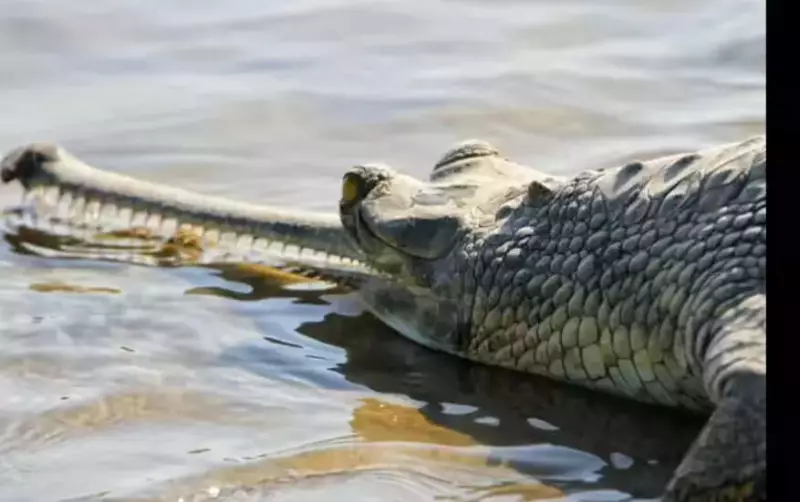
Major Survey Reveals Gharial Population Status Across Ganga Basin
A comprehensive new survey has recorded more than three thousand gharials across the Ganga river basin. The long-snouted reptiles, which once teetered on the brink of extinction, now show signs of recovery in specific protected areas. This landmark assessment provides the first basin-wide snapshot of both population numbers and habitat conditions.
Systematic Assessment Uncovers Uneven Distribution
The Wildlife Institute of India conducted this systematic survey between November 2020 and March 2023. Researchers covered twenty-two rivers across seven states, surveying over seven thousand six hundred kilometers of river stretches. They used boat-based visual encounter methods to document gharial presence and calculate minimum population estimates.
The total count reached three thousand thirty-seven individuals across thirteen of the surveyed rivers. This number represents both encouraging progress and continued vulnerability for the critically endangered species.

Chambal River Emerges as Primary Stronghold
The Chambal river supports the overwhelming majority of recorded gharials. This single river contains two thousand ninety-seven individuals, accounting for more than two-thirds of the total population. The Ghaghra river follows with four hundred sixty-three gharials, while the Girwa river holds one hundred fifty-eight.
In stark contrast, several rivers showed extremely low encounter rates. The Kosi river and even the main Ganga river, which gives the species its Latin name Gavialis gangeticus, recorded just 0.02 individuals per surveyed kilometer. Many historical ranges now report no gharials at all.
Habitat Suitability Analysis Reveals Ecological Pressures
The report's habitat analysis presents concerning findings. Over ninety-two percent of assessed river stretches were classified as unsuitable for gharial survival. Human disturbance, altered river flows, sand mining, and fishing practices have degraded most potential habitats.
Only 5.6 percent of surveyed stretches qualified as highly suitable. The Chambal contains the largest portion of suitable habitat with four hundred twenty-five kilometers, followed by the Yamuna with one hundred twenty kilometers. Smaller suitable stretches exist in the Sind, Gandak, Girwa, and Ramganga rivers.
State-by-State Distribution Shows Concentration in Protected Areas
The survey revealed significant variation in gharial distribution across states:
- Uttarakhand: Only the Ramganga river inside Corbett National Park supported gharials, with forty-eight individuals recorded over twenty kilometers.
- Uttar Pradesh: Eight rivers contained gharials totaling over two thousand individuals, including the Yamuna, Sharda, Kauriala, Babai, Chambal, Gandak, Ghaghra, and Girwa.
- Bihar: Lower numbers appeared with eighty-two gharials recorded from the Gandak and isolated sightings in the Bagmati, Kosi, and Ganga rivers.
- Jharkhand and West Bengal: No gharials were detected during the survey period.
Conservation History and Current Challenges
Gharials once ranged widely across the Ganges, Indus, and Mahanadi river systems. Their numbers collapsed dramatically due to multiple threats including habitat loss, declining fish stocks, dam construction, and fishing-related mortality. By the 1970s, the species had disappeared from nearly ninety-eight percent of its historical range.
India launched a national conservation program in 1975, with the Chambal emerging as the flagship protected area. The National Chambal Sanctuary provided crucial protection that enabled population recovery in that river.
Former WII scientist SA Hussain, who played a central role in the assessment, emphasized the connection between sustained protection and population trends. "The report indicates population recovery in select rivers, driven by long-term habitat protection, monitoring, and grow-and-release programs," he explained. "While the Chambal continues to show a stable or rising gharial population, other rivers remain conservation-dependent."

Breeding Success Remains Limited Outside Protected Areas
Despite decades of conservation efforts, breeding success remains limited in most rivers. Over eight thousand juvenile gharials have been released across various rivers through restocking programs, but many rivers show little evidence of natural breeding.
The Ghaghra river, despite holding over four hundred sixty individuals, likely functions as a sink population sustained by dispersal from the upstream Girwa river rather than local breeding. The Ken river, despite receiving more than one hundred forty gharials through restocking efforts between 1982 and 2007 and being designated a sanctuary, no longer supports a population.
A recent WWF India report marking fifty years of gharial conservation adds another layer of concern. It notes that only about 0.5 percent of hatchlings survive to adulthood in the wild, making protection of nesting sites and breeding habitats absolutely critical.
International Conservation Status Assessment
These findings align closely with the International Union for Conservation of Nature's first-ever Green Status assessment of the gharial. This evaluation classified the species as "Critically Depleted." Unlike the Red List, which measures extinction risk, the Green Status evaluates progress toward ecological recovery.
The IUCN assessment noted that while decades of conservation efforts have prevented extinction, gharials remain heavily dependent on sustained river protection and active management. This is particularly true in undammed and free-flowing river stretches where natural conditions persist.
Future Conservation Recommendations
The report calls for several specific actions to improve gharial survival prospects:
- Prioritize protection of critical habitats where adult numbers and breeding success remain high
- Restore degraded river stretches through habitat improvement measures
- Regulate river flows to maintain suitable conditions for nesting and survival
- Control pollution entering river systems
- Promote sustainable fishing practices that reduce gharial mortality
For reintroduction efforts, the report recommends focusing on river stretches with proven suitability. The Chambal, Yamuna, and Ghaghra rivers show particular promise for such programs. Integrating habitat assessments with population and genetic monitoring could significantly improve long-term survival prospects.
Jailabdeen A, director of the Gharial Ecology Project, emphasized the importance of stronghold identification. "Identifying and safeguarding stronghold habitats where adult numbers and breeding success remain high is essential," he stated.
Even where gharial numbers appear stable, the habitat itself continues to face threats. Climate-induced changes, sediment shifts, sandbar loss, and illegal fishing steadily erode suitable river stretches. These ongoing pressures underscore the need for continued vigilance and adaptive management.
The survey report was officially released on Tuesday by Union Minister of Jal Shakti C R Patil at WII's campus in Dehradun. Titled "Population Status and Conservation Action Plan for Critically Endangered Gharial in the Ganga River Basin," the document represents the most coordinated assessment ever undertaken for this iconic river species.





