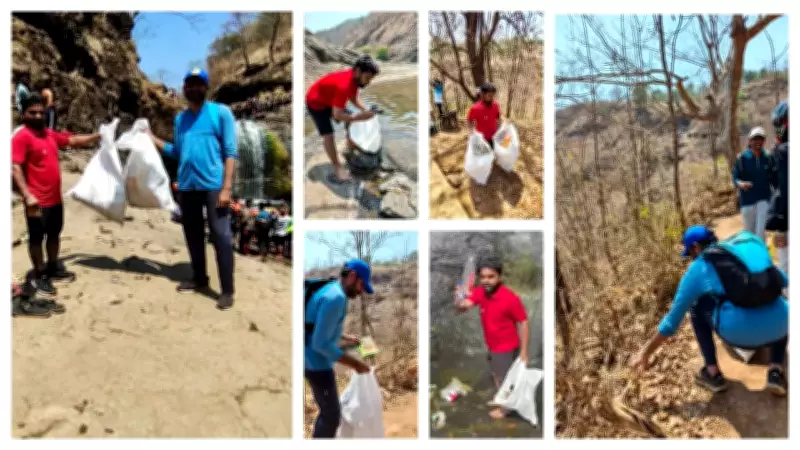
Citizens Transform Trek into Conservation Drive at Kalmandavi Waterfall
Marking World Forest Day, a dedicated group of environmentally conscious citizens turned a routine trek into a powerful act of conservation by organizing a comprehensive forest and waterfall cleanup drive at the scenic Kalmandavi Waterfall in the Jawhar region of Palghar district. What began as a simple outing amidst the lush greenery of the Sahyadri mountain ranges quickly evolved into a hands-on initiative addressing one of the most pressing environmental concerns of our time: plastic pollution in ecologically sensitive zones.
From Scenic Outing to Environmental Action
The Sahyadri ranges, renowned for their exceptional biodiversity and breathtaking landscapes, are increasingly facing threats from irresponsible tourism practices. Visitors often leave behind substantial amounts of non-biodegradable waste that poses serious risks to both wildlife and delicate aquatic ecosystems. The cleanup drive represented a proactive response to this growing problem, demonstrating how recreational activities can be transformed into meaningful conservation efforts.
Substantial Plastic Waste Collection
During the intensive cleanup operation, dedicated volunteers collected an estimated 2,000 to 2,500 individual pieces of plastic waste from the forest and waterfall surroundings. The collected materials included:

- Food wrappers and packaging materials
- Plastic bottles of various sizes
- Discarded gutkha packets
- Empty liquor bottles
- Worn-out footwear and other personal items
"Over 2,000 pieces of plastic waste were collected from the forest and waterfall surroundings," emphasized volunteer Jinesh Gala, highlighting the significant scale of pollution in what is typically considered a pristine natural location. While the effort itself was modest in scope, it powerfully underscored a much larger issue: the urgent need to fundamentally rethink how people interact with nature during their leisure activities and outdoor adventures.
Promoting Responsible Tourism Practices
The initiative extended far beyond mere cleanup activities, serving as an important platform for spreading environmental awareness and promoting sustainable practices. The organizing group seized the opportunity to advocate for a simple yet profoundly impactful message: "Bring Your Trash Back." This straightforward principle emphasizes personal responsibility in preserving natural spaces.
"If we can carry food and essential supplies to such remote locations, we can certainly carry back our waste and dispose of it responsibly in designated areas," explained Dharmesh Barai, founder of the organizing group. The cleanup drive also attracted participation from local visitors who were initially curious about the activity but later expressed genuine appreciation and support after understanding its crucial environmental purpose and significance.
Small Actions Creating Lasting Impact
The successful cleanup drive serves as an important reminder that preserving the fragile ecosystems of the Sahyadri ranges represents a shared responsibility among all stakeholders. With increasing footfall at popular trekking destinations throughout the region, even small individual actions can collectively create significant positive environmental impacts when multiplied across numerous visitors and repeated over time.
The initiative received substantial support from a team of dedicated volunteers including Rupesh Thik and Tejas Kansara, along with active participation from numerous visitors in the area. As the group of environmental enthusiasts continues its ongoing efforts under the #PlasticFreeSahyadri campaign, they have issued a compelling call to action for all trekking groups and individual adventurers to adopt the practice of carrying back at least some waste during their return journeys from natural sites.

A Clear Environmental Message
In the shadow of cascading waterfalls and amidst the dense forests of the Sahyadri ranges, the message from this World Forest Day initiative was unmistakably clear: protecting nature does not always require grand gestures or complex solutions. Sometimes, meaningful environmental conservation begins with the simple, fundamental practice of cleaning up after ourselves and leaving natural spaces better than we found them. This citizen-led effort demonstrates how community action can effectively address environmental challenges while inspiring broader behavioral change toward more sustainable tourism practices.