

Plains Battle Dense Fog as Himachal Hills Enjoy Bright Sunshine
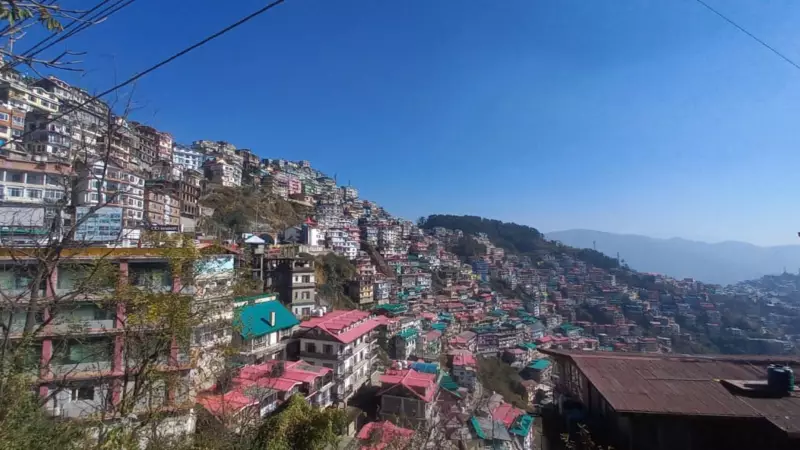
While dense fog blankets the plains of Punjab, Haryana, and Chandigarh, causing poor visibility and severe cold, the hilly regions of Himachal Pradesh present a completely different picture. These areas are experiencing bright sunshine and clear skies, creating a striking weather contrast that has captured public attention.
Scientific Explanation for the Weather Divide
Meteorological experts attribute this sharp difference to several key factors. The combination of topography, wind patterns, moisture levels, and pollution load creates distinct conditions in plains versus hills.
Stagnant air and moisture accumulation make plains particularly prone to fog formation. In contrast, the downward flow of winds from higher elevations to lower areas, absence of large water bodies, and relatively low pollutant levels contribute to clearer conditions in Himachal's higher reaches.

Not All Himachal Areas Escape the Fog
However, this sunny pattern doesn't extend to all parts of Himachal Pradesh. Several low-lying regions including Una, Bilaspur, Kangra, Nalagarh, Baddi in Solan district, and Paonta Sahib in Sirmaur district remain vulnerable to dense fog, low visibility, and intense cold conditions similar to adjoining plains.
On Wednesday morning, Una recorded dense fog with just 50 meters visibility, while Paonta Sahib experienced shallow fog with 500 meters visibility.
Detailed Meteorological Analysis
Scientist Sandeep Kumar Sharma from the India Meteorological Department in Shimla explained that the contrast between plains and hill regions has become particularly evident in recent days.
"The hills of Himachal Pradesh, including Shimla, Kasauli, Chail and Dharamshala, are experiencing bright sunshine and clear skies. There are three main reasons behind this," Sharma stated.
- Winds flow from higher elevations to lower areas
- These winds are weak and largely motionless, descending easily toward plains but losing momentum there, leading to temperature drops
- The presence of rivers, streams, water bodies and higher pollutant content in plains increases moisture, aiding fog formation
Sharma emphasized that fog-prone conditions aren't limited to plains alone. "Similar situations also develop in valleys—low-lying areas between hills or mountains—even in mountainous states like Himachal Pradesh," he added.
Winter Temperature Inversion Plays Crucial Role
Scientist Surinder Paul, in-charge of IMD Chandigarh, provided further insight into the phenomenon. "Weak northerly winds play a crucial role in fog formation. When these winds reach plains and valleys and contact moisture, fog forms. Pollutants further increase fog density," he explained.
Paul detailed how plains frequently experience temperature inversion during winter. This phenomenon traps colder air near the ground while warmer air remains above it. "This inversion restricts vertical air movement, allowing moisture, pollutants and cold air to accumulate near the surface, leading to persistent fog and smog," he said.
Hill Stations Remain Above the Inversion Layer
Comparing conditions with monsoon weather, Paul noted that hills do experience fog-like conditions during monsoon, but these are actually low clouds forming at around two kilometers height.
"In winter, hill stations remain above the inversion layer. At higher elevations, the air is relatively warmer and drier, allowing sunlight to pass through easily," Paul added.
Meteorologists note that while western disturbances may occasionally bring cloud cover or snowfall to higher reaches, in their absence, hill regions often enjoy crisp, sunny days even as plains below remain shrouded in fog for prolonged periods.
The weather contrast highlights how geographical features significantly influence local climate conditions, creating dramatically different experiences for residents just kilometers apart.






