Endorheic Lakes: The World's Landlocked Water Bodies That Never Reach the Ocean
Lakes are commonly perceived as serene bodies of water with clear inflows and outflows, forming part of a continuous cycle that ultimately connects back to the ocean. However, some lakes exist in closed basins where water enters but never exits through rivers or streams. These are known as endorheic lakes. The water simply accumulates and gradually vanishes through evaporation. While this may sound straightforward, the behavior of these lakes is markedly different from typical freshwater systems. Many are large, highly saline, and predominantly shaped by climate factors. Several are renowned across continents, each narrating a distinct tale of geography, isolation, and environmental equilibrium.
From Caspian Sea to Lake Chad: World's Endorheic Lakes That Never Reach the Ocean
Caspian Sea
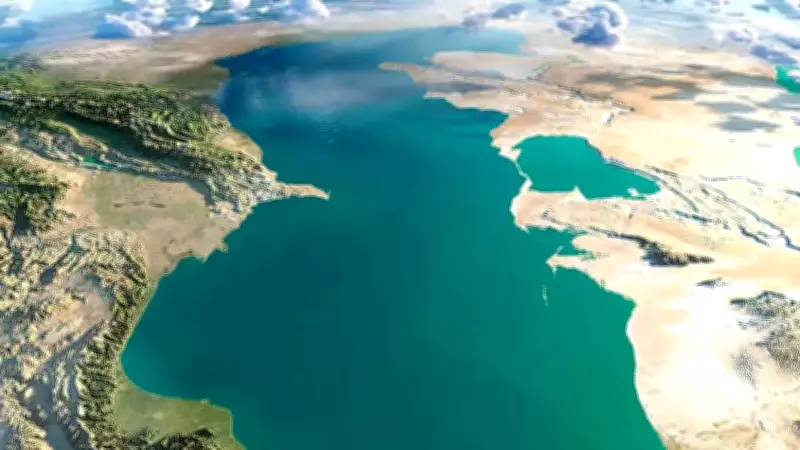
The Caspian Sea stands out as the largest endorheic lake on Earth. Despite its name, it is landlocked and lacks any direct connection to the ocean. It borders multiple countries, including Kazakhstan, Russia, Azerbaijan, Turkmenistan, and Iran. Spanning hundreds of miles across and reaching significant depths in certain regions, the lake receives major inflow from rivers such as the Volga. This constant supply helps maintain its volume, even as evaporation acts as a strong opposing force. Its ecosystem is diverse, supporting fish species, seals, and migratory birds. Nonetheless, pressures like pollution, fishing, and changing river flows continue to impact its condition.

Lake Balkhash
Lake Balkhash is another major endorheic lake situated in Kazakhstan. It features an unusual structure, with one side containing fresher water and the other being more saline. This disparity stems from geography; the lake is divided by a narrow stretch of land, and inflow from the Ili River primarily feeds one section. The other section experiences greater evaporation and less replenishment. Over time, human activities such as water diversion and upstream usage have reduced inflow levels, contributing to rising salinity in parts of the lake. It freezes during colder months, adding another layer to its seasonal dynamics, and is not static but changes with rainfall, river input, and temperature cycles.
Lake Chad
Lake Chad is frequently discussed in the context of shrinking lakes. Located in Central Africa, it serves as a crucial water source for surrounding communities. In earlier decades, the lake covered a much larger area. Today, its size fluctuates significantly based on rainfall and inflow from rivers like the Chari. Experts attribute its decline to a combination of reduced precipitation, water usage, and population pressure. Agriculture and irrigation heavily draw from its resources, while climate variability affects its recharge, making it a focal point for environmental concerns.
Lake Titicaca
Lake Titicaca sits high in the Andes Mountains between Bolivia and Peru, recognized as one of the highest navigable lakes globally. Its elevation is notable, as is its cultural significance, with indigenous communities having lived around it for centuries. The lake supports agriculture, fishing, and tourism. Although a small outflow exists, the system largely behaves like an endorheic basin, with most of its water balance dependent on rainfall, river inflow, and evaporation. The environment around it is relatively stable compared to other endorheic lakes, yet resource use and tourism impose ongoing demands on the region.
Great Salt Lake
The Great Salt Lake in the United States is renowned for its high salt concentration, ranking among the saltiest large bodies of water worldwide. It formed as a remnant of a much larger prehistoric lake, reducing to its current size over time due to climate changes. What remains is shallow and highly mineralized, with no fish able to survive in its waters due to salinity levels. Instead, specialized microorganisms and certain bird species thrive around it, and islands within the lake support wildlife such as bison and antelope. Water inflow comes from several rivers, but evaporation dominates, causing the lake's size to shift with seasonal conditions while its salty nature remains constant.

What Makes Endorheic Lakes Different from Other Lakes
An endorheic lake forms in a drainage basin with no outlet to the sea. Water flows in from rivers, rainfall, or melting snow but has nowhere else to go, accumulating until it evaporates. This process leaves behind minerals and salts, which build up over time. This accumulation is a primary reason many endorheic lakes are salty compared to typical freshwater lakes, highlighting their unique ecological and geological characteristics.