India's Economic Survey Champions Pragmatic Approach to Climate Change
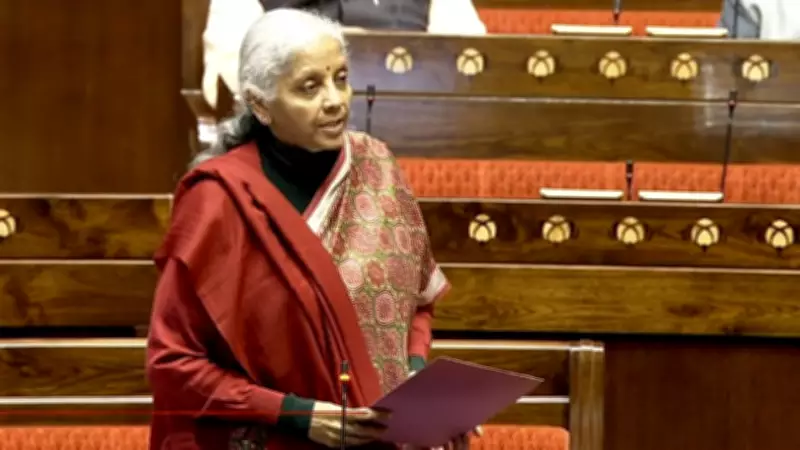
In a significant reiteration of its stance, India has once again underscored the principles of pragmatism and balance in the global fight against climate change. The Economic Survey presented to Parliament by Finance Minister Nirmala Sitharaman on Thursday reaffirmed that the nation will continue to place adaptation and development at the core of its climate action agenda. This marks the third consecutive year that India has advanced this argument, signaling a steadfast commitment to a nuanced strategy.
Global Realism and the Challenges of Decarbonization
The government highlighted that global experiences over recent years have injected greater realism into climate discourse. The Survey pointed out that even advanced economies are grappling with the unavoidable trade-offs associated with rapid and large-scale decarbonization, particularly concerning energy security and stability. For developing nations like India, where institutional and financial barriers to decarbonization are more pronounced, mitigation actions such as swift energy transitions within externally imposed timelines present significantly higher challenges and uncertain outcomes.
This perspective is not intended to diminish the importance of climate risks or mitigation efforts but rather to emphasize the necessity of prioritizing pragmatism over mere signaling. The Survey articulated that in emerging economies, growth, energy security, and resilience must progress alongside low-carbon pathways, rather than being supplanted by them.

Expanding the Scope of Effective Climate Action
The Economic Survey elaborated that effective climate action extends beyond emissions mitigation. It encompasses enhancing societal resilience through:
- Strengthening health systems
- Developing climate-resilient infrastructure
- Boosting agricultural productivity
- Ensuring access to affordable and reliable energy
Measured in terms of human welfare rather than temperature outcomes alone, the most successful strategies are those that expand opportunities while reducing vulnerabilities. Prioritizing adaptation not only addresses immediate climate challenges but also delivers local economic benefits by protecting livelihoods, safeguarding infrastructure investments, and minimizing disaster-related losses.
India's Evolving Narrative on Climate Change
Through its annual Economic Survey, India has been advocating an alternative narrative on climate change for several years. In 2024, the Survey argued that focusing solely on limiting global temperatures, even at the expense of economic well-being in developing countries, is not necessarily the optimal approach. India was the first nation to publicly challenge the then-established global consensus on climate action.
Last year, the Survey asserted that development serves as the best insurance against climate change, advocating that India should aim to achieve developed nation parameters by 2047 before concentrating on attaining net-zero status by 2070. This year's document builds upon this thought process, highlighting issues faced in Europe, where reliance on renewable energy has led to electricity supply disruptions, such as the widespread power outage in Spain last year.
The Survey clarified that this is not a critique of renewable energy itself but a caution against introducing complex systems too rapidly without adequate buffers, redundancy, and institutional capacity, which can lead to fragility rather than resilience.
India's Strategic Energy Approach
The Survey affirmed that India will continue to rapidly expand its renewable energy capacity to provide reliable and affordable electricity to its citizens. However, it will also maintain flexibility in power systems, prioritizing energy security, affordability, and industrial competitiveness. This balanced approach ensures that the nation's climate actions are sustainable and aligned with its developmental goals.