Western Technology Powers Russian Bombs: Moscow Strikes Ukraine With EU & US Components
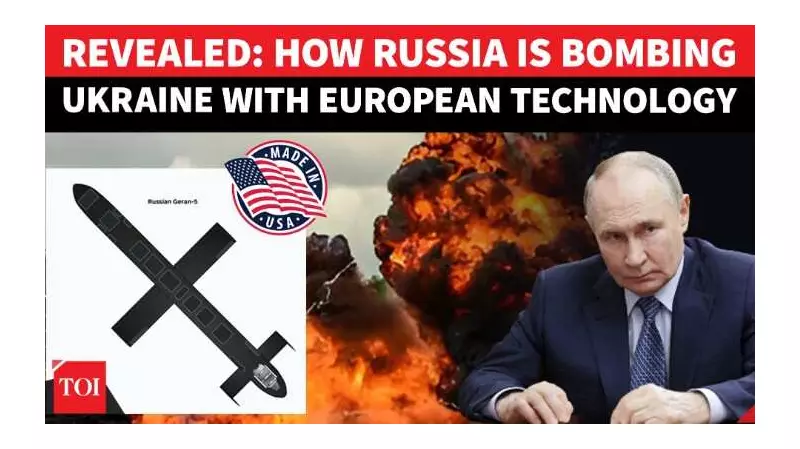
In a significant development that underscores the ongoing challenges in enforcing international sanctions, Ukrainian forces have successfully intercepted and downed a new Russian Geran-5 drone. This advanced unmanned aerial vehicle, capable of reaching speeds up to 600 kilometres per hour, has revealed a troubling reality: despite extensive Western embargoes, critical components from American and European manufacturers continue to find their way into Russian military hardware.
Microchips From Texas and Germany Found in Downed Drone
Ukrainian intelligence agencies have conducted a thorough analysis of the captured Geran-5 drone, uncovering components sourced from prominent Western technology firms. The investigation identified microchips manufactured by Texas Instruments, CTS Corporation, and Germany's Infineon Technologies embedded within the drone's systems. These findings provide concrete evidence that Russia's military-industrial complex continues to access sophisticated Western electronics despite concerted international efforts to cut off such supplies.
Fresh Manufacturing Dates Challenge Sanctions Enforcement
Perhaps most concerning is the manufacturing timeline revealed by the discovered components. Analysis of the chips shows they are not from pre-war stockpiles that Russia might have accumulated before the invasion of Ukraine. Instead, the manufacturing dates indicate these components entered Russian hands relatively recently, suggesting ongoing evasion of sanctions through third-party channels or clandestine supply networks.

Critical Role in Russia's Drone Warfare Capabilities
Ukrainian officials emphasize that these Western components play a vital role in Russia's drone production capabilities. The sophisticated microchips enable advanced guidance systems, communication modules, and flight control mechanisms that enhance the effectiveness of Russian drones used in attacks against Ukrainian targets. This technological infusion directly supports Moscow's ongoing military operations and underscores the strategic importance of cutting off these supply lines.
Broader Implications for International Sanctions Regime
The discovery raises serious questions about the effectiveness of current sanctions enforcement mechanisms. Despite comprehensive restrictions imposed by the European Union, United States, and other allies, Russia appears to maintain access to critical dual-use technologies through various means. This situation highlights the need for more robust monitoring of global supply chains and stricter enforcement of export controls to prevent Western technology from fueling Russia's war machine.
As the conflict continues, this revelation adds another layer of complexity to international efforts to constrain Russia's military capabilities while supporting Ukraine's defense. The presence of American and German components in advanced Russian weaponry serves as a stark reminder of the interconnected nature of global technology markets and the challenges of completely severing technological ties in an era of complex international trade networks.