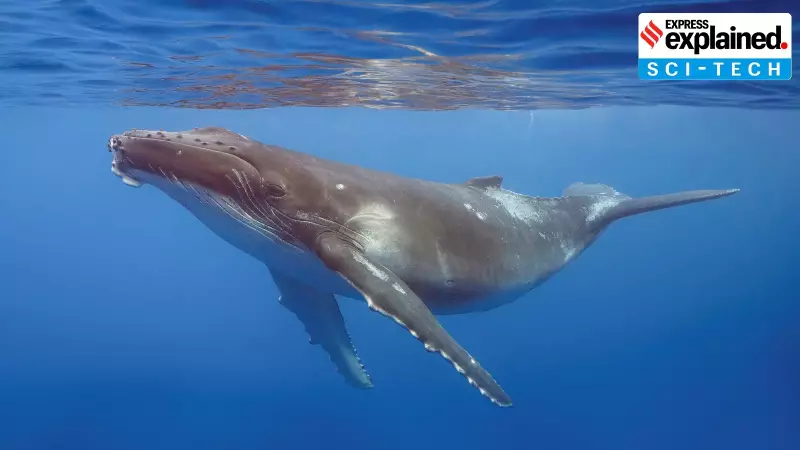
In a significant leap for marine biology, researchers have successfully employed drone technology to detect a dangerous and often fatal virus circulating among whale populations in the Arctic. This innovative, non-invasive method marks a departure from traditional, more intrusive sampling techniques and has revealed the presence of the cetacean morbillivirus in these remote waters for the very first time.
A Revolutionary Method for Whale Research
Studying massive, free-roaming whales has always presented a formidable challenge for scientists. The conventional approach involves navigating a boat perilously close to a whale and using a dart gun to extract a small skin biopsy, a procedure that inevitably causes a minor wound. The majority of other samples historically come from deceased animals, limiting the scope of live population health studies.
The new technique, detailed in a study published in the journal BMC Veterinary Research in December 2025, elegantly sidesteps these issues. Researchers, led by veterinarian Helena Costa from Nord University, flew drones over surfacing whales from a nearby boat. Using live camera feeds, they expertly hovered the drones above a whale's blowhole—the nostril on its head—just as it exhaled.

The whale's breath, or "blow," which contains respiratory droplets and biological material, was collected on petri dishes attached to the drone. Between 2022 and 2025, the team gathered over 50 such blow samples from humpback, sperm, and fin whales in regions spanning northern Norway, Iceland, and Cape Verde off West Africa.
"It's a little bit crazy that you can collect air from a whale and actually detect something," Costa remarked in an interview with The New York Times, highlighting the simplicity and effectiveness of the method.
The Discovery of a Deadly Pathogen
The analysis of these breath samples led to a critical discovery: the presence of cetacean morbillivirus. This highly infectious pathogen affects dolphins, whales, and porpoises, attacking their respiratory and neurological systems. Since its identification in 1987, it has been linked to numerous mass stranding and mortality events worldwide, particularly in the North Atlantic and Mediterranean.
The virus spreads through direct contact and respiratory droplets, much like common colds in humans. Despite its known prevalence, it had never been officially documented in Arctic waters. The lack of prior detection likely pointed to surveillance gaps rather than the virus's actual absence from the region.
Through drone sampling, scientists confirmed the virus in two separate humpback whale groups in northern Norway, in a sperm whale that appeared to be in poor health, and in a stranded pilot whale. This finding raises important questions about disease dynamics in the rapidly changing Arctic environment.
Implications for Conservation and Future Research
This breakthrough is more than a one-time discovery; it pioneers a sustainable framework for long-term wildlife health monitoring. Drones offer a less stressful and completely non-invasive way to track pathogens, hormones, and pollutants in whale populations over time.
Helena Costa emphasised the importance of longitudinal data in understanding disease patterns. Speaking to NPR, she explained, "Obviously, four years of data is interesting, but if we have 30 years of data, we can understand better the dynamics of the circulation of these pathogens…how some stressors, for example, pollutants or climate change, are affecting these dynamics of these diseases."
While there are currently no direct protocols to treat wild whales infected with the virus, the knowledge gained enables proactive conservation measures. Authorities can, for instance, help reduce stress on sick whales—a critical factor in survival—by rerouting ship traffic to minimise disruptive interactions.
The successful use of drones to uncover a hidden viral threat in the Arctic underscores the power of innovative technology in conservation. It provides scientists with a vital, ethical tool to safeguard the health of some of the ocean's most majestic and vulnerable inhabitants.