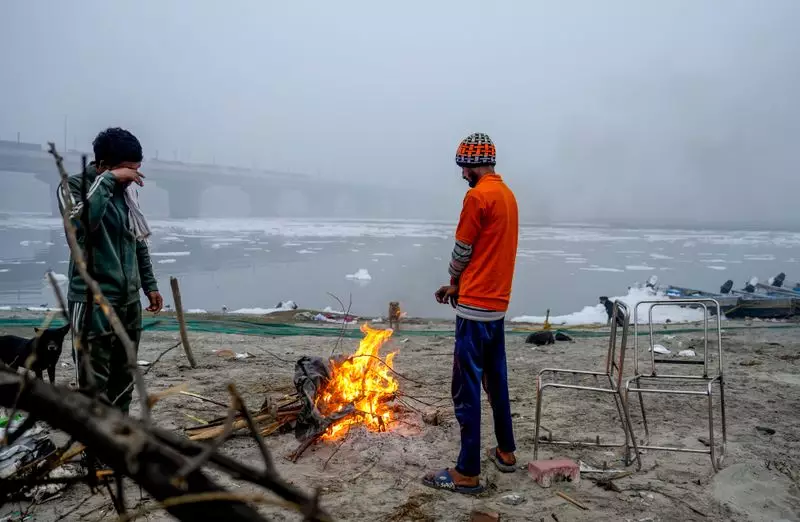
Delhi and its surrounding regions were engulfed by a thick blanket of dense fog on Tuesday morning, severely disrupting daily life and transportation. The fog drastically reduced visibility, creating hazardous conditions for commuters and leading to significant delays in both air and rail travel across the national capital.
Visibility Plummets and Air Quality Worsens
The India Meteorological Department (IMD) reported that visibility at the Indira Gandhi International (IGI) Airport dropped to a mere 50 meters at 5:30 AM. This severe reduction persisted for several hours, with visibility recorded at 125 meters at 7 AM and 200 meters at 8:30 AM. The dense fog warning was extended to include the morning hours of Wednesday as well.
Simultaneously, the city's air quality deteriorated sharply. The overall Air Quality Index (AQI) in Delhi was recorded at 398, placing it in the 'very poor' category and perilously close to the 'severe' threshold of 400. According to data from the Central Pollution Control Board (CPCB), several monitoring stations reported even worse conditions. Anand Vihar recorded a severe AQI of 452, while Wazirpur and Jahangirpuri registered levels of 434 and 430, respectively.

Major Disruptions to Flight and Train Schedules
The intense fog had an immediate and severe impact on transportation networks. At Delhi's IGI Airport, over 20 flights were delayed due to the low visibility conditions. While flight operations were not completely suspended, the delays caused considerable inconvenience to passengers. Authorities advised travelers to check directly with their airlines for real-time flight status updates.
The Northern Railways also reported significant disruptions. At least 22 trains arriving in Delhi were delayed by several hours due to the reduced visibility. The fog affected rail movements across the northern plains, leading to a cascading effect on schedules. Commuters were left stranded at stations, and railway officials worked to manage the fallout from the widespread delays.
Safety Advisories and Health Warnings Issued
In response to the dual threats of poor visibility and toxic air, authorities issued multiple advisories. The IMD's forecast indicated that similar foggy conditions are likely to persist. Motorists were urged to exercise extreme caution, use fog lights, and drive at low speeds. For early morning walkers and outdoor workers, the combination of fog and high pollution levels posed serious health risks.
Doctors and health experts reiterated warnings, especially for children, the elderly, and individuals with pre-existing respiratory or heart conditions. The public was advised to limit prolonged outdoor exposure, wear N95 or equivalent masks when outside, and rely on air purifiers indoors where possible. The situation underscores the recurring winter challenge for Delhi, where cold temperatures and calm winds trap pollutants close to the ground, exacerbating the air quality crisis.
The episode highlights the ongoing struggle with environmental conditions in the capital, affecting millions of residents and testing the preparedness of infrastructure and public services during the winter season.