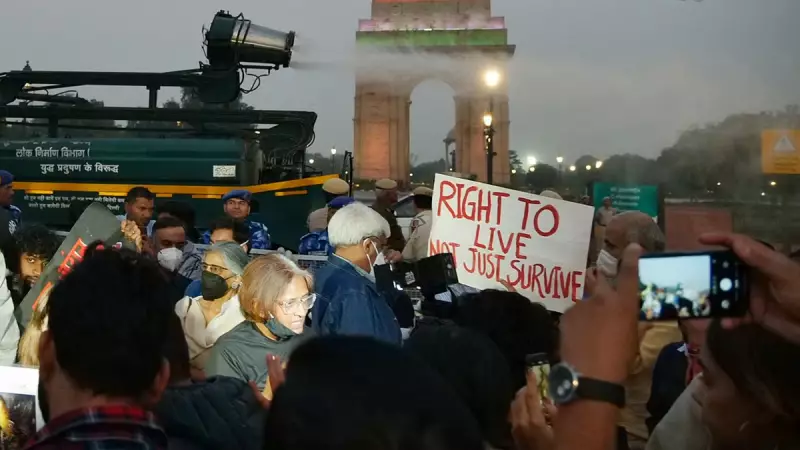
Hundreds of concerned Delhi residents gathered at India Gate on Sunday, November 9, 2025, to protest the city's deteriorating air quality and demand immediate government action to address the pollution crisis. The demonstration turned tense as police detained several participants who were voicing their frustration over the toxic air that has become a recurring nightmare for the capital's inhabitants.
Growing Public Anger Over Pollution Crisis
The protest organized by environmental activists and concerned citizens began peacefully in the morning hours. Participants carried banners and placards with messages like "We Want Clean Air" and "Stop Killing Our Future" as they voiced their anger about the government's perceived inaction. The gathering represented a cross-section of Delhi society, including students, senior citizens, parents with young children, and working professionals, all united by their shared concern about the health impacts of prolonged exposure to polluted air.
Many protesters shared personal stories of how the poor air quality has affected their families. Several parents expressed worry about their children developing respiratory problems, while elderly participants described the difficulty of performing daily activities outdoors during peak pollution periods. The emotional testimonies highlighted how the environmental crisis has become a deeply personal issue for millions of Delhi residents.

Police Intervention and Detentions
The situation escalated when police personnel present at the location began detaining protesters. According to eyewitness accounts, several demonstrators were taken into custody when they attempted to move beyond the designated protest area. The police action appeared to be prompted by concerns about maintaining public order and preventing the gathering from disrupting traffic flow in the central Delhi area.
One detained protester, who spoke to media before being taken away, stated: "We have tried every other method to get the government's attention. Petitions, letters, meetings - nothing has worked. When our children's health is at stake, what choice do we have but to raise our voices louder?" The sentiment echoed among many participants who felt that conventional methods of seeking government intervention had failed to produce meaningful results.
Broader Context of Delhi's Pollution Problem
The protest comes during a period when Delhi typically experiences its worst air quality of the year. The combination of vehicle emissions, industrial pollution, construction dust, and seasonal agricultural burning in neighboring states creates a toxic cocktail that regularly pushes the Air Quality Index (AQI) into hazardous levels. Medical professionals have repeatedly warned about the long-term health consequences, including increased risk of respiratory diseases, cardiovascular problems, and developmental issues in children.
Environmental experts point out that despite various government initiatives and pollution control measures, the situation shows little signs of sustainable improvement. The recurring nature of severe pollution episodes has led to growing frustration among residents who feel that temporary solutions like smog towers and pollution control certificates have proven inadequate to address the scale of the problem.
The detention of protesters at India Gate has sparked discussions about the right to peaceful assembly versus maintaining public order. Civil rights organizations have questioned the police action, arguing that citizens have a legitimate right to protest issues that directly affect their health and wellbeing. Meanwhile, authorities maintain that they support the right to protest but must balance it with other public interests.
As Delhi continues to grapple with what has become an annual environmental emergency, the India Gate protest signals a potential shift toward more assertive public demand for concrete, effective solutions. The incident highlights how environmental concerns are increasingly driving civic engagement and political expression in urban India, particularly among younger demographics who see pollution as a direct threat to their future quality of life.