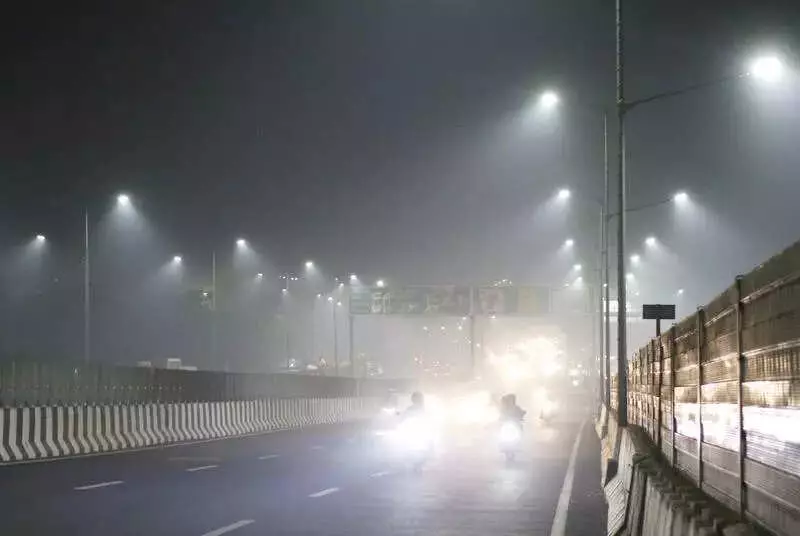
In a significant last-minute revision, the Delhi government on Wednesday modified its impending ban on vehicles registered outside the capital that do not meet the stringent BS-VI emission norms. The restriction, which was set to begin on Thursday, will now be enforced only when the Graded Response Action Plan (GRAP) Stage-IV is in force.
Why the Ban Was Modified
A government official explained the sudden change, stating that enforcing the ban during GRAP Stage-III would have caused massive disruption to vehicular movement. GRAP Stage-IV, the most severe level of anti-pollution measures, is activated when the Air Quality Index (AQI) surpasses 450. Currently, all stages of GRAP are active across Delhi and the National Capital Region (NCR).
Simultaneously, a strict 'No PUC, No Fuel' directive comes into effect from Thursday. Vehicles without a valid Pollution Under Control (PUC) certificate will be denied refuelling at petrol pumps across the city. Furthermore, vehicles transporting construction material will be barred from entering Delhi for the duration of GRAP Stage-IV.

New Tech-Driven Initiatives to Curb Pollution
Delhi's Environment Minister, Manjinder Singh Sirsa, outlined a series of new measures targeting vehicular pollution, which is one of the four key pollution sources alongside industries, solid waste, and dust. The government will launch its own official car-pooling application exclusively for Delhi. This platform will allow users to either offer their cars for pooling or find rides with others heading in the same direction.
"Many people want to use this system to avoid using personal vehicles, but don't know how to connect with others. We hope this app gives people the right platform," Sirsa said. He added that based on historical data, the city is likely to experience choking pollution levels until at least December 27.
For traffic management, the government plans to identify congestion hotspots using Google Maps data and roll out an integrated system to synchronise traffic signal timing. Sirsa pointed out the current inefficiency where signals remain red for extended periods even during jams, stating the need for smarter, adaptive signals.
On-Ground Enforcement and Public Appeal
To enforce these rules, 580 police personnel will be stationed at 126 checkpoints across Delhi, including border points. They will be supported by 37 Prakhar vans and equipped with e-challan machines that automatically display a vehicle's BS compliance and registration details upon entering its RC number. Thirteen major entry points are equipped with Radio-Frequency Identification (RFID) readers to streamline checks.
At petrol pumps, a police officer and a transport department official will ensure compliance with the PUC rule. Minister Sirsa urged Delhiites and pump owners to cooperate, framing it as a collective responsibility. "Please do not argue with officers or pump staff. Delhi's air is our shared heritage, cooperate for the health of our children and future," he appealed.
In addition to existing hotspots, the government has identified 62 new pollution hotspots on city roads and plans to collaborate with Google to pinpoint the top 100 worst-affected areas. The Delhi Pollution Control Committee (DPCC) will also hire an agency to identify potholes citywide, with a mandate to repair each within 72 hours of reporting.