The India Meteorological Department (IMD) has issued a stark warning for the national capital, forecasting an extended period of severe cold conditions. Residents of Delhi can expect colder-than-usual nights throughout January, with a cold wave likely to persist until January 5 and dense fog blanketing the city until January 6.
IMD's Extended Forecast: Cold Days and Dense Fog
In its extended range outlook issued on Thursday, January 1, 2026, the weather agency highlighted multiple challenges for the city. Apart from the cold wave, cold day conditions were expected on January 2. A 'cold day' is officially declared when the minimum temperature is at or below 10 degrees Celsius and the maximum temperature dips 4.5 degrees or more below the normal range.
The IMD has escalated its warning by issuing an orange alert for Friday. It predicts a partly cloudy sky with moderate fog across many areas. More alarmingly, dense to very dense fog is anticipated at a few locations during the morning hours, alongside continued cold day conditions in isolated places.

Temperature Plunge and Air Quality Crisis
The forecast follows a record-breaking chill. Wednesday, December 31, 2025, was Delhi's coldest December day in six years. The maximum temperature plunged to a biting 14.2 degrees Celsius, which was about 6.2 degrees below the seasonal average.
On Thursday, the city recorded a maximum temperature of 17.3 degrees Celsius and a minimum of 10.6 degrees Celsius. Despite very light morning drizzle and partly cloudy skies, the air quality remained a serious concern. Delhi's average Air Quality Index (AQI) was recorded at 380, in the 'Very Poor' category, slightly worse than Wednesday's 373.
Neighbouring regions mirrored this trend:
- Noida: AQI of 367 (improved from 382)
- Ghaziabad: AQI of 356
- Gurgaon: AQI of 312 (improved from 328)
Experts from the Indian Institute of Tropical Meteorology (IITM) warn that the AQI is likely to stay in the 'Very Poor' category until at least January 4, with similar conditions possible for the subsequent six days. This is attributed to highly unfavourable meteorological conditions for dispersion.
Why Pollution is Stagnating Over Delhi
The combination of cold weather and poor air is no coincidence. Meteorological factors are trapping pollutants close to the ground. Key indicators point to a prolonged spell of bad air:
The ventilation index—a measure of the atmosphere's ability to disperse pollutants—is expected to remain below 6000 m²/s. Simultaneously, the average wind speed is forecast to be below 10 kmph. Both conditions are considered highly unfavourable for clearing airborne pollutants.
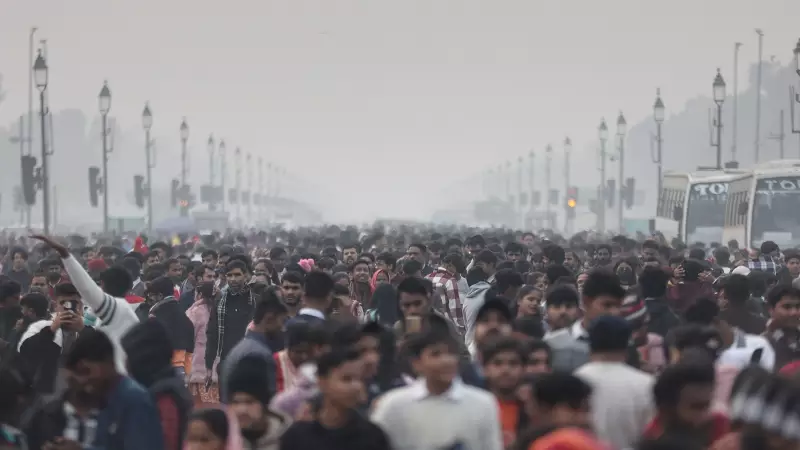
Visibility data from Thursday underscores the problem. Safdarjung reported visibility as low as 500 meters from late Wednesday night until Thursday morning, improving only to 600 meters by 9 AM. Palam observatory recorded similarly poor visibility of 500 meters during the same period.
As Delhi steps into the new year, the dual challenges of a severe cold wave and hazardous air quality demand caution from its residents. The IMD's advisory urges people to take necessary precautions against the cold and limit outdoor exposure, especially during early morning and late evening hours when fog and pollution levels peak.