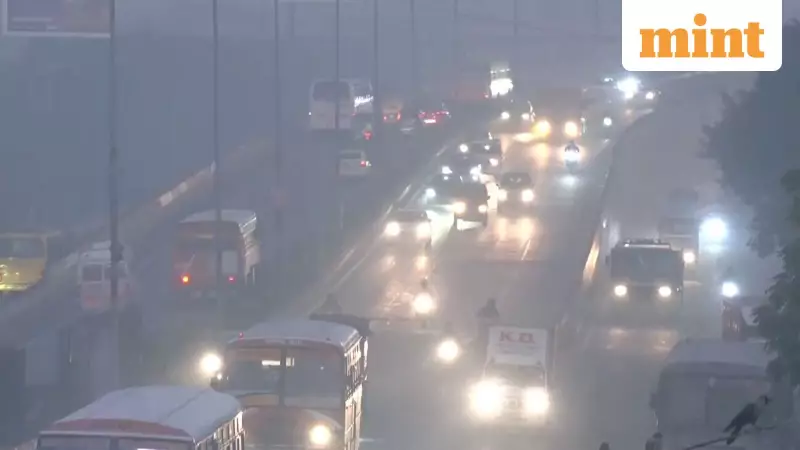
In a decisive move to combat the capital's hazardous air quality, the Delhi government has announced stringent restrictions on vehicular movement within the National Capital Region (NCR). The new rules, which come into effect from Thursday, December 18, will prohibit the entry and movement of older, more polluting vehicles.
What The New NCR Vehicle Restrictions Entail
The core of the emergency measure is a ban on vehicles complying with older emission standards. Only vehicles meeting the latest Bharat Stage 6 (BS6) norms will be permitted to enter and ply in the NCR. This directly impacts all BS3 and BS4 standard vehicles registered outside Delhi. The ban is a key part of a series of emergency steps being implemented by authorities in Delhi-NCR to tackle the severe air pollution crisis.
BS6 vs BS4: A Major Leap in Curbing Emissions
The restriction highlights the significant technological and environmental gap between the BS4 and BS6 emission standards. BS6 is a far more stringent regulation designed to drastically cut down on harmful pollutants.

The most fundamental difference lies in fuel quality. BS6 fuel has a sulphur content of just 10 parts per million (ppm), compared to 50 ppm in BS4 fuel. This makes BS6 fuel five times cleaner, which is crucial for the advanced emission control systems in modern engines.
The limits on tailpipe emissions are also much stricter under BS6 norms:
- Nitrogen Oxides (NOx): BS6 petrol engines must emit 25% less NOx. For diesel engines, the reduction is a massive 70%.
- Particulate Matter (PM): BS6 introduces a strict limit for petrol engines and slashes the permissible PM from diesel engines by 20.5 mg/km.
- Hydrocarbons & NOx (Diesel): The combined limit is reduced by 130 mg/km under BS6.
Advanced Technology Mandatory in BS6 Vehicles
Meeting these tough limits requires sophisticated technology that was not mandatory in BS4 vehicles. BS6-compliant engines, especially diesel ones, are equipped with systems like Diesel Particulate Filters (DPF) and Selective Catalytic Reduction (SCR). These components actively trap and neutralize harmful pollutants.
Furthermore, On-Board Diagnostics (OBD-II) become compulsory in BS6 vehicles, allowing for real-time monitoring of the emission control system. Vehicles also undergo Real Driving Emissions (RDE) testing to ensure they perform cleanly on actual roads, not just in labs.
This push for cleaner technology means that while BS6 vehicles are significantly more environmentally friendly, they also require the specific, cleaner BS6 fuel to operate effectively and protect their complex systems.