

The Seed-Sowing Cyclist: How Daripalli Ramaiah Grew a Forest in Telangana
On the arid roads of Khammam district in Telangana, residents became accustomed to a humble yet persistent sight: a man pedaling a bicycle, his pockets bulging with seeds, driven by a singular mission to green every barren patch he encountered. This man was Daripalli Ramaiah, locally revered as Chettu Ramaiah or Vanajeevi Ramaiah, whose life story unfolds as a testament to simplicity and perseverance, built meticulously one sapling at a time.
The Pocket-Sized Revolution
Ramaiah did not launch his efforts with grand campaigns or flashy slogans. Instead, he arrived armed with seeds, carrying them in his pockets and planting them wherever he found dry, open ground during his bicycle journeys through the region. He was never fixated on numbers; in fact, he reportedly never maintained a precise count of the saplings he planted. However, by his own modest estimation, the total surpassed ten million trees over his lifetime. This is not merely a statistic but a testament to a landscape gradually transforming through unwavering commitment.
A Lesson He Never Forgot
The roots of Ramaiah's mission trace back to a beautifully ordinary memory: his mother saving seeds for the next planting season. This childhood lesson stayed with him, evolving into a personal guide for adulthood. Reports indicate that he studied tree planting through extensive reading, collected articles on trees, and turned his home into a living archive of conservation slogans and notes. Despite leaving school after the tenth grade, he continued learning through hands-on experience, drawing knowledge from the soil, observation, and repetitive practice, building expertise quietly and effectively.

More Than Planting: A Habit of Insistence
What set Ramaiah apart was not just the act of planting trees but his treatment of it as a daily obligation. He traveled to barren stretches, sowed seeds along roads and canal banks, and focused on native species and useful trees that provided shade, fruit, or long-term ecological benefits. One report highlights his early work along a four-kilometer stretch near Khammam, where he began greening road and canal banks with native seeds. This labor does not create dramatic fanfare; it persists until people notice the air has changed, a subtle yet profound impact.
The Man Society Underestimated
Like many dedicated to practical good, Ramaiah was not always immediately understood. He was once mocked as mentally unstable for his obsession with planting saplings, a detail that reflects public impatience more than his character. Unfazed by the laughter, he continued pedaling and planting, even transforming his home into a display of tree-plantation slogans, reminding his neighborhood that conservation is a habit, not a theory. His family supported his work wholeheartedly, making their household an integral part of the mission.
Recognition Came, but Later Than the Trees
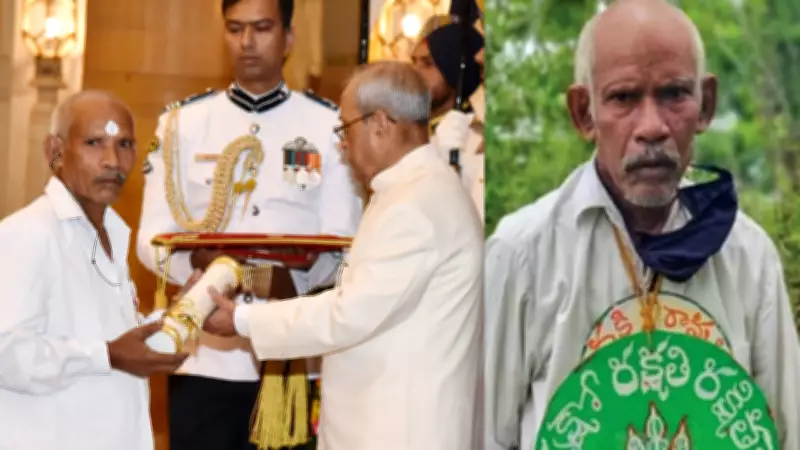
For years, Ramaiah's work quietly flourished in Telangana before gaining national recognition. The Government of India honored him with the Padma Shri in 2017, listing his contributions under social work in Telangana. Earlier accolades included the Seva Award, the Vanamitra Award, and the National Innovations and Outstanding Traditional Knowledge Award in 2015. These honors felt less like a culmination and more like a belated acknowledgment of decades of silent dedication.
Why His Story Still Matters
Ramaiah's legacy endures because it embodies a timeless form of courage. He sold land to purchase saplings and seeds, planted tirelessly even without applause, and viewed greenery as a responsibility rather than a campaign. Reports in 2025 noted his death in Khammam at age 87, with tributes highlighting his influence as a green crusader. Though he is gone, the living results of his work remain visible in the trees, shade, and memories he left behind.

The Quiet Kind of Heroism
There is something profoundly moving about a life that does not need to shout to be remembered. Ramaiah did not build monuments; he built cover, canopy, and continuity. He made restoration feel personal and intimate, demonstrating that one person's pocketful of seeds could challenge drought and prevail. His story resonates not just as a tale of planting millions of trees but as a lesson in understanding that the future can begin with something as small as a seed and as ordinary as a bicycle ride.





