

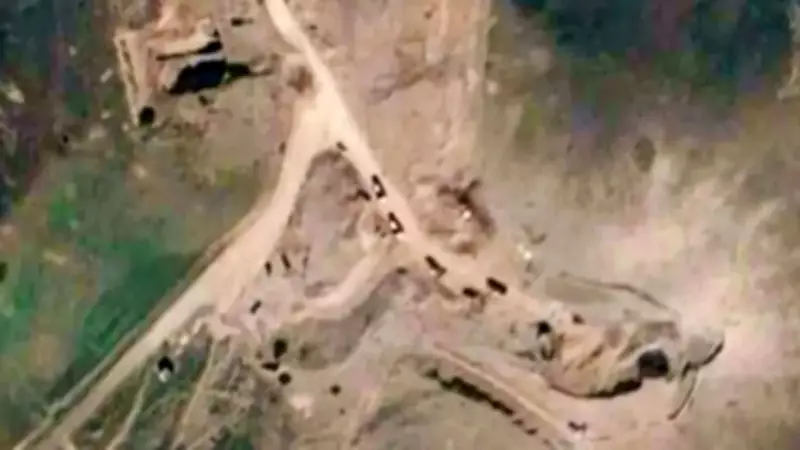
Iran Exploits Ceasefire to Reconstruct Missile Infrastructure
Satellite images have revealed that Iran is actively using the current ceasefire period to clear debris and restore access to underground missile bases that were damaged during recent strikes by the United States and Israel. According to reports from the Daily Telegraph and other sources, this activity was observed as of April 10, 2026, with significant operations underway at key facilities.
Evidence of Restoration Efforts at Key Sites
Imagery from locations near Khomeyn and Tabriz shows trucks and heavy machinery in operation, specifically focused on removing rubble from tunnel entrances that had been sealed during airstrikes. Crews were seen loading debris onto trucks and reopening access points, indicating a concerted effort to make these missile facilities operational again. This work appears concentrated at critical entry sites that were previously blocked to prevent missile deployments.
Similar observations were reported by Israeli newspaper Haaretz, which noted the use of bulldozers to dig out missile launchers from underground bunkers. Additional satellite images cited by CNN show excavation and dumping equipment near tunnel openings in areas such as Hormozgan and Tabriz, suggesting that restoration efforts are widespread and ongoing.

Intelligence Warnings and Strategic Implications
US intelligence had previously warned that Iranian operatives were working to reactivate missile bunkers and silos. Assessments indicate that some facilities may have been repaired rapidly, in some cases within hours of being struck. The Pentagon and White House have disclosed that over 13,000 sites in Iran were targeted during five weeks of conflict, including more than 450 ballistic missile storage facilities.
Despite these extensive strikes, US officials briefed on the matter told The New York Times that Iran retains the capability to launch attacks using its remaining arsenal. While exact numbers of operational launchers were not specified, estimates suggest that approximately half of Iran’s launchers survived, aligning with intelligence assessments.
Challenges in Targeting Iran's Missile Networks
Analysts highlight that much of Iran’s missile infrastructure is located in mountainous regions and protected by extensive underground tunnel networks, making it difficult to fully destroy with conventional strikes. These networks connect storage sites, launch points, and concealed exits, enhancing Iran’s resilience. Additionally, Iran relies on mobile launch systems that can be quickly deployed and relocated, complicating detection and targeting efforts.
Although missile and drone activity has decreased compared to earlier phases of the conflict, intermittent launches continue. Reports suggest Iran is deploying between 50 and 100 drones daily, with many being intercepted by defense systems.
Geopolitical Context and Future Negotiations
The developments occur as mediators attempt to revive talks between Washington and Tehran, following a stall in negotiations over the weekend. Officials from the US and Israel have stated that a key objective of their military campaign is to eliminate Iran’s ability to target Israel and American allies in the region. However, analysts cited in the reports argue that Tehran’s efforts to restore its missile infrastructure may be aimed at preserving its military capabilities and maintaining leverage in any future diplomatic negotiations.
This strategic maneuvering underscores the complex dynamics of the conflict, where temporary halts in fighting are being used by Iran to bolster its defensive and offensive postures, potentially influencing the outcome of ongoing peace efforts.






