

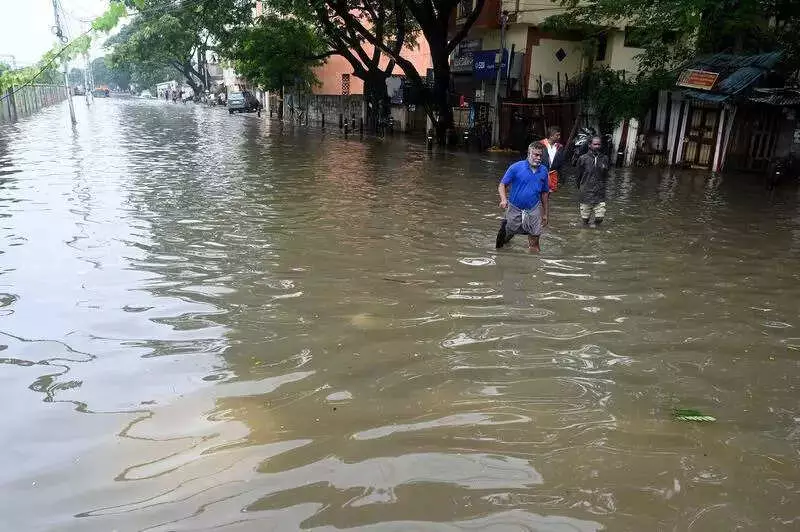
The death toll from Cyclone Ditwah in Tamil Nadu climbed to four on Tuesday, as unrelenting rains continued to wreak havoc, submerging extensive agricultural lands across the state. The severe weather has triggered a large-scale relief operation, with authorities assessing the full extent of the damage.
Minister Details Losses and Relief Measures
State Disaster Management Minister K K S S R Ramachandran provided a grim update on the situation. He confirmed that one of the fatalities was due to electrocution in Villupuram district. While the cyclone has weakened into a low-pressure area, heavy rainfall persisted in Chennai, Tiruvallur, Kancheepuram, and Chengalpet districts, with the India Meteorological Department (IMD) predicting continued showers until Wednesday morning.
Reviewing operations from the emergency control room in Ezhilagam, Minister Ramachandran disclosed staggering figures: 582 cattle have perished, and 1,601 huts and houses have been damaged. The agricultural sector has been hit exceptionally hard, with crops cultivated across more than 85,500 hectares now under water. A complete assessment of crop damage is still pending.

Compensation Announced and Relief Camps Operational
Addressing the urgent need for farmer support, the minister stated that Chief Minister M K Stalin has directed district collectors to disburse compensation. Farmers who suffered crop damage in October will receive ₹20,000 per hectare. To shelter those displaced by the floods, the state government has established 54 relief camps, accommodating 3,534 individuals from 1,127 families.
"Food, drinking water, and all basic amenities were provided to them," assured Minister Ramachandran. In Chennai, a significant force is on standby for emergencies, with 10 National Disaster Response Force (NDRF) teams, comprising 330 personnel, ready for deployment. The Greater Chennai Corporation has been authorized to utilize these teams as needed.
Unpredictable Weather Pattern Challenged Forecasts
The minister also responded to criticisms regarding inaccurate weather predictions. He explained that the intense rainfall "outsmarted all the predictions." The forecast models from both the IMD and private weather stations proved incorrect because Cyclone Ditwah lingered closer to the Chennai coast instead of tracking northwards towards Andhra Pradesh as initially projected. This unexpected trajectory resulted in the prolonged and severe rainfall over the region.






