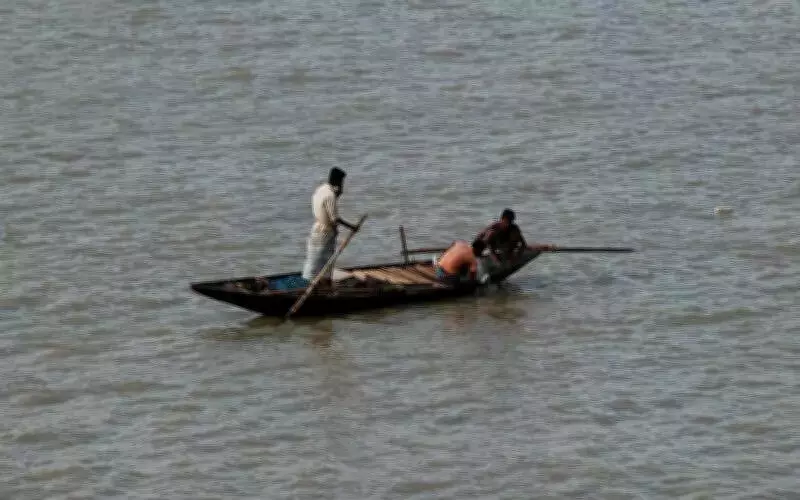
CPCB Report Exposes Critical Pollution Levels in Five Major Indian Rivers
The Central Pollution Control Board (CPCB) has officially acknowledged the severe environmental degradation affecting five of India's major river systems. In a recent affidavit submitted to the National Green Tribunal (NGT), the CPCB confirmed that the Satluj, Beas, Ravi, Jhelum, and Chenab rivers are experiencing significant pollution that violates established water quality standards.
Widespread Non-Compliance with Water Quality Standards
The comprehensive monitoring report reveals alarming levels of non-compliance across multiple monitoring locations. For the Satluj River, 10 out of 16 monitored locations failed to meet quality standards, with seven problematic sites located in Punjab and the remaining three in Himachal Pradesh. The report specifically identified the stretch near Budda Nullah in Ludhiana as the most heavily polluted section of the entire river.
The Ravi River showed contamination at 2 out of 13 monitored points, with one non-compliant location in Punjab and another in Jammu & Kashmir. Meanwhile, the Beas River demonstrated pollution issues at 4 out of 41 monitored locations, equally distributed between Punjab and Himachal Pradesh with two problematic sites in each state.

Scientific Assessment and Classification System
Water quality assessment primarily relies on Biological Oxygen Demand (BOD) levels, which serve as a crucial indicator of organic pollution in aquatic systems. The CPCB employs a sophisticated classification system that categorizes polluted river stretches into five distinct priority levels:
- Priority Class I: Represents the most severe contamination where BOD levels exceed 30 mg/l
- Priority Class II-V: Progressively less severe but still non-compliant pollution levels
- Priority Class V: Denotes the least polluted stretches that nevertheless fail to meet quality standards
Legal Context and Environmental Petition
The NGT's intervention originated from a petition filed by environmental activist Abhisht Kusum Gupta, who alleged systematic destruction of these five sister rivers through multiple contributing factors. The petition specifically highlighted:
- Unregulated industrial discharge from textile, pharmaceutical, and small-scale manufacturing units
- Large-scale illegal sand mining operations and riverbank encroachment
- Unchecked agricultural runoff containing toxic pesticides and insecticides
- Continued dumping of untreated municipal waste into river systems
National Monitoring Infrastructure
In response to these mounting environmental challenges, the CPCB maintains the National Water Quality Monitoring Programme (NWMP), an extensive surveillance initiative that currently oversees 4,922 monitoring locations nationwide. This comprehensive program covers diverse water bodies including rivers, lakes, groundwater sources, and marine environments across India.
The affidavit represents a significant official acknowledgment of the critical state of these vital water resources and underscores the urgent need for coordinated environmental protection measures to address the multifaceted pollution sources affecting India's river systems.