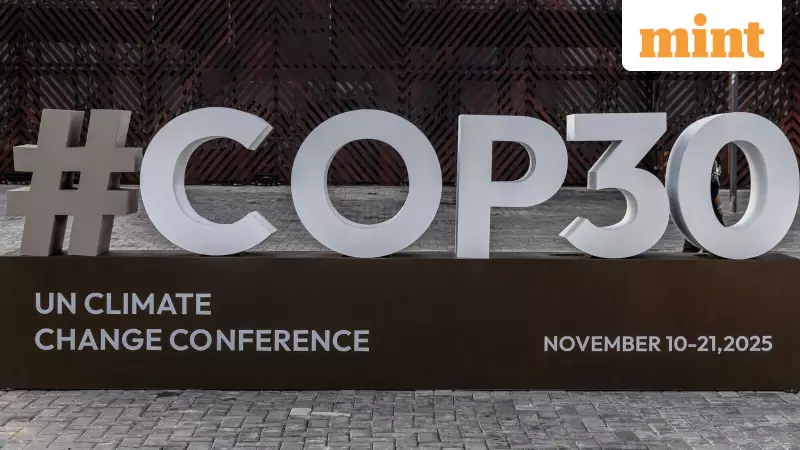
The COP30 climate summit in Belém, Brazil represents a pivotal moment for global climate action, particularly for India. As world leaders gather in the heart of the Amazon rainforest, the conversation has decisively shifted from making promises to delivering tangible results.
The Adaptation Funding Crisis
Recent reports reveal a staggering gap between climate adaptation needs and actual funding. According to UNEP's Adaptation Gap Report 2025, developing countries require between $310 billion and $365 billion annually by 2035 to adapt to climate impacts. Shockingly, wealthy nations provided only $26 billion in 2023, down from $28 billion the previous year.
This funding shortfall of 12-14 times current levels exposes a fundamental breakdown in global climate justice. The money desperately needed to protect vulnerable communities from rising seas, extreme weather events, and climate disasters simply isn't reaching those who need it most.

India's Dual Challenge and Opportunity
For India, COP30 presents both significant risks and unprecedented opportunities. The country bears the weight of compelling statistics: India houses 17% of the world's population while contributing only 4% of historical global emissions. Yet it faces severe climate threats including retreating Himalayan glaciers, coastal erosion, intensifying cyclones, and unpredictable monsoon patterns.
India's diplomatic credibility at the summit hinges on two critical outcomes. First, the nation must demonstrate clear pathways to evaluate whether adaptation initiatives actually work, moving beyond vague commitments to genuine accountability. Second, it needs to secure reliable grant-based funding mechanisms that don't burden vulnerable nations with additional debt.
From Burden to Investment Opportunity
Rather than treating adaptation as a burden resulting from climate injustice, India has the chance to reframe it as an investment in shared prosperity. The country's adaptation strategy could showcase how climate resilience can generate profitable enterprises across multiple sectors including agriculture, water management, heat protection, and public health.
The challenges remain formidable. India and other emerging economies are pushing for more equitable terms, emphasizing grants for community-level projects like coastal protection and blended public-private finance for large-scale infrastructure development. The argument is straightforward: climate resilience benefits everyone and shouldn't depend solely on borrowing mechanisms.
The credibility of global climate negotiations will be tested by how quickly developed nations respond in Belém. Adaptation demands consistent, predictable investment, which explains why climate finance has become the central fault line in international discussions. Wealthy countries have yet to fulfill their $100 billion annual commitment to support poorer nations, making the post-2025 financial targets even more critical.
Linking Finance to Measurable Results
The Belém summit offers a crucial opportunity to connect funding with verifiable performance. Both donors and recipients would benefit from linking climate finance to clearly defined, measurable outcomes such as enhanced flood defenses or restored ecosystems. This transparency could also attract private investors who traditionally avoid adaptation projects due to difficulties in tracking results.
The Amazon rainforest itself provides a powerful lesson in resilience. Forest ecosystems don't adapt through isolated solutions but through interconnected systems—roots that stabilize soil, canopies that regulate rainfall, and diverse species that buffer against environmental shocks. Human adaptation strategies should mirror this connectivity, linking financing to planning, planning to action, and action to visible outcomes.
For India, COP30 represents more than just another climate conference. It's an opportunity to help define the rules governing long-term resilience funding and measurement. The country's mission is to lead this integration and demonstrate that developing nations can champion adaptation not as punishment for climate injustice, but as strategic investment in collective prosperity.

With hundreds of millions of vulnerable people depending on meaningful outcomes, failure at COP30 is simply not an option the planet can afford.